
Constellations of the Month: September – Microscopium:
We continue September with the next constellation of the month, Microscopium, “The Microscope.”

Microscopium constellation map courtesy of Openverse
Microscopium, The “Goat” – The Microscopium constellation is a constellation located in the southern hemisphere, symbolizing the “microscope.” Microscopium is positioned south of Capricornus, nestled between the constellations Piscis Austrinus and Sagittarius. This constellation is relatively small and faint, making it difficult to observe from northern latitudes. It was first introduced by the French astronomer Nicolas Louis de Lacaille during the 18th century. The brightest stars within Microscopium are of only fifth magnitude, and the constellation is not visible without binoculars under less than optimal viewing conditions. Additionally, it does not contain any prominent deep sky objects.
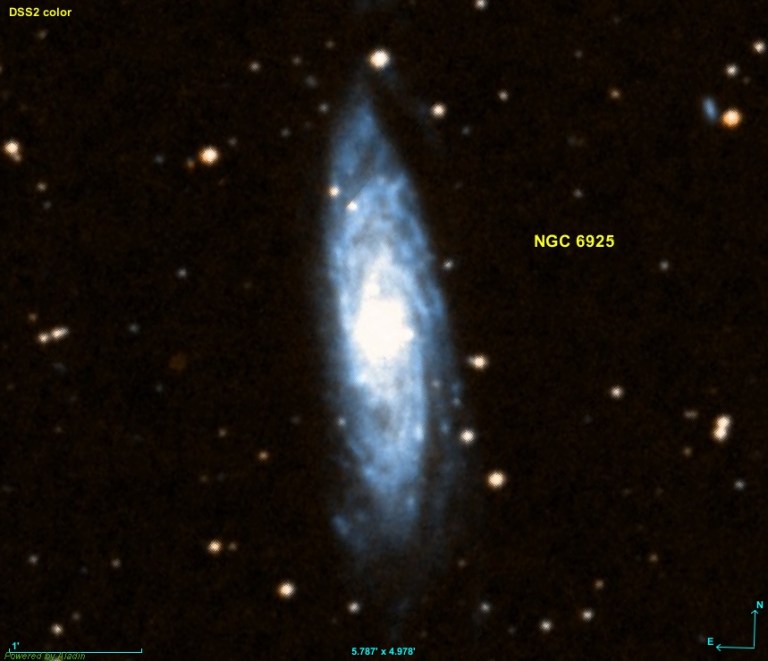
NGC 6925 DSS courtesy of Openverse
Key points regarding Microscopium:
- Meaning: The term “Microscopium” translates to “The Microscope” in Latin. Microscopium is part of the Lacaille family of constellations, which includes Antlia, Caelum, Circinus, Fornax, Horologium, Mensa, Norma, Octans, Pictor, Reticulum, Sculptor, and Telescopium. Within Microscopium, there is one star that has known planets, and it does not feature any Messier objects. The constellation’s brightest star is Gamma Microscopii, which has an apparent magnitude of 4.67. Additionally, there are no meteor showers linked to this constellation. Microscopium lacks any formally designated stars.
- Notable stars: Gamma Microscopii is the brightest star in the constellation Microscopium, located about 229 light years away with an apparent magnitude of 4.68. It is a yellow giant star, 2.5 times the mass of the Sun. Epsilon Microscopii follows as the second brightest star, approximately 165 light years away and classified as a white main sequence dwarf. Theta Microscopii is a wide double star and the third brightest, located around 186 light years from Earth. Alpha Microscopii is fourth, a variable yellow giant star about 380 light years away. Lacaille 8760, one of the nearest stars at 12.87 light years, is a flare star too faint to see without binoculars. AU Microscopii and BO Microscopii are both variable flare stars in the constellation. WASP-7, about 456 light years away, hosts an extrasolar planet, WASP-7b, which orbits it.
- Other features: NGC 6925 is a barred spiral galaxy located in the constellation Microscopium. It possesses an apparent magnitude of 11.3. The galaxy has a lens-like shape and appears nearly edge-on from the perspective of Earth. It can be located 3.7 degrees to the west-northwest of Alpha Microscopii. This galaxy was discovered by the English astronomer John Herschel in July 1834. In 2011, a Type IIb supernova, designated SN 2011ei, was observed within this galaxy. NGC 6923 is another spiral galaxy situated in Microscopium. It has an apparent magnitude of 12.2 and is approximately 36.437 million parsecs distant from Earth. Similar to NGC 6925, this galaxy was also discovered by John Herschel during the summer of 1834.
- Mythology: Microscopium lacks any mythological associations. The Microscopium constellation was established by the French astronomer Nicolas Louis de Lacaille during the years 1751-1752. Lacaille named it after an early variant of the compound microscope, which utilized multiple lenses and was prevalent in the 18th century. He characterized the constellation as representing “a tube above a square box.” The current official boundaries of the constellation were defined by the Belgian astronomer Eugène Delporte in 1930.
- Visibility: Microscopium is the 66th largest constellation in the sky. It covers an area of 210 square degrees. It is situated in the fourth quadrant of the southern hemisphere (SQ4) and is observable at latitudes ranging from +45° to -90°. The constellations that border it include Capricornus, Grus, Indus, Piscis Austrinus, Sagittarius, and Telescopium. The name Microscopium is pronounced /ˌmaɪkroʊˈskɒpiəm/. In English, this constellation is referred to as the Microscope. The genitive form of Microscopium, which is utilized in the naming of stars, is Microscopii (pronunciation: /ˌmaɪkroʊˈskɒpiaɪ/). The three-letter abbreviation, which was officially adopted by the International Astronomical Union (IAU) in 1922, is Mic.
⁺‧₊☽◯☾₊‧⁺⋆⁺‧₊☽◯☾₊‧⁺⋆⁺‧₊☽◯☾₊‧⁺⋆⁺‧₊☽◯☾₊‧⁺⋆⁺‧₊☽◯☾₊‧⁺⋆⁺‧₊☽◯☾₊‧⁺⋆
Constellations:
| Constellations by Month | ||
| JANUARY [8] | FEBRUARY [7] | MARCH [7] |
| Taurus | Camelopardalis | Ursa Major |
| Orion | Auriga | Cancer |
| Lepus | Gemini | Canis Minor |
| Caelum | Monoceros | Pyxis |
| Reticulum | Canis Major | Vela |
| Dorado | Columba | Carina |
| Pictor | Puppis | Volans |
| Mensa | ||
| APRIL [8] | MAY [7] | JUNE [6] |
| Ursa Major | Canes Venatici | Ursa Minor |
| Leo Minor | Coma Berenices | Boötes |
| Leo | Virgo | Libra |
| Sextans | Corvus | Lupus |
| Crater | Centaurus | Circinus |
| Hydra | Crux | Apus |
| Antlia | Musca | |
| Chamaeleon | ||
| JULY [9] | AUGUST [9] | SEPTEMBER [6] |
| Draco | Lyra | Cygnus |
| Corona Borealis | Vulpecula | Delphinus |
| Hercules | Sagitta | Equuleus |
| Serpens | Aquila | Capricornus |
| Ophiuchus | Scutum | Microscopium |
| Scorpius | Sagittarius | Indus |
| Norma | Corona Australis | |
| Ara | Telescopium | |
| Triangulum Australe | Pavo | |
| OCTOBER [7] | NOVEMBER [8] | DECEMBER [6] |
| Cepheus | Cassiopeia | Perseus |
| Lacerta | Andromeda | Triangulum |
| Pegasus | Pisces | Aries |
| Aquarius | Cetus | Eridanus |
| Piscis Austrinus | Sculptor | Fornax |
| Grus | Phoenix | Horologium |
| Octans | Tucana | |
| Hydrus | ||
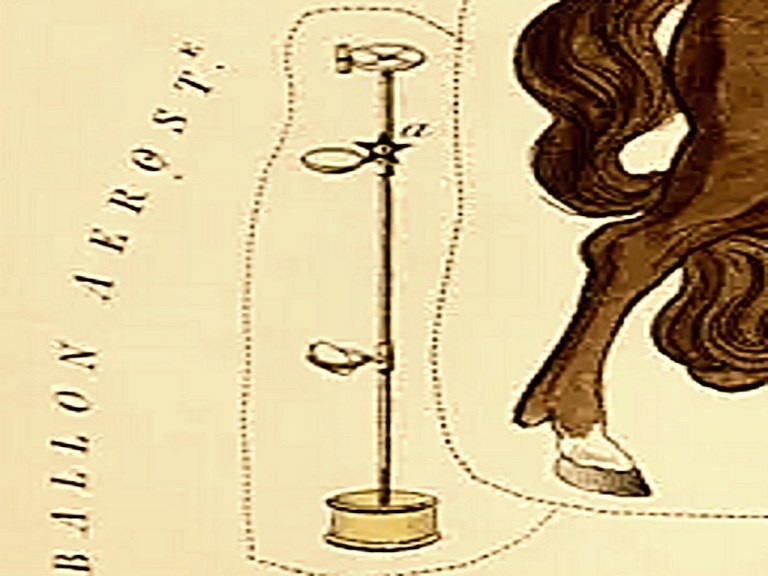
Sidney Hall’s (?-1831) astronomical chart illustration of Microscopium. The microscope forming the constellation. Original from Library of Congress courtesy of Openverse
Constellations of the Month:
September – Microscopium
Material may be shared for personal and educational use, Share with family and friends. The material cannot be used in an educational setting whereby a “book fee” is charged in or above tuition costs, and the material here is being used without paying a licensing fee.. AI must file an application for use of such material.
| You May Also Like. . . | |
 NASA 1997 Liftoff Special |
 NASA Mission Patch Party |
More on Versatileer:
![HRG book 1 Instagram available Now - Copy.jpg]()
Ends 05-22 – Riot by L. L. Ash, Pax Sinclair Book Blitz + $20 Amazon Gift Card Giveaway
05/14/2024![RainFallingonEmbers_Quote.jpg]()
Ends 10-18 – Rain Falling on Embers by Liana Gardner Book Blitz + $20 Amazon Gift Card Giveaway
10/12/2023![Recent Solar Eclipse Overnight - Total Eclipse of the Media]()
Recent Solar Eclipse Overnight - Total Eclipse of the Media
06/21/2020![Photo of the Day: Obscure Darkroom Magic Day 18]()
Photo of the Day: Obscure Darkroom Magic Day 18
02/12/2020![Silver Spiraea__20210905_104511-1.jpg]()
Featured Photo: Flower of the Day – Silver Spiraea
09/28/2021


























Very cool