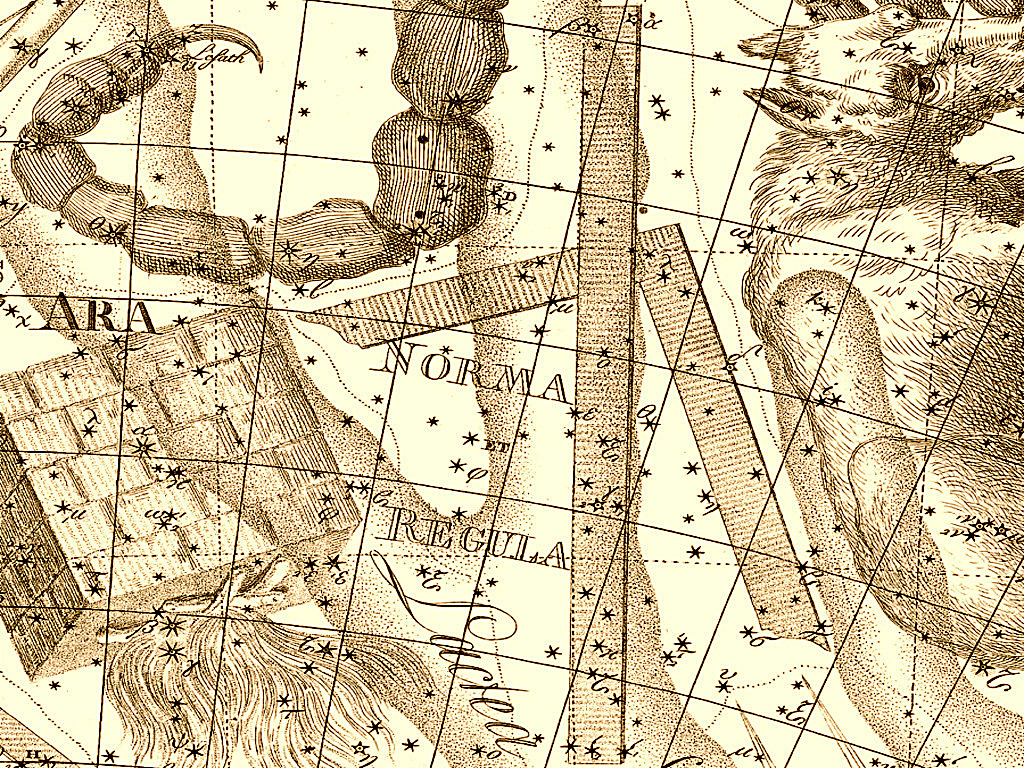
Constellations of the Month: July – Norma:
We continue July with the next constellation of the month, Norma, “Normal.”
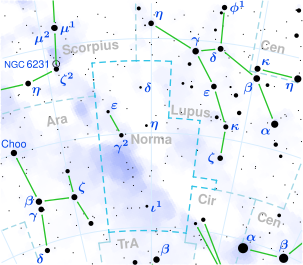
Norma constellation map courtesy of Openverse
Norma, “Normal” – The constellation of Norma is located in the southern hemisphere, and symbolizes “normal.” Norma is nestled between the constellations Scorpius and Centaurus. The term “Norma” (“normal” in Latin) refers to a right angle, symbolizing a level, a set square, a rule, or a carpenter’s square. This constellation was first introduced by the French astronomer Nicolas Louis de Lacaille during the mid-18th century. Lacaille initially designated the constellation as l’Equerre et la Regle, in reference to a draughtsman’s set-square and rule. Norma is classified as one of the smaller constellations and lacks any notable stars. It encompasses the Norma Cluster of galaxies, the bipolar Ant Nebula, the Fine Ring Nebula, and the open clusters NGC 6067 and NGC 6087, among various other celestial objects.
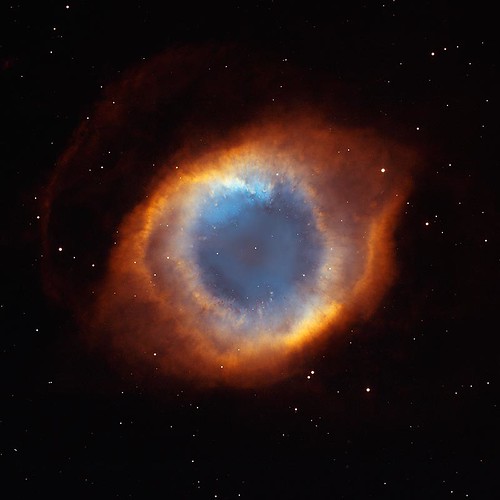
Helix Nebula courtesy of Openverse
Key points regarding Norma:
- Meaning: The term “Norma” translates to “Normal” in Latin. The constellation Norma is part of the Lacaille family of constellations, which includes Antlia, Caelum, Circinus, Fornax, Horologium, Mensa, Microscopium, Octans, Pictor, Reticulum, Sculptor, and Telescopium. The constellation Norma features four stars that have known planets and does not include any Messier objects. The most luminous star in this constellation is Gamma-2 Normae, which has an apparent magnitude of 4.02. Additionally, there is one meteor shower linked to this constellation, known as the Gamma Normids. Norma lacks any stars that have been formally named.
- Notable stars: Gamma Normae is an optical double star with two components: Gamma-1 Normae, a yellow-white supergiant, and Gamma-2 Normae, a brighter yellow giant star. Gamma-2 is 127 light years away with a magnitude of 4.02, while Gamma-1 is 1,436 light years distant with a magnitude of 5.09. Epsilon Normae is a binary star, classified as a blue-white dwarf, located 400 light years from Earth. Iota-1 Normae is a multiple star system about 140 light years away, consisting of a binary star and a third component. Eta Normae and Delta Normae are yellow giant and white stars, respectively, located 218 and 123 light years away. Mu Normae is a blue-white supergiant, 4,657 light years distant, and is very luminous. Kappa Normae is another yellow giant approximately 438 light years away. R Normae is a Mira variable red giant 600 light years away. S Normae, a Cepheid variable star, is around 2,741 light years distant. HD 142415, HD 148156, and HD 143361 are yellow main sequence stars with confirmed planets, each varying in distance and characteristics. HD 330075 is also a yellow dwarf with a confirmed planet orbiting it.
- Other features: The Ant Nebula, or Menzel 3, is a bipolar planetary nebula located about 8,000 light years away in the Norma constellation. It was discovered by Donald Howard Menzel in 1922 and resembles an ant in shape. NGC 6067 is an open cluster nearby, 4,621 light years from Earth, that can be seen with binoculars. NGC 6087 is another cluster with about 40 stars, located roughly 3,500 light years away. The Fine Ring Nebula, discovered in 1936, is a 1,000 light year distant round nebula with a white dwarf at its center. The Norma Cluster, 221.1 million light years away, is difficult to observe due to dust. Other clusters include NGC 6031, NGC 6167, and NGC 6152, with various distances and magnitudes.
- Mythology: The Norma constellation is not linked to any myths. It was established by Nicolas Louis de Lacaille in the 1750s during his time at the Cape of Good Hope in South Africa, where he was engaged in mapping the southern skies. Lacaille formed the constellation from faint stars located between Lupus and Ara, initially naming it l’Equerre et la Regle, which refers to a draughtsman’s set-square and rule. This constellation symbolizes a carpenter’s square, a tool utilized by carpenters on exploratory ships. The name of the constellation was later Latinized to Norma et Regula and eventually abbreviated to Norma. Since the 18th century, the boundaries of the constellation have been altered, resulting in Norma no longer having stars designated as Alpha or Beta. The stars that were once known as Alpha and Beta Normae during Lacaille’s era are now part of the Scorpius constellation and are referred to as N and H Scorpii.
- Visibility: Norma is the 74th largest constellation, covering 165 square degrees. It is situated in the third quadrant of the southern hemisphere (SQ3) and is visible at latitudes ranging from +30° to -90°. The constellations that border it include Ara, Circinus, Lupus, Scorpius, and Triangulum Australe. The name of the constellation, Norma, is pronounced /ˈnɔːrmə/. In English, it is referred to as the Carpenter’s Square. The genitive form of Norma, which is used in the naming of stars, is Normae (pronunciation: /ˈnɔːrmiː/). The three-letter abbreviation, which was established by the International Astronomical Union (IAU) in 1922, is Nor.
⁺‧₊☽◯☾₊‧⁺⋆⁺‧₊☽◯☾₊‧⁺⋆⁺‧₊☽◯☾₊‧⁺⋆⁺‧₊☽◯☾₊‧⁺⋆⁺‧₊☽◯☾₊‧⁺⋆⁺‧₊☽◯☾₊‧⁺⋆
Constellations:
| Constellations by Month | ||
| JANUARY [8] | FEBRUARY [7] | MARCH [7] |
| Taurus | Camelopardalis | Ursa Major |
| Orion | Auriga | Cancer |
| Lepus | Gemini | Canis Minor |
| Caelum | Monoceros | Pyxis |
| Reticulum | Canis Major | Vela |
| Dorado | Columba | Carina |
| Pictor | Puppis | Volans |
| Mensa | ||
| APRIL [8] | MAY [7] | JUNE [6] |
| Ursa Major | Canes Venatici | Ursa Minor |
| Leo Minor | Coma Berenices | Boötes |
| Leo | Virgo | Libra |
| Sextans | Corvus | Lupus |
| Crater | Centaurus | Circinus |
| Hydra | Crux | Apus |
| Antlia | Musca | |
| Chamaeleon | ||
| JULY [9] | AUGUST [9] | SEPTEMBER [6] |
| Draco | Lyra | Cygnus |
| Corona Borealis | Vulpecula | Delphinus |
| Hercules | Sagitta | Equuleus |
| Serpens | Aquila | Capricornus |
| Ophiuchus | Scutum | Microscopium |
| Scorpius | Sagittarius | Indus |
| Norma | Corona Australis | |
| Ara | Telescopium | |
| Triangulum Australe | Pavo | |
| OCTOBER [7] | NOVEMBER [8] | DECEMBER [6] |
| Cepheus | Cassiopeia | Perseus |
| Lacerta | Andromeda | Triangulum |
| Pegasus | Pisces | Aries |
| Aquarius | Cetus | Eridanus |
| Piscis Austrinus | Sculptor | Fornax |
| Grus | Phoenix | Horologium |
| Octans | Tucana | |
| Hydrus | ||

Norma courtesy of Openverse
Constellations of the Month:
July – Norma
Material may be shared for personal and educational use, Share with family and friends. The material cannot be used in an educational setting whereby a “book fee” is charged in or above tuition costs, and the material here is being used without paying a licensing fee.. AI must file an application for use of such material.
| You May Also Like. . . | |
 NASA 1997 Liftoff Special |
 NASA Mission Patch Party |
More on Versatileer:
![WastedOnYou_Square.jpg]()
Ends 07-05 – Wasted On You by Colleen Charles Book Blitz + $10 Amazon Gift Card Giveaway
07/02/2023![Super Bowl Sunday '25 Recipes to Make Your Party a Smash.jpg]()
Super Bowl Recipes to Make Your 2025 Party a Smash this Sunday
02/08/2025![20211204_182308.jpg]()
Featured Photos: The 25 Days of Christmas – Photo 6: Yuletide on Dover Road
12/06/2021![Catch and Release__BookBrushImage-2024-2-8-14-4827.jpg]()
Ends 02-28 – Catch and Release by Tracy Solheim Book Blitz + $25 Amazon Gift Card Giveaway
02/18/2024![elevenphotographs-IydYk-LGOhc-unsplash.jpg]()
Happy President Abraham Lincoln's Birthday – 2024
02/12/2024