Constellations of the Month: April – Chamaeleon:
We continue April with the last constellation of the month, Chamaeleon, “The Lizard.”

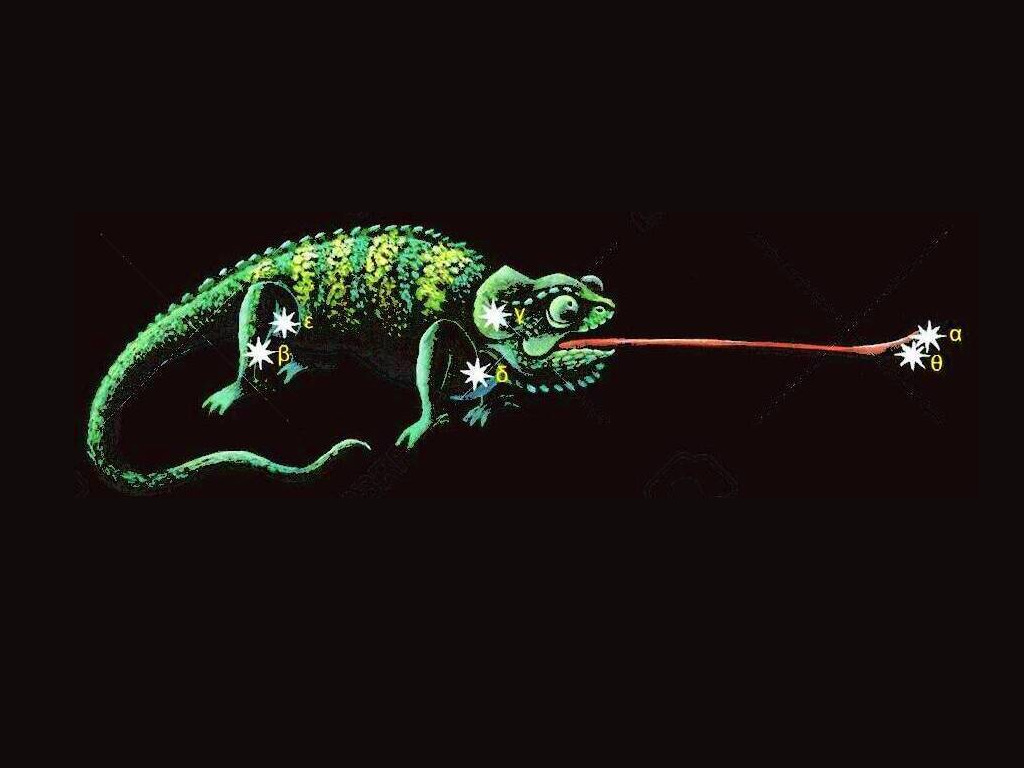
Chamaeleon constellation map courtesy of Openverse
Chamaeleon, “The Lizard” – The Chamaeleon constellation is found in the southern sky and is named after the chameleon lizard. It was created by Dutch astronomer Petrus Plancius using observations from navigators Pieter Dirkszoon Keyser and Frederick de Houtman in the 16th century. Johann Bayer first showed Chamaeleon in his star atlas Uranometria in 1603. In Australia, it is sometimes called the Frying Pan. Notable objects in Chamaeleon include the planetary nebula NGC 3195 and the Chamaeleon cloud complex. The constellation also features Cha 110913, an object possibly surrounded by a protoplanetary disk, discovered in 2004.
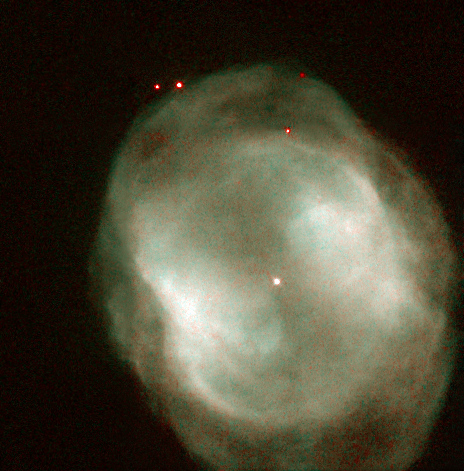
Caldwell 109 courtesy of Openverse
Key points regarding Chamaeleon:
- Meaning: The term “Chamaeleon” translates to “The Lizard.” Notable objects in Chamaeleon include the planetary nebula NGC 3195 and the Chamaeleon cloud complex. The constellation also features Cha 110913, an object possibly surrounded by a protoplanetary disk, discovered in 2004.
- Notable stars: Alpha Chamaeleontis is a star of spectral type F5III, located about 63.5 light years away, with an apparent magnitude of 4.066. It is the brightest star in its constellation. Beta Chamaeleontis is a B5Vn main sequence star, 270 light years away, with a varying apparent magnitude from 4.24 to 4.30. It ranks as the third brightest star in the constellation, after Alpha and Gamma Chamaeleontis. Delta-1 Chamaeleontis is a close binary star made of two similar stars separated by 0.6”. Epsilon Chamaeleontis is another close binary with two stars separated by 0.9”. R Chamaeleontis is a Mira-type variable star with a 334-day period, its magnitude varying from 7.5 to 14. CT Chamaeleontis, a T Tauri star about 540 light years distant, has an apparent magnitude ranging from 12.31 to 12.43 and has a faint companion believed to be a brown dwarf. HD 63454 is a K-type main sequence star, 116.7 light years away, with an apparent magnitude of 9.40. It can be seen with a small telescope and is slightly cooler and less luminous than the Sun. In February 2005, a planet resembling a hot Jupiter, named HD 63454 b, was discovered orbiting it.
- Other features: T
- Mythology: There are no myths linked to the Chamaeleon constellation. It was charted by Dutch navigators in the 16th century and named by Plancius after an exotic lizard known for changing color. Jodocus Hondius illustrated it as a chameleon catching a fly from the Musca constellation.
- Visibility: Chamaeleon is the 79th largest constellation, covering 132 square degrees in the second quadrant of the southern hemisphere. It can be seen at latitudes between 0° and -90°, neighboring constellations include Apus, Carina, Mensa, Musca, Octans, and Volans. The name is pronounced /kəˈmiːliən/, and in English, it is called the Chameleon. The genitive form is Chamaeleontis, and the three-letter abbreviation is Cha. Chamaeleon has one star with known planets, Alpha Chamaeleontis, located 63.45 light years away. There are no Messier objects or meteor showers linked to it, and it contains one formally named star, Ceibo (HD 63454).
⁺‧₊☽◯☾₊‧⁺⋆⁺‧₊☽◯☾₊‧⁺⋆⁺‧₊☽◯☾₊‧⁺⋆⁺‧₊☽◯☾₊‧⁺⋆⁺‧₊☽◯☾₊‧⁺⋆⁺‧₊☽◯☾₊‧⁺⋆
Constellations:
| Constellations by Month | ||
| JANUARY [8] | FEBRUARY [7] | MARCH [7] |
| Taurus | Camelopardalis | Leo Minor |
| Orion | Auriga | Cancer |
| Lepus | Gemini | Canis Minor |
| Caelum | Monoceros | Pyxis |
| Reticulum | Canis Major | Vela |
| Dorado | Columba | Carina |
| Pictor | Puppis | Volans |
| Mensa | ||
| APRIL [8] | MAY [7] | JUNE [6] |
| Ursa Major | Canes Venatici | Ursa Minor |
| Leo Minor | Coma Berenices | Boötes |
| Leo | Virgo | Libra |
| Sextans | Corvus | Lupus |
| Crater | Centaurus | Circinus |
| Hydra | Crux | Apus |
| Antlia | Musca | |
| Chamaeleon | ||
| JULY [9] | AUGUST [9] | SEPTEMBER [6] |
| Draco | Lyra | Cygnus |
| Corona Borealis | Vulpecula | Delphinus |
| Hercules | Sagitta | Equuleus |
| Serpens | Aquila | Capricornus |
| Ophiuchus | Scutum | Microscopium |
| Scorpius | Sagittarius | Indus |
| Norma | Corona Australis | |
| Ara | Telescopium | |
| Triangulum Australe | Pavo | |
| OCTOBER [7] | NOVEMBER [8] | DECEMBER [6] |
| Cepheus | Cassiopeia | Perseus |
| Lacerta | Andromeda | Triangulum |
| Pegasus | Pisces | Aries |
| Aquarius | Cetus | Eridanus |
| Piscis Austrinus | Sculptor | Fornax |
| Grus | Phoenix | Horologium |
| Octans | Tucana | |
| Hydrus | ||

Chamaeleon region courtesy of Openverse
Constellations of the Month:
April – Chamaeleon
Material may be shared for personal and educational use, Share with family and friends. The material cannot be used in an educational setting whereby a “book fee” is charged in or above tuition costs, and the material here is being used without paying a licensing fee.. AI must file an application for use of such material.
| You May Also Like. . . | |
 NASA 1997 Liftoff Special |
 NASA Mission Patch Party |