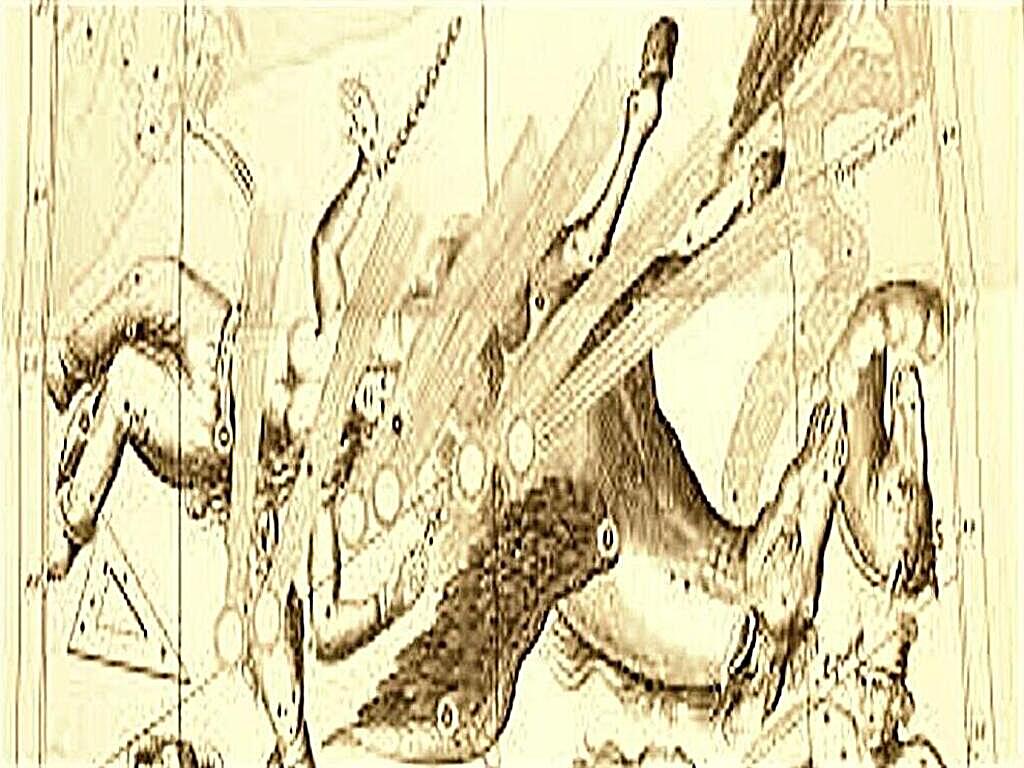
Constellations of the Month: October – Pegasus:
We continue October with the next constellation of the month, Pegasus, “Winged Horse.”
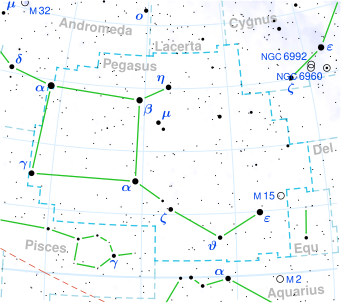
Pegasus constellation map courtesy of Openverse
Pegasus, “Winged Horse” – The Pegasus minor constellation is located in the northern hemisphere, and symbolizes “winged horse.” Pegasus is among the largest constellations visible in the sky. Initially catalogued by the Greek astronomer Ptolemy during the 2nd century, this constellation derives its name from Pegasus, the winged horse of Greek mythology. Notably, the constellation features the Great Square of Pegasus, a well-known asterism in the northern sky, along with several bright stars and deep sky objects, including Messier 15 (NGC 7078), NGC 7331, Stephan’s Quintet of galaxies, the Einstein Cross (a gravitationally lensed quasar), and the unbarred spiral galaxy NGC 7742. The Great Square of Pegasus is formed by three bright stars in Pegasus, along with Alpha Andromedae. This asterism was important in ancient times. In the 17th century, Johann Bayer named Alpha Andromedae as Delta Pegasi, but it is now known only as Alpha Andromedae or Alpheratz. Other stars in the square are Markab, Scheat, and Algenib.

Galactic Wreckage in Stephan’s Quintet courtesy of Openverse
Key points regarding Pegasus:
- Meaning: The term “Pegasus” translates to “Winged Horse” in Greek. The constellation features a Messier object – Messier 15 (NGC 7078, Cumulo de Pegaso) – and is home to nine stars that have confirmed planets. The constellation’s brightest star is Enif, Epsilon Pegasi, which has an apparent magnitude of 2.399. There is one meteor shower linked to Pegasus; the July Pegasids. This constellation comprises 15 stars that have been formally named. The names of the stars that have received approval from the International Astronomical Union (IAU) include Algenib, Alkarab, Anadolu, Biham, Enif, Helvetios, Homam, Markab, Matar, Morava, Sadalbari, Salm, Scheat, Solaris, and Tangra. Pegasus exhibits
- Notable stars: Alpha Pegasi is a giant star of spectral class B9 III, with an apparent magnitude of 2.48 and about 133 light years away. It is the third brightest star in Pegasus and has a radius nearly five times that of the Sun. Its name comes from the Arabic word for “the saddle of the horse. ” Beta Pegasi, or Scheat, is the second brightest star, classified as M2.3 II-III, roughly 196 light years distant and about 1500 times more luminous than the Sun. It varies in brightness and is losing mass, creating an expanding shell of gas and dust. Algenib is a B2 IV subgiant star, nearly nine times the mass of the Sun, and 390 light years away. Its brightness varies due to radial pulsations. Epsilon Pegasi, the brightest star in Pegasus, is a K2 Ib orange supergiant, about 690 light years away and significantly bigger and brighter than the Sun. Zeta Pegasi is a rapidly rotating B8 V main sequence star with slight luminosity variations, located about 204 light years away. Eta Pegasi is a double star system, 167 light years away, with a bright giant and a main sequence star. Theta Pegasi is about 67 light years distant with a luminosity 25 times greater than the Sun. Mu Pegasi is a yellow giant star, 106.1 light years away, slightly more massive than the Sun. 51 Pegasi, similar to the Sun, is notable for having an exoplanet, discovered in 1995. IK Pegasi is a double star system, with the brighter star being a Delta Scuti variable, about 150 light years away, and its white dwarf companion is a supernova candidate.
- Other features: Messier 15 is a globular cluster located about 33,600 light years away, containing over 100,000 stars, including a double neutron star and a planetary nebula called Pease 1. It is one of the oldest clusters, estimated to be 12 billion years old. Stephan’s Quintet consists of five galaxies, first discovered in 1877, located around 280 million light years from Earth, with the brightest, NGC 7320, being 40 million light years away, where intense star formation takes place. NGC 7317 is an elliptical galaxy, while NGC 7318 is a pair of colliding galaxies. NGC 7319 is a spiral galaxy that has a debated quasar at its center. NGC 7217 is an unbarred spiral galaxy with distinctive rings of stars, found about 50 million light years away. NGC 7673 is a starburst galaxy located around 150 million light years from Earth. The Einstein Cross is a gravitationally lensed quasar, 8 billion light years away, appearing as four images around Huchra’s lens galaxy. Other notable galaxies include NGC 7479 and NGC 1, with NGC 7725 and NGC 7753 being a pair of barred spiral and satellite galaxies, approximately 272 million light years away.
- Mythology: In Greek mythology, Pegasus is a white winged horse that emerged from Medusa’s neck when Perseus beheaded her. Medusa, once a beautiful woman, was transformed into a monster by the goddess Athena after she was harmed by Poseidon in Athena’s temple, causing anyone who looked at her to turn to stone. Perseus was tasked with defeating Medusa by King Polydectes, who wanted Perseus’s mother, Danaë. Polydectes did not believe Perseus would return alive after the mission. After defeating Medusa, Pegasus and Chrysaor (both children of Poseidon) were born. Pegasus flew to Mount Helicon, befriended the Muses, and created the Hippocrene spring, which granted poetic inspiration to those who drank from it. The legendary tale includes Bellerophon, who used a golden bridle from Athena to tame Pegasus. He defeated the fire-breathing Chimaera but later fell from Pegasus while attempting to reach Olympus. Pegasus succeeded in reaching Olympus, where Zeus made him carry thunder and lightning and later placed him among the stars as a constellation.
- Visibility: Pegasus is the 7th largest constellation, covering 1121 square degrees. It is situated in the fourth quadrant of the northern hemisphere (NQ4) and is visible at latitudes ranging from +90° to -60°. The constellations that border it include Andromeda, Aquarius, Cygnus, Delphinus, Equuleus, Lacerta, Pisces, and Vulpecula. The name of the constellation, Pegasus, is pronounced /ˈpɛɡəsəs/. In English, it is referred to as Pegasus or the Winged Horse. The genitive form of Pegasus, which is utilized in the naming of stars, is Pegasi (pronunciation: /ˈpɛɡəsaɪ/). The three-letter abbreviation, which was established by the International Astronomical Union (IAU) in 1922, is Peg. Pegasus is part of the Perseus family of constellations, which also includes Andromeda, Auriga, Cassiopeia, Cepheus, Cetus, Lacerta, Perseus, and Triangulum.
⁺‧₊☽◯☾₊‧⁺⋆⁺‧₊☽◯☾₊‧⁺⋆⁺‧₊☽◯☾₊‧⁺⋆⁺‧₊☽◯☾₊‧⁺⋆⁺‧₊☽◯☾₊‧⁺⋆⁺‧₊☽◯☾₊‧⁺⋆
Constellations:
| Constellations by Month | ||
| JANUARY [8] | FEBRUARY [7] | MARCH [7] |
| Taurus | Camelopardalis | Ursa Major |
| Orion | Auriga | Cancer |
| Lepus | Gemini | Canis Minor |
| Caelum | Monoceros | Pyxis |
| Reticulum | Canis Major | Vela |
| Dorado | Columba | Carina |
| Pictor | Puppis | Volans |
| Mensa | ||
| APRIL [8] | MAY [7] | JUNE [6] |
| Ursa Major | Canes Venatici | Ursa Minor |
| Leo Minor | Coma Berenices | Boötes |
| Leo | Virgo | Libra |
| Sextans | Corvus | Lupus |
| Crater | Centaurus | Circinus |
| Hydra | Crux | Apus |
| Antlia | Musca | |
| Chamaeleon | ||
| JULY [9] | AUGUST [9] | SEPTEMBER [6] |
| Draco | Lyra | Cygnus |
| Corona Borealis | Vulpecula | Delphinus |
| Hercules | Sagitta | Equuleus |
| Serpens | Aquila | Capricornus |
| Ophiuchus | Scutum | Microscopium |
| Scorpius | Sagittarius | Indus |
| Norma | Corona Australis | |
| Ara | Telescopium | |
| Triangulum Australe | Pavo | |
| OCTOBER [7] | NOVEMBER [8] | DECEMBER [6] |
| Cepheus | Cassiopeia | Perseus |
| Lacerta | Andromeda | Triangulum |
| Pegasus | Pisces | Aries |
| Aquarius | Cetus | Eridanus |
| Piscis Austrinus | Sculptor | Fornax |
| Grus | Phoenix | Horologium |
| Octans | Tucana | |
| Hydrus | ||

Pegasus courtesy of Openverse
Constellations of the Month:
October – Pegasus
Material may be shared for personal and educational use, Share with family and friends. The material cannot be used in an educational setting whereby a “book fee” is charged in or above tuition costs, and the material here is being used without paying a licensing fee.. AI must file an application for use of such material.
| You May Also Like. . . | |
 NASA 1997 Liftoff Special |
 NASA Mission Patch Party |






























one of my favorites!
I’ve been enjoying the stars.