Constellations of the Month: August – Telescopium:
We continue August with the next constellation of the month, Telescopium, “The Telescope.”

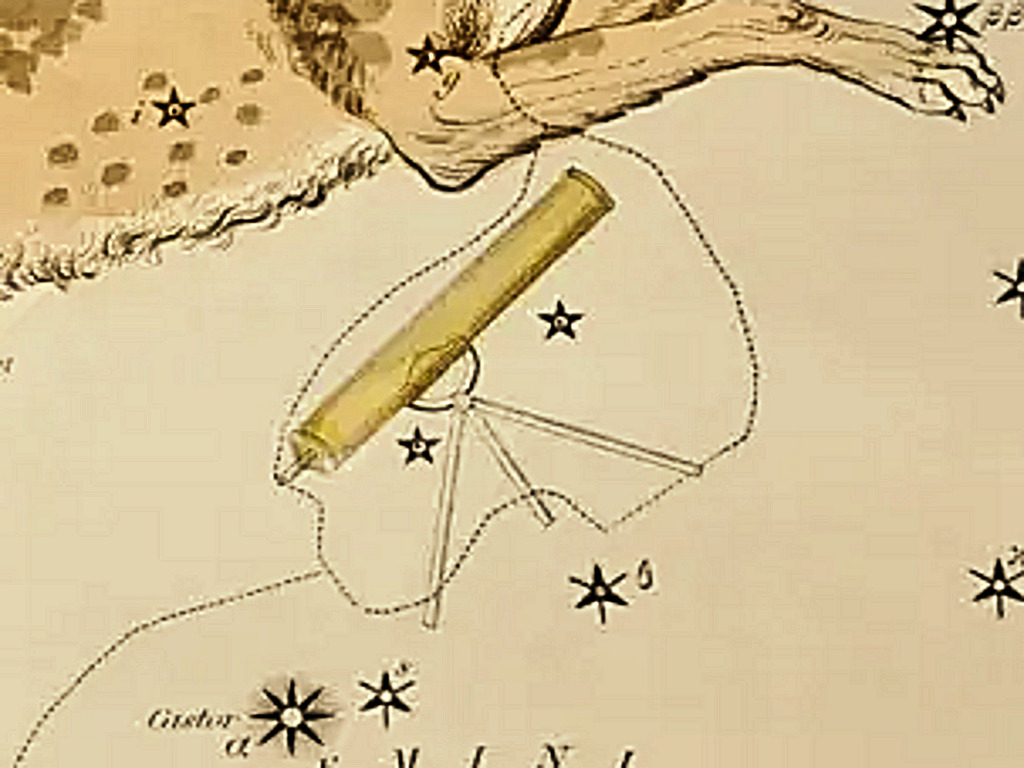
Telescopium constellation map courtesy of Openverse
Telescopium, “The Telescope” – The Telescopium constellation is located in the southern hemisphere, and symbolizes “the telescope.” Telescopium is positioned south of Sagittarius and Corona Australis. As its name suggests, Telescopium symbolizes the telescope. This constellation was established by the French astronomer Nicolas Louis de Lacaille during the 18th century. Lacaille chose the name in tribute to a specific type of telescope, acknowledging its invention. Telescopium is considered a relatively dim constellation, lacking any stars that exceed fourth magnitude in brightness. Additionally, it features a limited number of significant deep sky objects. Within its boundaries lies the Telescopium Group, which comprises approximately 12 galaxies, as well as the quartet of interacting galaxies known as NGC 6845 (Klemola 30).

Galaxy NGC 6861, variant courtesy of Openverse
Key points regarding Telescopium:
- Meaning: The term “Telescopium” translates to “The Telescope” in Latin. Telescopium is part of the Lacaille family of constellations, which includes Antlia, Caelum, Circinus, Fornax, Horologium, Mensa, Microscopium, Norma, Octans, Pictor, Reticulum, and Sculptor. This constellation lacks any stars that have confirmed planets, and it does not feature any Messier objects. The most luminous star in Telescopium is Alpha Telescopii, which has an apparent magnitude of 3.49. Additionally, there are no meteor showers linked to this constellation. Furthermore, Telescopium does not have any stars that are formally named.
- Notable stars: Alpha Telescopii is the brightest star in the Telescopium constellation, classified as a blue-white subgiant (B3 IV), with an apparent magnitude of 3.51 and located about 278 light years away. It is five times the Sun’s mass and is 800 times more luminous. Zeta Telescopii, a yellow giant (G class), is the second brightest with a visual magnitude of 4.10, around 127 light years away. Epsilon Telescopii is a binary system with a primary orange giant (K0III) and is about 420 light years distant. Lambda Telescopii is a white main sequence dwarf (A0V), 531 light years away, while Iota Telescopii is an orange giant (K0III) at 398 light years. Delta Telescopii consists of two stars, Delta-1 and Delta-2, separated in the sky. Xi Telescopii, a red giant (M1IIab), is 1,250 light years away. Other stars include Eta, Rho, Kappa, Nu, Mu Telescopii, and HIP 92367, each with unique characteristics and distances from Earth.
- Other features: NGC 6850 is a spiral galaxy in the constellation Telescopium, discovered by John Herschel in June 1836, with an apparent magnitude of 12.6. IC 4699 is a planetary nebula near Alpha Telescopii, visible in a 200 mm telescope, with an apparent magnitude of 13. NGC 6584 is a globular cluster about 44,000 light years from Earth, with an apparent magnitude of 7.9. The Telescopium Group contains 12 galaxies, about 120 million light years away, with NGC 6868 and NGC 6861 as its brightest galaxies. NGC 6861, a lenticular galaxy with an apparent magnitude of 11, interacts with NGC 6868, a giant elliptical galaxy with an apparent magnitude of 10.6.
- Mythology: Telescopium is a constellation created by French astronomer Nicolas Louis de Lacaille in 1751-1752 while mapping the southern skies in South Africa. It symbolizes an aerial telescope used by J. D. Cassini. Lacaille’s original definition included more stars and extended between Sagittarius and Scorpius, but its boundaries were later fixed by Eugène Delporte in 1930. Today, Telescopium is located south of Sagittarius and Corona Australis. Some stars were renamed, such as Beta Telescopii becoming Eta Sagittarii, Gamma Telescopii turning into G Scorpii, and Theta Telescopii moving to Ophiuchus as 45 Ophiuchi. The name Tubus Astronomicus is now outdated.
- Visibility: Telescopium is the 57th largest constellation, covering 252 square degrees. It is situated in the fourth quadrant of the southern hemisphere (SQ4) and is observable at latitudes ranging from +40° to -90°. The constellations that border it include Ara, Corona Australis, Indus, Microscopium, Pavo, and Sagittarius. The name of the constellation, Telescopium, is pronounced /ˌtɛlɪˈskɒpiəm/. In English, it is referred to as the Telescope. The genitive form of Telescopium, which is utilized in the naming of stars, is Telescopii (pronunciation: /ˌtɛlɪˈskɒpiaɪ/). The three-letter abbreviation, which was officially adopted by the International Astronomical Union (IAU) in 1922, is Tel.
⁺‧₊☽◯☾₊‧⁺⋆⁺‧₊☽◯☾₊‧⁺⋆⁺‧₊☽◯☾₊‧⁺⋆⁺‧₊☽◯☾₊‧⁺⋆⁺‧₊☽◯☾₊‧⁺⋆⁺‧₊☽◯☾₊‧⁺⋆
Constellations:
| Constellations by Month | ||
| JANUARY [8] | FEBRUARY [7] | MARCH [7] |
| Taurus | Camelopardalis | Ursa Major |
| Orion | Auriga | Cancer |
| Lepus | Gemini | Canis Minor |
| Caelum | Monoceros | Pyxis |
| Reticulum | Canis Major | Vela |
| Dorado | Columba | Carina |
| Pictor | Puppis | Volans |
| Mensa | ||
| APRIL [8] | MAY [7] | JUNE [6] |
| Ursa Major | Canes Venatici | Ursa Minor |
| Leo Minor | Coma Berenices | Boötes |
| Leo | Virgo | Libra |
| Sextans | Corvus | Lupus |
| Crater | Centaurus | Circinus |
| Hydra | Crux | Apus |
| Antlia | Musca | |
| Chamaeleon | ||
| JULY [9] | AUGUST [9] | SEPTEMBER [6] |
| Draco | Lyra | Cygnus |
| Corona Borealis | Vulpecula | Delphinus |
| Hercules | Sagitta | Equuleus |
| Serpens | Aquila | Capricornus |
| Ophiuchus | Scutum | Microscopium |
| Scorpius | Sagittarius | Indus |
| Norma | Corona Australis | |
| Ara | Telescopium | |
| Triangulum Australe | Pavo | |
| OCTOBER [7] | NOVEMBER [8] | DECEMBER [6] |
| Cepheus | Cassiopeia | Perseus |
| Lacerta | Andromeda | Triangulum |
| Pegasus | Pisces | Aries |
| Aquarius | Cetus | Eridanus |
| Piscis Austrinus | Sculptor | Fornax |
| Grus | Phoenix | Horologium |
| Octans | Tucana | |
| Hydrus | ||
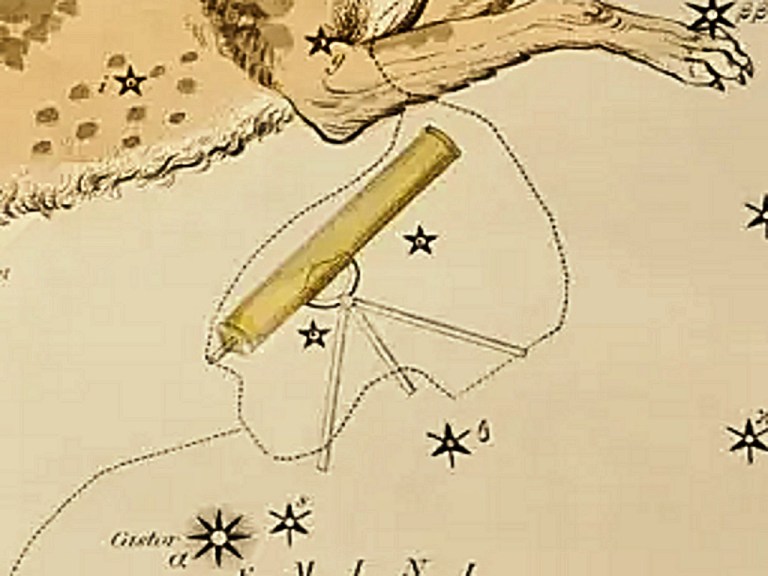
Sidney Hall’s (1831) astronomical chart illustration of Lynx and the Telescopium Herschilii. Original from Library of Congress. Digitally enhanced by rawpixel. courtesy of Openverse
Constellations of the Month:
August – Telescopium
Material may be shared for personal and educational use, Share with family and friends. The material cannot be used in an educational setting whereby a “book fee” is charged in or above tuition costs, and the material here is being used without paying a licensing fee.. AI must file an application for use of such material.
| You May Also Like. . . | |
 NASA 1997 Liftoff Special |
 NASA Mission Patch Party |
More on Versatileer:
![1650260274432.png]()
Featured Photo: The Magic of Easter Sunday! – Bunnies on Waverly Avenue’s End, Midlothian
04/17/2022![Featured Photo: The Everglades from The Bee Line – Florida]()
Featured Photo: The Everglades from The Bee Line – Florida
08/24/2020![Ends 01-29 – Teacher Tuesday - January 23rd]()
Ends 01-29 – Teacher Tuesday - January 23rd
01/23/2024![SMGurusNetwork-MothersDayGiftGuide2022-ImageLARGE.jpg]()
2022 Mother's Day Gift Guide – 04-01 to 05-08
03/23/2022![20240705_09_00__two_pac_2d0__Aletta.jpg]()
From the Satellite...Pacific Tropical Storm Aletta on .GIPHY & Video + 2024 Season Info
07/27/2024