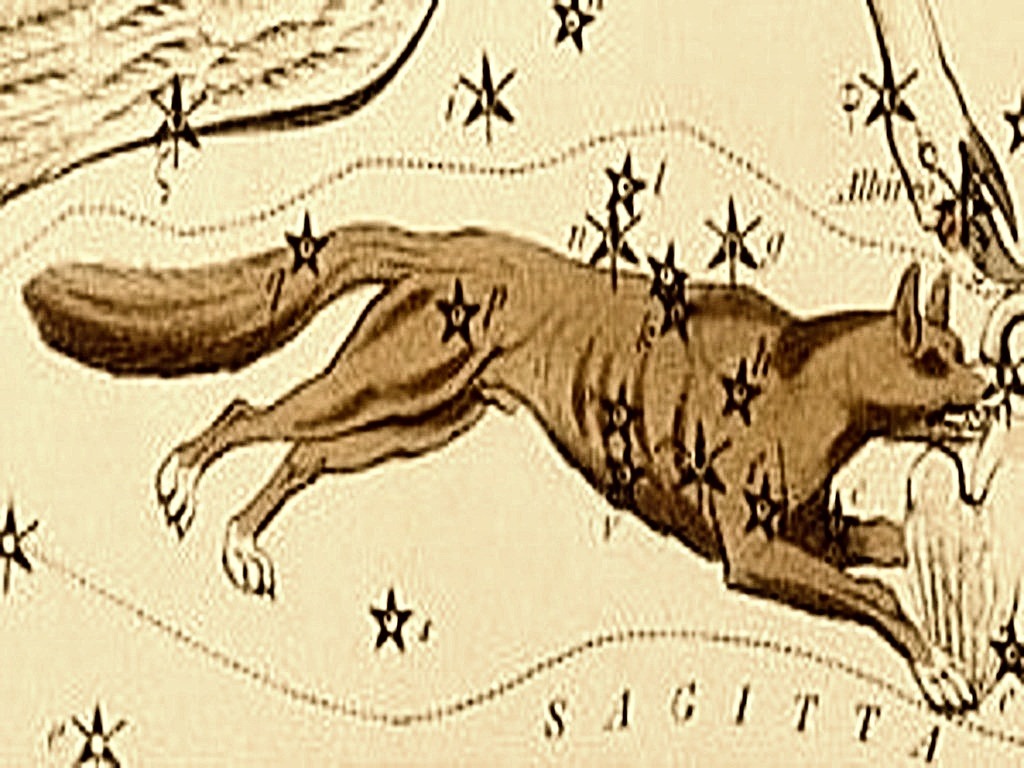
Constellations of the Month: August – Vulpecula:
We continue August with the next constellation of the month, Vulpecula, “The Little Fox.”
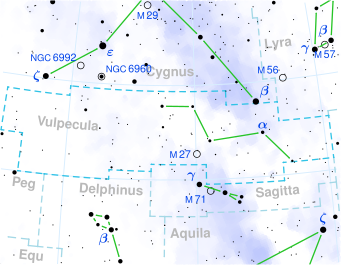
Vulpecula constellation map courtesy of Openverse
Vulpecula, “The Little Fox” – The Vulpecula constellation is located in the northern hemisphere, and symbolizes “the little fox.” Vulpecula is a faint constellation with no stars brighter than fourth magnitude. It is located in the center of the Summer Triangle, formed by the stars Vega, Altair, and Deneb. Polish astronomer Johannes Hevelius introduced Vulpecula in the late 17th century, originally calling it Vulpecula cum ansere, meaning “the little fox with the goose. ” Over time, the constellation was refined, and the name Anser was retained for its brightest star. The Coathanger, also known as Brocchi’s Cluster, is a nearby asterism made up of unrelated stars.
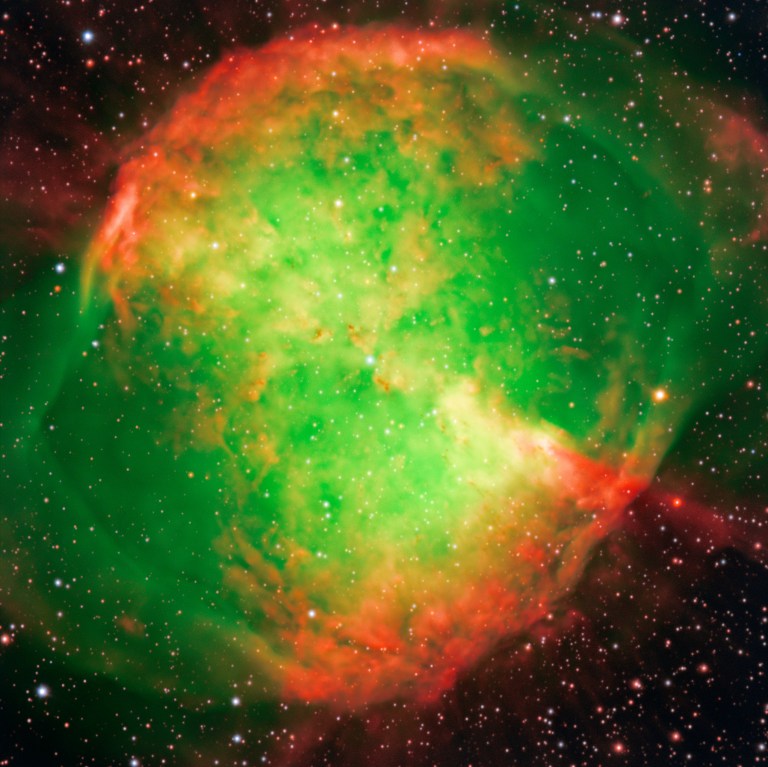
M27 – Dumbbell Nebula courtesy of Openverse
Key points regarding Vulpecula:
- Meaning: The term “Vulpecula” translates to “The Little Fox” in Latin. The constellation Vulpecula comprises a single Messier object – Messier 27 (M27, NGC 6853, also known as the Dumbbell Nebula) – and features four stars that have confirmed planets. The constellation’s brightest star is Anser, designated Alpha Vulpeculae, which has an apparent magnitude of 4.44. There are no meteor showers linked to this constellation. Among the notable deep sky objects in Vulpecula are the renowned Dumbbell Nebula (Messier 27), recognized as the first planetary nebula discovered, the elliptical galaxy NGC 7052, and Brocchi’s Cluster. Additionally, this constellation is the location of the first pulsar ever identified, PSR B1919+21, which was first detected by Jocelyn Bell Burnell and Antony Hewish in 1967. Vulpecula is home to one officially named star. The name of this star, approved by the International Astronomical Union (IAU), is Anser.
- Notable stars: Anser is a red giant star classified as M0III, with an apparent magnitude of 4.44, located about 297 light years from the Sun. It is the brightest star in the constellation Vulpecula, sometimes called Lucida Anseris or Lukida. Anser forms a wide optical binary with 8 Vulpeculae, an orange giant star that is about 484 light years away and has an apparent magnitude of 5.81. The second brightest star in Vulpecula is 23 Vulpeculae, with a magnitude of 4.52, located 328 light years away. It is classified as K3III and is part of a binary system. The third brightest star is 31 Vulpeculae, a variable star with a magnitude of 4.59, situated 216.57 light years from the Sun. HD 189733 is a binary star system located near the Dumbbell Nebula. Its primary star is a cool orange dwarf, and it has an orbital period of roughly 3,200 years. HD 189733 b, an extrasolar planet, orbits this star and was the first to be discovered with carbon dioxide in its atmosphere.
- Other features: The Dumbbell Nebula, also known as Messier 27 or the Apple Core Nebula, is a notable planetary nebula formed when a dying star expelled its gas. Discovered by Charles Messier in 1764, it has an apparent magnitude of 7.5 and is about 1,360 light years away, making it visible with binoculars and amateur telescopes. NGC 7052 is an elliptical galaxy located 191 million light years away, recognized as a radio source with a dust disk formed from a past galaxy collision. NGC 6820 is an emission nebula surrounding the cluster NGC 6823, containing many young stars and located around 6,000 light years from Earth. NGC 6885 is an open star cluster, visible without binoculars, located about 1,950 light years away, known by names linked to different astronomers over the centuries.
- Mythology: The Vulpecula constellation is not named after any mythological figure. It was first introduced by Johannes Hevelius in 1687. Hevelius positioned it adjacent to two other constellations that also depict hunting animals: the eagle (Aquila) and the vulture (which was previously associated with the constellation Lyra). Hevelius described Vulpecula et Anser, or the little fox with the goose, as symbolizing a fox transporting a goose to Cerberus, the canine guardian of the Underworld in Greek mythology. Hevelius also created the Cerberus constellation, which has since become obsolete. Vulpecula and Anser were subsequently divided into two separate constellations, the Fox and the Goose, but were later combined again under the name Vulpecula. The brightest star within this constellation, Alpha Vulpeculae, is named Anser and currently represents the Goose.
- Visibility: Vulpecula is the 55th largest constellation, covering 268 square degrees. It is situated in the fourth quadrant of the northern hemisphere (NQ4) and is visible at latitudes ranging from +90° to -55°. The constellations that border it include Cygnus, Delphinus, Hercules, Lyra, Pegasus, and Sagitta. Vulpecula, pronounced /vʌlˈpɛkjʊlə/, means “the Fox” in English. It is bordered by the constellations Cygnus, Delphinus, Hercules, Lyra, Pegasus, and Sagitta. The genitive form is Vulpeculae and the IAU abbreviation is Vul. It is part of the Hercules family of constellations. Vulpecula has one Messier object (M27, Dumbbell Nebula) and contains four stars with known planets. The brightest star is Anser, with an apparent magnitude of 4.44. There are no associated meteor showers.
⁺‧₊☽◯☾₊‧⁺⋆⁺‧₊☽◯☾₊‧⁺⋆⁺‧₊☽◯☾₊‧⁺⋆⁺‧₊☽◯☾₊‧⁺⋆⁺‧₊☽◯☾₊‧⁺⋆⁺‧₊☽◯☾₊‧⁺⋆
Constellations:
| Constellations by Month | ||
| JANUARY [8] | FEBRUARY [7] | MARCH [7] |
| Taurus | Camelopardalis | Ursa Major |
| Orion | Auriga | Cancer |
| Lepus | Gemini | Canis Minor |
| Caelum | Monoceros | Pyxis |
| Reticulum | Canis Major | Vela |
| Dorado | Columba | Carina |
| Pictor | Puppis | Volans |
| Mensa | ||
| APRIL [8] | MAY [7] | JUNE [6] |
| Ursa Major | Canes Venatici | Ursa Minor |
| Leo Minor | Coma Berenices | Boötes |
| Leo | Virgo | Libra |
| Sextans | Corvus | Lupus |
| Crater | Centaurus | Circinus |
| Hydra | Crux | Apus |
| Antlia | Musca | |
| Chamaeleon | ||
| JULY [9] | AUGUST [9] | SEPTEMBER [6] |
| Draco | Lyra | Cygnus |
| Corona Borealis | Vulpecula | Delphinus |
| Hercules | Sagitta | Equuleus |
| Serpens | Aquila | Capricornus |
| Ophiuchus | Scutum | Microscopium |
| Scorpius | Sagittarius | Indus |
| Norma | Corona Australis | |
| Ara | Telescopium | |
| Triangulum Australe | Pavo | |
| OCTOBER [7] | NOVEMBER [8] | DECEMBER [6] |
| Cepheus | Cassiopeia | Perseus |
| Lacerta | Andromeda | Triangulum |
| Pegasus | Pisces | Aries |
| Aquarius | Cetus | Eridanus |
| Piscis Austrinus | Sculptor | Fornax |
| Grus | Phoenix | Horologium |
| Octans | Tucana | |
| Hydrus | ||
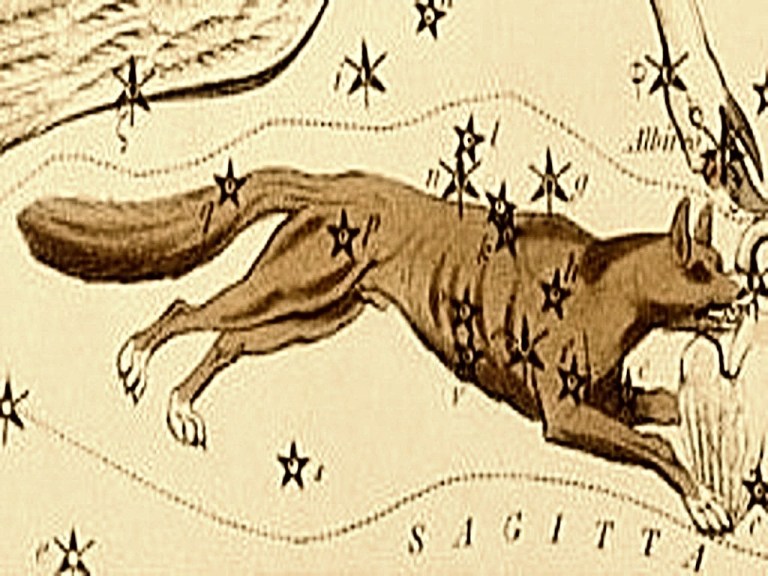
Sidney Hall’s (1831) astronomical chart illustration of Vulpecula and Anser. Original from Library of Congress. Digitally enhanced by rawpixel. courtesy of Openverse
Constellations of the Month:
August – Vulpecula
Material may be shared for personal and educational use, Share with family and friends. The material cannot be used in an educational setting whereby a “book fee” is charged in or above tuition costs, and the material here is being used without paying a licensing fee.. AI must file an application for use of such material.
| You May Also Like. . . | |
 NASA 1997 Liftoff Special |
 NASA Mission Patch Party |
More on Versatileer:
![assorted pile of cheese.jpg]()
Happy National Cheese Day – 2024
06/05/2024![Lost and Stolen Gods__11 2.png]()
Ends 04-16 – Lost and Stolen Gods by Debbie Cassidy Book Blitz + $15 Amazon Gift Card Giveaway
04/06/2025![wp-17455588500308652780766849008483.jpg]()
Featured Photo: Flower Bouquet Photo of the Day – The 4th Week of April '25
04/30/2025![Christmas '24.jpg]()
My Christmas Card – 2024: Merry Christmas!
12/24/2024![pink-doughnut-with-colorful-sprinkles-intilt-shift-lens-3784440 donut_1699151104.jpeg Alexander Grey at Pexels]()
Happy Second National Donut Day! – 2023
11/05/2023






























So many wonders in the night sky! Time to buy a telescope.