
Constellations of the Month: May – Crux:
We continue May with the next constellation of the month, Crux, “Southern Cross.”
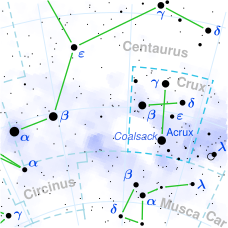
Crux constellation map courtesy of Openverse
Crux, “Southern Cross” – Crux is a constellation located in the southern hemisphere, and symbolizes a “southern cross” in Latin. Crux is a well-known constellation in the southern sky and is the smallest of the 88 constellations. It is easily recognized by its cross shape made up of five bright stars. Crux is important in various southern hemisphere mythologies and is especially significant in Australia and New Zealand, where it can be seen all year round. It is not visible north of +20° and never sets below the horizon south of 34°S. Crux lies opposite Cassiopeia on the celestial sphere.
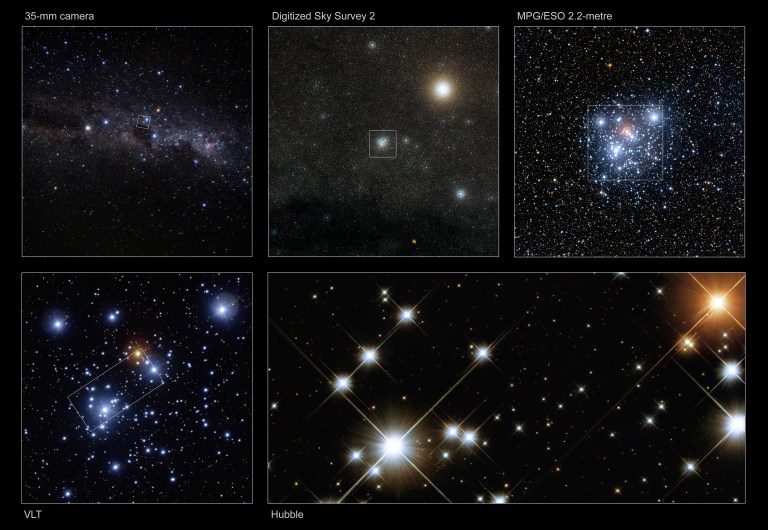
Putting the Jewel Box in perspective (composite image) courtesy of Openverse
Key points regarding Crux:
- Meaning: The term “Crux” translates to “Southern Cross” in Latin. The Ancient Greeks regarded he constellation Crux as a component of the Centaurus constellation. Although its stars were depicted on numerous celestial globes, it was not until 1679 that it was recognized as a distinct constellation. The French astronomer Augustin Royer is credited with the formal separation of Crux from Centaurus. Some historians attribute the creation of the constellation to the Dutch astronomer Petrus Plancius in 1613, as it was published by Jakob Bartsch in 1624. Crux features a single star with known planets and does not include any Messier objects. The constellation’s brightest star is Acrux, also known as Alpha Crucis, which has an apparent magnitude of 0.77. Acrux ranks as the 12th brightest star in the night sky. Additionally, there is one meteor shower linked to this constellation, known as the Crucids. Crux is home to six named stars. The official names of these stars, as recognized by the International Astronomical Union (IAU), include Acrux, Gacrux, Ginan, Imai, Mimosa, and Tupã.
- Notable stars: Acrux, or Alpha Crucis, is the brightest star in the Southern Cross constellation and the 12th brightest star in the night sky. It is about 320 light years away, has an apparent magnitude of 0.77, and cannot be seen north of latitude 27°N. Acrux consists of multiple stars, including a B class subgiant and a B class dwarf, which are very hot and have high luminosities. It holds cultural significance in the southern hemisphere, appearing on the flags of several countries. Beta Crucis, the second brightest star in the Southern Cross, is approximately 350 light years away and has an apparent magnitude of 1.30. It is classified as a Beta Cephei variable and is thought to be the hottest first magnitude star. Gamma Crucis, or Gacrux, is a red giant that is the third brightest star in Crux, while Delta Crucis is a B class subgiant about 360 light years distant. Other stars in the constellation include Epsilon Crucis, Zeta Crucis, and Theta and Lambda Crucis, each with different characteristics and distances. Iota Crucis is an orange giant, and BZ Crucis is a Be star with emission lines in its spectrum. NGC 4349-127 is a distant red giant with a companion star.
- Other features: The Coalsack Nebula is a well-known dark nebula in the southern Milky Way, visible as a large dark patch. It covers nearly seven by five degrees of the sky and is about 600 light years away from Earth, with a radius of 30 to 35 light years. The nebula was recognized in pre-historic times and was observed by Vicente Yáñez Pinzón in 1499. Amerigo Vespucci named it “il Canopo fosco,” meaning “the dark Canopus. ” In Aboriginal astronomy, it represents the head of the Emu, linked to local creation myths. The Kappa Crucis Cluster, or Jewel Box, is a young open star cluster in Crux, around 14 million years old. It has a visual magnitude of 4.2 and contains about a hundred stars, located approximately 6,440 light years away. The cluster was discovered by Nicolas Louis de Lacaille in 1751-1752. To the naked eye, it appears as a star near Beta Crucis. Its brightest stars are supergiants, including Kappa Crucis, a red supergiant with a visual magnitude of 5.98, contrasting with the mostly blue stars in the cluster. Kappa Crucis is about 1,700 light years distant and has an absolute magnitude of -6.0.
- Mythology: Crux is a well-known constellation in various cultures. The ancient Greeks saw it as part of Centaurus and associated its fading from the sky with Christ’s crucifixion. Ptolemy listed Crux in the 2nd century, but by 400 AD, it was no longer visible from most of Europe, only being rediscovered during the naval expeditions of the late 15th and early 16th centuries. In the southern hemisphere, the Southern Cross has great cultural meaning. In Machu Picchu, a stone image of Crux was found; the Inca called it Chakana, and the Maori referred to it as Te Punga. In Australia, it symbolizes the head of the Emu in the Sky and appears on the Australian flag. It is also featured on Brazil’s flag and mentioned in its national anthem. Amerigo Vespucci charted the stars in 1501, with a more accurate depiction by Andrea Corsali in 1515. Crux later appeared on celestial globes by Plancius and Hondius.
- Visibility: Crux is the 88th largest constellation (smallest), covering only 68 square degrees, located in the southern hemisphere and visible between latitudes +20° and -90°. It is adjacent to Centaurus and Musca. Known as the Southern Cross in English, its genitive form is Crucis. The International Astronomical Union (IAU) adopted the three-letter abbreviation Cru in 1922. Crux is part of the Hercules family of constellations.
⁺‧₊☽◯☾₊‧⁺⋆⁺‧₊☽◯☾₊‧⁺⋆⁺‧₊☽◯☾₊‧⁺⋆⁺‧₊☽◯☾₊‧⁺⋆⁺‧₊☽◯☾₊‧⁺⋆⁺‧₊☽◯☾₊‧⁺⋆
Constellations:
| Constellations by Month | ||
| JANUARY [8] | FEBRUARY [7] | MARCH [7] |
| Taurus | Camelopardalis | Ursa Major |
| Orion | Auriga | Cancer |
| Lepus | Gemini | Canis Minor |
| Caelum | Monoceros | Pyxis |
| Reticulum | Canis Major | Vela |
| Dorado | Columba | Carina |
| Pictor | Puppis | Volans |
| Mensa | ||
| APRIL [8] | MAY [7] | JUNE [6] |
| Ursa Major | Canes Venatici | Ursa Minor |
| Leo Minor | Coma Berenices | Boötes |
| Leo | Virgo | Libra |
| Sextans | Corvus | Lupus |
| Crater | Centaurus | Circinus |
| Hydra | Crux | Apus |
| Antlia | Musca | |
| Chamaeleon | ||
| JULY [9] | AUGUST [9] | SEPTEMBER [6] |
| Draco | Lyra | Cygnus |
| Corona Borealis | Vulpecula | Delphinus |
| Hercules | Sagitta | Equuleus |
| Serpens | Aquila | Capricornus |
| Ophiuchus | Scutum | Microscopium |
| Scorpius | Sagittarius | Indus |
| Norma | Corona Australis | |
| Ara | Telescopium | |
| Triangulum Australe | Pavo | |
| OCTOBER [7] | NOVEMBER [8] | DECEMBER [6] |
| Cepheus | Cassiopeia | Perseus |
| Lacerta | Andromeda | Triangulum |
| Pegasus | Pisces | Aries |
| Aquarius | Cetus | Eridanus |
| Piscis Austrinus | Sculptor | Fornax |
| Grus | Phoenix | Horologium |
| Octans | Tucana | |
| Hydrus | ||
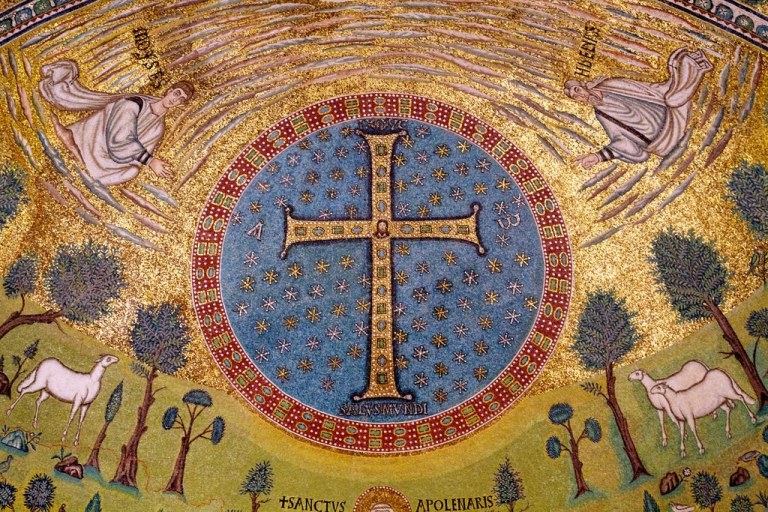
Crux gemmata courtesy of Openverse
Constellations of the Month:
May – Crux
Material may be shared for personal and educational use, Share with family and friends. The material cannot be used in an educational setting whereby a “book fee” is charged in or above tuition costs, and the material here is being used without paying a licensing fee.. AI must file an application for use of such material.
| You May Also Like. . . | |
 NASA 1997 Liftoff Special |
 NASA Mission Patch Party |
More on Versatileer:
![spacious-bathroom-interior-with-shower-cabin-and-shiny-tiled-walls-6585765 pexels-photo-6585765.jpeg Photo by Max Rahubovskiy on Pexels.com]()
National Tile Day – 2024 + Tile Projects, Design & Resources
02/23/2024![Screen of Apps.jpg]()
National App Day – 2024 + History of Apps
12/11/2024![Category 4 Hurricane Ian – Recap + Video Segment.jpg]()
Category 4 Hurricane Ian – Recap + Video Segment
10/10/2022![Can’t Hurry Christmas__2.jpg]()
Ends 11-19 – Can’t Hurry Christmas by Melissa Baldwin Book Blitz + $25 Amazon Gift Card Giveaway
11/12/2025![Happy Easter!!]()
Happy Easter!!
04/21/2019



























Thank you for sharing