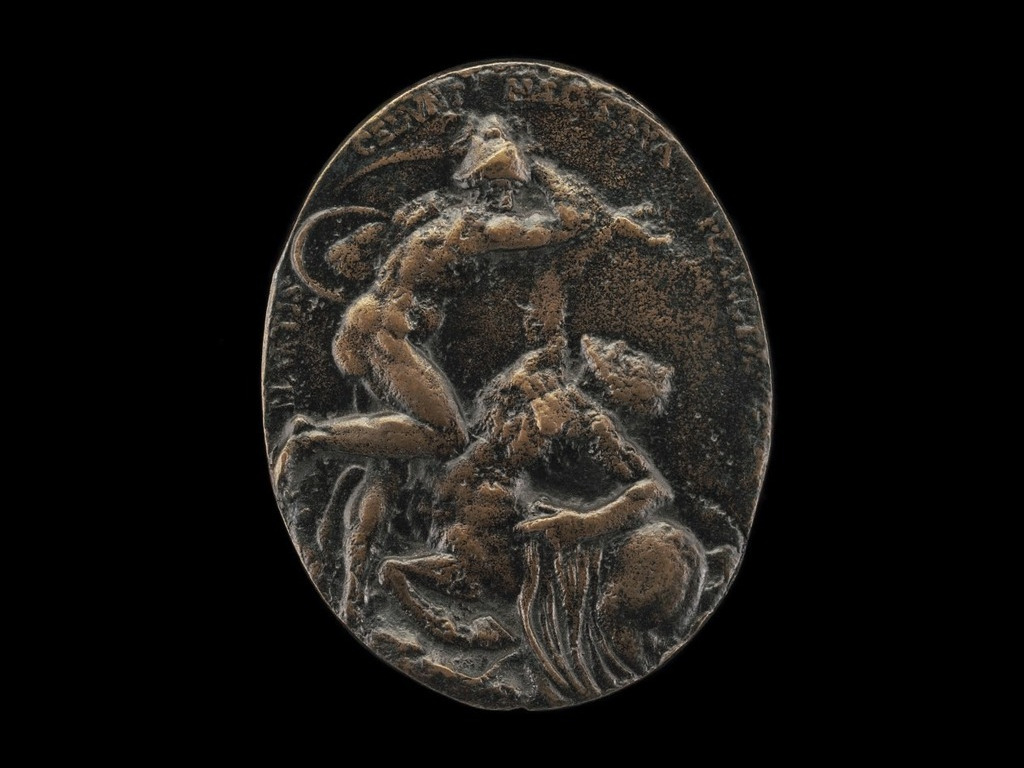
Constellations of the Month: May – Centaurus:
We continue May with the next constellation of the month, Centaurus, “The Centaur.”
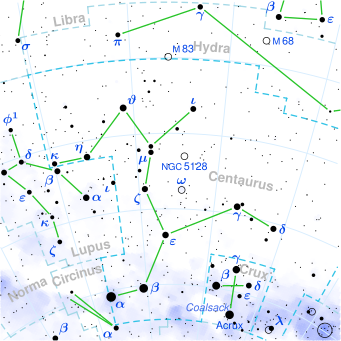
Centaurus constellation map courtesy of Openverse
Centaurus, “The Centaur” – Centaurus is a constellation located in the southern hemisphere, and symbolizes a “centaur” in Latin. Centaurus was catalogued by the Greek astronomer Ptolemy in the 2nd century, though earlier references were made by Eudoxus and Aratus. It is one of the largest constellations, depicting a centaur from Greek mythology, often identified as Chiron. Centaurus has two of the ten brightest stars, the closest star to the Sun being Alpha Centauri; and Beta Centauri. Centaurus also includes the white dwarf BPM 37093, also known as Lucy or the Diamond Star.
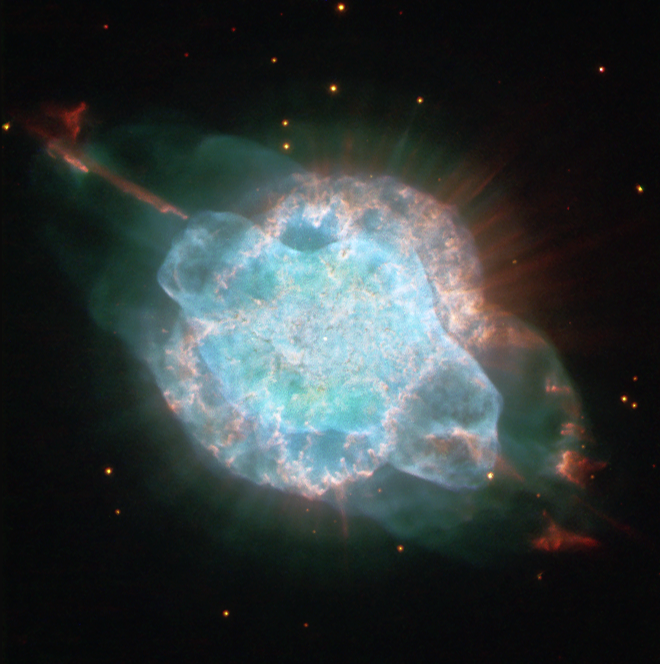
NGC 3918 ‘The Southerner’ (10207557744) courtesy of Openverse
Key points regarding Centaurus:
- Meaning: The term “Centaurus” translates to “The Centaur” in Latin. The constellation Centaurus has 11 stars with known planets and no Messier objects. The brightest star is Alpha Centauri, the 3rd brightest star in the sky. Beta Centauri is the 2nd brightest in Centaurus and the 11th brightest overall. There are three meteor showers linked to this constellation: Alpha Centaurids, Omicron Centaurids, and Theta Centaurids. Centaurus has 12 named stars officially approved by the International Astronomical Union (IAU). It also contains significant deep sky objects like Centaurus A, Omega Centauri, the Running Chicken Nebula, the Blue Planetary Nebula, the Boomerang Nebula, and the Southern Crab Nebula.
- Notable stars: Alpha Centauri is the closest system to Earth, located 4.365 light years away, with a brightness level of -0.27. The main star, Alpha Centauri A, is yellow-white and slightly more massive than the Sun, with a brightness of -0. 01, making it the fourth brightest star in the night sky. Alpha Centauri B is a slightly smaller star than the Sun, with a brightness of 1.33, ranking 21st in brightness. Both A and B are around 4.85 billion years old, older than the Sun. The third star is Proxima Centauri, a red dwarf star that is linked to the other two and is 2.2° away. Proxima Centauri is the closest star to our solar system at 4.24 light years but has a brightness of 11.05, making it invisible to the naked eye. It was discovered by Robert Innes in 1915 and can have sudden changes in brightness. Alpha Centauri has several traditional names, such as Rigil Kentaurus and Toliman. Beta Centauri is a blue-white giant star located 348. 83 light years away, with a brightness of 0.6, making it the tenth brightest star. It is a binary star, and at least one of its stars changes brightness. Menkent is an orange giant star about 60.9 light years away with a brightness of 2.06. Gamma Centauri is a binary system 130 light years away, with each star at a brightness of 2.9. Epsilon Centauri is a blue-white giant, approximately 380 light years away, and varies in brightness. Eta Centauri is a young hot dwarf star, 30 light years away, with a brightness of 2.33. Zeta Centauri is a binary star, 382 light years away, with a brightness of 2. 55. Delta Centauri is a Be star, about 395 light years away, fluctuating in brightness. Nu Centauri is a blue-white subgiant about 475 light years away, with a brightness of 3. 1. Kappa Centauri is a binary star roughly 540 light years distant, with a brighter star of brightness 3.13. BPM 37093 is a white dwarf located about 53 light years away, classified as a variable star with a brightness of 14.0.
- Other features: Centaurus A is the 5th brightest galaxy and one of the nearest radio galaxies to Earth, located 10 to 16 million light years away. It may be a lenticular or giant elliptical galaxy with an apparent magnitude of 6.84. A supermassive black hole is believed to be at its center, and it is currently colliding with a spiral galaxy, leading to intense star formation with over 100 star-forming regions noted. A supernova, SN 1986G, was observed here in 1986. Centaurus A is part of the Centaurus A/M83 Group of galaxies, with Messier 83, the Southern Pinwheel Galaxy, being the center of another subgroup. Omega Centauri is a large globular cluster near Centaurus A, about 15,800 light years away, and visible to the naked eye. It contains millions of stars and is thought to have once been the core of a dwarf galaxy absorbed by the Milky Way. NGC 4945 is a bright spiral galaxy in the same group, noted for its energetic Seyfert II nucleus. NGC 4650A is a polar-ring galaxy with an unusual ring structure, while the Blue Planetary nebula, also in the area, is the brightest planetary nebula in the far southern sky. Other significant galaxies include NGC 4622 with leading spiral arms, NGC 5090 and NGC 5091 merging together, NGC 4696 in the Centaurus Cluster, NGC 5253 and NGC 5408 as irregular galaxies, NGC 4603 with Cepheid variable stars, and NGC 5291 featuring interacting galaxies with a star-forming collisional ring.
- Mythology: The constellation Centaurus has ancient origins, traced back to the Babylonians, who referred to it as the Bison-man, depicting it as a four-legged bison with a man’s head or a creature with a human torso and bison legs. The Babylonians linked it to the Sun god Utu (Shamash). In Greek and Roman times, Centaurus became associated with a centaur, a being that is half man, half horse. Ovid suggested it represented Chiron, the wise centaur who taught many heroes. However, others connect Chiron with Sagittarius. Chiron, born from Cronus and the nymph Philyra, became a respected teacher but faced a tragic end when Heracles accidentally struck him with a poisoned arrow. After suffering, Zeus released him from immortality, placing him among the stars. Centaurus is depicted sacrificing an animal to the gods on an altar, with bright stars marking its legs and pointing to the Southern Cross.
- Visibility: Centaurus is the 9th largest constellation, covering 1060 square degrees in the southern hemisphere. It can be seen between latitudes +25° and -90° and is surrounded by the constellations Antlia, Carina, and others. The name Centaurus is pronounced /sɛnˈtɔːrəs/, and it is also called the Centaur in English. The genitive form for star names is Centauri (/sɛnˈtɔːraɪ/), and its abbreviation is Cen. Centaurus is part of the Hercules family of constellations.
⁺‧₊☽◯☾₊‧⁺⋆⁺‧₊☽◯☾₊‧⁺⋆⁺‧₊☽◯☾₊‧⁺⋆⁺‧₊☽◯☾₊‧⁺⋆⁺‧₊☽◯☾₊‧⁺⋆⁺‧₊☽◯☾₊‧⁺⋆
Constellations:
| Constellations by Month | ||
| JANUARY [8] | FEBRUARY [7] | MARCH [7] |
| Taurus | Camelopardalis | Ursa Major |
| Orion | Auriga | Cancer |
| Lepus | Gemini | Canis Minor |
| Caelum | Monoceros | Pyxis |
| Reticulum | Canis Major | Vela |
| Dorado | Columba | Carina |
| Pictor | Puppis | Volans |
| Mensa | ||
| APRIL [8] | MAY [7] | JUNE [6] |
| Ursa Major | Canes Venatici | Ursa Minor |
| Leo Minor | Coma Berenices | Boötes |
| Leo | Virgo | Libra |
| Sextans | Corvus | Lupus |
| Crater | Centaurus | Circinus |
| Hydra | Crux | Apus |
| Antlia | Musca | |
| Chamaeleon | ||
| JULY [9] | AUGUST [9] | SEPTEMBER [6] |
| Draco | Lyra | Cygnus |
| Corona Borealis | Vulpecula | Delphinus |
| Hercules | Sagitta | Equuleus |
| Serpens | Aquila | Capricornus |
| Ophiuchus | Scutum | Microscopium |
| Scorpius | Sagittarius | Indus |
| Norma | Corona Australis | |
| Ara | Telescopium | |
| Triangulum Australe | Pavo | |
| OCTOBER [7] | NOVEMBER [8] | DECEMBER [6] |
| Cepheus | Cassiopeia | Perseus |
| Lacerta | Andromeda | Triangulum |
| Pegasus | Pisces | Aries |
| Aquarius | Cetus | Eridanus |
| Piscis Austrinus | Sculptor | Fornax |
| Grus | Phoenix | Horologium |
| Octans | Tucana | |
| Hydrus | ||
![Mars Battling the Constellation Centaurus [reverse].jpg](https://versatileer.com/wp-content/uploads/2025/05/60f99562-0a9c-480d-a9cb-02ff794b97a3_-768x576.jpg)
Mars Battling the Constellation Centaurus [reverse] courtesy of Openverse
Constellations of the Month:
May – Centaurus
Material may be shared for personal and educational use, Share with family and friends. The material cannot be used in an educational setting whereby a “book fee” is charged in or above tuition costs, and the material here is being used without paying a licensing fee.. AI must file an application for use of such material.
| You May Also Like. . . | |
 NASA 1997 Liftoff Special |
 NASA Mission Patch Party |
More on Versatileer:
![wp-17160693222593475103711332757159.jpg]()
Featured Photo: Flower of the Day – Clematis 'Ville de Lyon'
06/18/2024![31 Days of Halloween 2023.gif]()
The 31 Days of Halloween – All October: Starting October 1st
09/27/2023![wp-17008609185545678794809798553620.jpg]()
Featured Photo: Flower of the Day – The Bada Bing Pink Begonia
11/25/2023![Hurricane & Tropical Safety Starts With Preparedness]()
Hurricane & Tropical Safety Starts With Preparedness
06/22/2021![Scam Alert: Claims of Photo Copyright Violations – Bloggers Beware]()
Scam Alert: Claims of Photo Copyright Violations – Bloggers Beware
05/20/2021





























Thank you for sharing