Constellations of the Month: December – Eridanus:
We continue December with the next constellation of the month, Eridanus, “The Celestial River.”

Eridanus constellation map-bs courtesy of Openverse
Eridanus, “The Celestial River” – The Eridanus constellation is equatorial constellation, lying in both the northern but with most of the stars lying in the southern hemispheres, and symbolizes “the celestial river.” Eridanus is among the largest constellations visible in the sky. This constellation symbolizes the celestial river that flows from Cursa (Beta Eridani) near Rigel in Orion, extending all the way to Achernar (Alpha Eridani) in the distant southern sky. Achernar, the brightest star in this constellation, is recognized as the ninth brightest star in the entire sky. Eridanus is one of the 48 constellations from Greek mythology, initially catalogued by the Greek astronomer Claudius Ptolemy during the 2nd century CE. It is linked to the Greek myth of Phaëton and is typically illustrated as a river that originates from the waters spilled by Aquarius. The name of the constellation was subsequently adopted as a Latin term for the river Po in Italy. In Sanskrit, Eridanus is referred to as srotaswini, which translates to “current” or “course (of a river).” Prominent stars within the constellation include Achernar, one of the sky’s brightest stars, Cursa, a white giant that signifies the footstool of Orion, Acamar, a binary star that denoted the end of the celestial river during Ptolemy’s era, and Epsilon Eridani, one of the closest stars visible to the naked eye, which is known to host a confirmed exoplanet. Eridanus hosts a variety of fascinating deep-sky objects, including the CMB Cold Spot (Eridanus Supervoid), which may be the largest void identified, the Eridanus Group of galaxies, and the Witch Head Nebula, a reflection nebula that is illuminated by the bright star Rigel in the adjacent constellation of Orion.
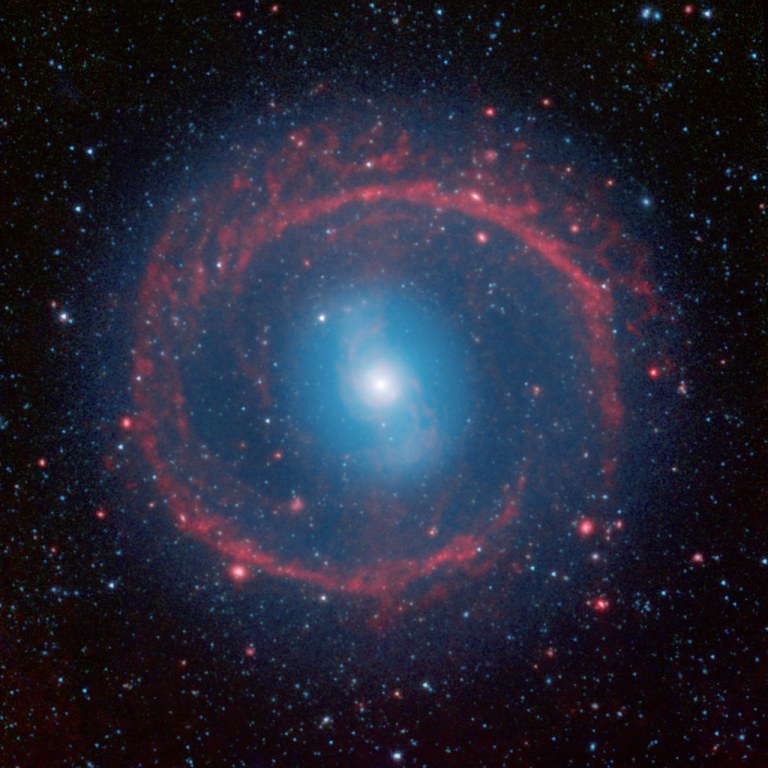
Star Formation Ring courtesy of Openverse
Key points regarding Eridanus:
- Meaning: The term “Eridanus” translates to “The Celestial River” in Greek. The constellation Eridanus is classified as one of the 15 equatorial constellations. It comprises 32 stars that have known planets, but it does not include any Messier objects. The constellation’s most luminous star is Achernar, designated as Alpha Eridani, which has an apparent magnitude that fluctuates between 0.40 and 0.46. Additionally, there are no meteor showers linked to this constellation. Eridanus features 19 stars that have been given names. The names that have received approval from the International Astronomical Union (IAU) include Acamar (Theta1 Eridani), Achernar (Alpha Eridani A), Angetenar (Tau2 Eridani), Ayeyarwady (HD 18742), Azha (Eta Eridani), Beemim (Upsilon³ Eridani), Beid (Omicron¹ Eridani), Chaophraya (WASP-50), Cursa (Beta Eridani), Keid (Omicron Eridani A), Koeia (HIP 12961), Montuno (WASP-79), Mouhoun (HD 30856), Ran (Epsilon Eridani), Rana (Delta Eridani), Sceptrum (53 Eridani A), Theemin (Upsilon² Eridani), Tojil (WASP-22), Zaurak (Gamma Eridani), and Zibal (Zeta Eridani Aa).
- Notable stars: Achernar, the brightest star in the Eridanus constellation, is the ninth brightest star in the night sky. Located about 139 light years from Earth, it has a varying brightness from 0.40 to 0.46 and is known for being the hottest and bluest among the ten brightest stars. Achernar is best viewed in November from the southern hemisphere and never rises above the horizon for locations north of 33° N. It is a blue main sequence star, far more massive than the Sun, and features a companion star in close orbit. Beta Eridani, or Cursa, is the second brightest star in Eridanus, located approximately 89 light years away. With an apparent magnitude of 2.796, it is visible from most inhabited areas. Acamar, or Theta Eridani, is a binary star system, with a primary component more massive and larger than the Sun. Zaurak, or Gamma Eridani, is a red giant star about 203 light years away and is the fourth brightest in the constellation. Delta Eridani, known as Rana, is an orange subgiant star with brightness fluctuations and is located 29.49 light years from Earth. Epsilon Eridani is the 12th closest star to the Sun, located about 10.475 light years away. It is the third nearest star visible without binoculars and has a confirmed exoplanet. Epsilon Eridani has a classification of K2V, is smaller and less massive than the Sun, and has a surface temperature of 5,084 K. The star is variable in brightness due to starspots and has two asteroid belts. It was named Ran in 2015, after the Norse goddess of the sea, and its planet was named Ægir. Tau Eridani refers to nine stars that are not physically related. Tau1 Eridani is a binary system 46 light years away. Angetenar, or Tau2 Eridani, is an evolved giant star located about 187 light years from Earth. Tau3 Eridani is nearing the end of its life and has a mass of 1.78 times that of the Sun. Tau4 Eridani is a binary system with a red giant. Beid (38 Eridani) is a white giant star that varies in brightness and lies 122 light years from Earth. Keid is part of a triple star system called Omicron2 Eridani, located 16.26 light years from the Sun. The system includes an orange dwarf (Keid), a white dwarf, and a red dwarf. Keid has a mass of 0.84 solar masses and shines with 0.457 solar luminosities. A planet was found orbiting Keid, which is not in the habitable zone and has a mass 8.47 times that of Earth. 82 G. Eridani is a yellow star, 19.71 light years away, with a mass of 0.70 solar masses and three super-Earths orbiting it. EF Eridani, found 300 light years from Earth, is a variable binary system comprising a white dwarf and a former star now reduced to 0.05 solar masses.
- Other features: The Witch Head Nebula, a faint reflection nebula in Eridanus, may be a remnant of an ancient supernova or a gas cloud lit by the star Rigel in Orion. It appears in the show Andromeda as a battle site and is about 1,000 light years away with a magnitude of 13. The Eridanus Group consists of around 200 galaxies, mostly spiral and irregular, located about 75 million light years away. Key galaxies include NGC 1407 and NGC 1395. Other galaxies mentioned include NGC 1300, NGC 1084, and NGC 1332, with notable features and discoveries. The Eridanus Supervoid is the largest void in space, about one billion light years wide, raising questions in cosmic theory. Other galaxies discussed include NGC 1427A, NGC 1309, NGC 1291, and NGC 1187, with several having observed supernovae.
- Mythology: In Greek mythology, the constellation Eridanus is linked to the tale of Phaëton, the son of Helios, the Sun god, and Clymene. Phaëton wished to drive his father’s chariot across the sky. After much pleading, Helios allowed him but warned him to stay on the established path. However, Phaëton lost control of the chariot as it rose too high. This caused fires on Earth, turning Libya into a desert and affecting the Ethiopians’ skin color. To stop the chaos, Zeus struck Phaëton with a thunderbolt, and he fell into the river Eridanus, grieving his father who did not drive the chariot for days, plunging the world into darkness. The poet Aratus named the constellation Eridanus, while others like Ptolemy referred to it as Potamos, meaning “the river. ” Eratosthenes connected it to the Nile, the only river that flows south to north. Later, it was identified as the river Po in Italy. Some suggest that the name Eridanus may come from a Babylonian constellation named after a sacred city called Eridu, linked to the god Enki-Ea, associated with a cosmic reservoir of fresh water.
- Visibility: Eridanus is the 6th largest constellation, covering 1138 square degrees. It is situated in the first quadrant of the southern hemisphere (SQ1) and is observable at latitudes ranging from +32° to -90°. The constellations that border it include Caelum, Cetus, Fornax, Horologium, Hydrus, Lepus, Orion, Phoenix, Taurus, and Tucana. The name Eridanus is pronounced /ɪˈrɪdənəs/. In English, this constellation is referred to as the River. The genitive form of Eridanus, which is utilized in the naming of stars, is Eridani (pronunciation: /ɪˈrɪdənaɪ/). The three-letter abbreviation, which was officially adopted by the International Astronomical Union (IAU) in 1922, is Eri. Eridanus is part of the Heavenly Waters family of constellations, which also includes Carina, Columba, Delphinus, Equuleus, Piscis Austrinus, Puppis, Pyxis, and Vela.
⁺‧₊☽◯☾₊‧⁺⋆⁺‧₊☽◯☾₊‧⁺⋆⁺‧₊☽◯☾₊‧⁺⋆⁺‧₊☽◯☾₊‧⁺⋆⁺‧₊☽◯☾₊‧⁺⋆⁺‧₊☽◯☾₊‧⁺⋆
Constellations:
| Constellations by Month | ||
| JANUARY [8] | FEBRUARY [7] | MARCH [7] |
| Taurus | Camelopardalis | Ursa Major |
| Orion | Auriga | Cancer |
| Lepus | Gemini | Canis Minor |
| Caelum | Monoceros | Pyxis |
| Reticulum | Canis Major | Vela |
| Dorado | Columba | Carina |
| Pictor | Puppis | Volans |
| Mensa | ||
| APRIL [8] | MAY [7] | JUNE [6] |
| Ursa Major | Canes Venatici | Ursa Minor |
| Leo Minor | Coma Berenices | Boötes |
| Leo | Virgo | Libra |
| Sextans | Corvus | Lupus |
| Crater | Centaurus | Circinus |
| Hydra | Crux | Apus |
| Antlia | Musca | |
| Chamaeleon | ||
| JULY [9] | AUGUST [9] | SEPTEMBER [6] |
| Draco | Lyra | Cygnus |
| Corona Borealis | Vulpecula | Delphinus |
| Hercules | Sagitta | Equuleus |
| Serpens | Aquila | Capricornus |
| Ophiuchus | Scutum | Microscopium |
| Scorpius | Sagittarius | Indus |
| Norma | Corona Australis | |
| Ara | Telescopium | |
| Corona Australis | Pavo | |
| OCTOBER [7] | NOVEMBER [8] | DECEMBER [6] |
| Cepheus | Cassiopeia | Perseus |
| Lacerta | Andromeda | Triangulum |
| Pegasus | Pisces | Aries |
| Aquarius | Cetus | Eridanus |
| Piscis Austrinus | Sculptor | Fornax |
| Grus | Phoenix | Horologium |
| Octans | Tucana | |
| Hydrus | ||

eridanus courtesy of Openverse
Constellations of the Month:
December – Eridanus
Material may be shared for personal and educational use, Share with family and friends. The material cannot be used in an educational setting whereby a “book fee” is charged in or above tuition costs, and the material here is being used without paying a licensing fee.. AI must file an application for use of such material.
| You May Also Like. . . | |
 NASA 1997 Liftoff Special |
 NASA Mission Patch Party |