Constellations of the Month: July – Serpens:
We continue July with the next constellation of the month, Serpens, “The Serpent.”
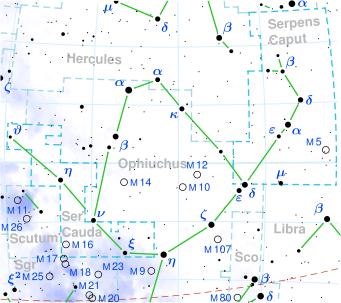
Serpens constellation map courtesy of Openverse
Serpens, “The Serpent” – The Serpens constellation is located in the northern and southern hemispheres because of its long shape, and symbolizes “the serpent.” Serpens was catalogued by the Greek astronomer Ptolemy in the 2nd century and is split into two parts: Serpens Caput (the head) and Serpens Cauda (the tail), divided by the constellation Ophiuchus. It includes the Eagle Nebula, known for the Pillars of Creation, and other notable objects like Messier 5, IC 4703, Seyfert’s Sextet, Hoag’s Object, the Red Square Nebula, and the Serpens South star cluster.
![Messier 16 Narrowband in Hubble palette [Robotic, NM] {Explored}.jpg](https://versatileer.com/wp-content/uploads/2025/07/70647b32-bd97-473c-bcd9-9c1c8308fe50-768x615.jpg)
Messier 16 Narrowband in Hubble palette [Robotic, NM] {Explored} courtesy of Openverse
- Meaning: The term “Serpens” translates to “The Serpent” in Latin. The constellation Serpens has over 15 stars with known planets, including Omega Serpentis, HD 168443, and NN Serpentis, which has two gas giant planets. Other notable stars include HAT-P-45 and HAT-P-46, each hosting two transiting planets, and the pulsar PSR J1719-1438, known for its dense, diamond-like companion. Six named stars in Serpens are recognized by the IAU: Alasia, Alya, Gudja, Kaveh, Unukalhai, and Zhou. Serpens is part of the Hercules family of constellations and contains two Messier objects and two meteor showers, the Omega Serpentids and Sigma Serpentids.
- Notable stars: Alpha Serpentis is the brightest star in the Serpens constellation, located in the serpent’s head, with an apparent magnitude of 2.623 and about 74 light years from the Sun. It is a double star with an orange giant primary and a fainter companion star named Unukalhai, meaning “the serpent’s neck. ” Eta Serpentis, the second brightest star in the constellation, is an orange star found in the serpent’s tail, with a magnitude of 3.260 and about 60.5 light years from Earth. Mu Serpentis is a white dwarf, the third brightest at a magnitude of 3.54, located 156 light years away. Other notable stars include Xi Serpentis, a triple star system, and Beta Serpentis, a multiple star system. Theta Serpentis is a multiple star system with two main components, both luminous A-type dwarfs. R Serpentis is a Mira variable red giant about 900 light years away. Chi Serpentis is a white dwarf with varying brightness. Tau Serpentis consists of multiple stars, with Tau-1 being a red giant. HD 168443 has a confirmed planet and brown dwarf in orbit, while Gliese is an orange dwarf that may trigger comet showers in the future.
- Other features: Messier 5 is a large globular cluster in the Serpens constellation, about 24,500 light years from Earth, containing over 100,000 stars. It was discovered in 1702 and is about 13 billion years old. The Eagle Nebula, found in Serpens, has the Pillars of Creation and was discovered in the mid-1700s. Seyfert’s Sextet is a group of galaxies in Serpens Caput, named after Carl Seyfert. Other notable objects include the Red Square Nebula, Hoag’s Object, and several galaxies such as NGC 6118 and Arp 220, which is an ultraluminous infrared galaxy.
- Mythology: In Greek mythology, the Serpens constellation symbolizes a giant snake held by Asclepius, the healer, who is depicted with the snake in his hands. Asclepius, the son of Apollo, had healing powers and could bring people back to life. He learned to revive a snake using a herb placed on it by another snake. The brightest star in Serpens, Unukalhai, represents the snake’s neck, while Alya marks its tail. This constellation dates back to Babylon, where two snake constellations were recognized, with Bašmu being a horned serpent.
- Visibility: Serpens is the 23rd largest constellation, covering 637 square degrees and is one of 15 equatorial constellations. It consists of two parts: Serpens Caput (the head) in the northern hemisphere and Serpens Cauda (the tail) in the southern hemisphere. The constellation is visible between latitudes +80° and -80°. Bordering Serpens Caput are Boötes, Corona Borealis, Hercules, Libra, Ophiuchus, and Virgo. For Serpens Cauda, the bordering constellations include Aquila, Ophiuchus, Sagittarius, and Scutum. The name Serpens is pronounced /ˈsɜːrpɛnz/, and its brightest star is Alpha Serpentis (Unukalhai), with a magnitude of 2.63. The nearest star is GJ 1224, located 24.60 light years from Earth.
⁺‧₊☽◯☾₊‧⁺⋆⁺‧₊☽◯☾₊‧⁺⋆⁺‧₊☽◯☾₊‧⁺⋆⁺‧₊☽◯☾₊‧⁺⋆⁺‧₊☽◯☾₊‧⁺⋆⁺‧₊☽◯☾₊‧⁺⋆
Constellations:
| Constellations by Month | ||
| JANUARY [8] | FEBRUARY [7] | MARCH [7] |
| Taurus | Camelopardalis | Ursa Major |
| Orion | Auriga | Cancer |
| Lepus | Gemini | Canis Minor |
| Caelum | Monoceros | Pyxis |
| Reticulum | Canis Major | Vela |
| Dorado | Columba | Carina |
| Pictor | Puppis | Volans |
| Mensa | ||
| APRIL [8] | MAY [7] | JUNE [6] |
| Ursa Major | Canes Venatici | Ursa Minor |
| Leo Minor | Coma Berenices | Boötes |
| Leo | Virgo | Libra |
| Sextans | Corvus | Lupus |
| Crater | Centaurus | Circinus |
| Hydra | Crux | Apus |
| Antlia | Musca | |
| Chamaeleon | ||
| JULY [9] | AUGUST [9] | SEPTEMBER [6] |
| Draco | Lyra | Cygnus |
| Corona Borealis | Vulpecula | Delphinus |
| Hercules | Sagitta | Equuleus |
| Serpens | Aquila | Capricornus |
| Ophiuchus | Scutum | Microscopium |
| Scorpius | Sagittarius | Indus |
| Norma | Corona Australis | |
| Ara | Telescopium | |
| Triangulum Australe | Pavo | |
| OCTOBER [7] | NOVEMBER [8] | DECEMBER [6] |
| Cepheus | Cassiopeia | Perseus |
| Lacerta | Andromeda | Triangulum |
| Pegasus | Pisces | Aries |
| Aquarius | Cetus | Eridanus |
| Piscis Austrinus | Sculptor | Fornax |
| Grus | Phoenix | Horologium |
| Octans | Tucana | |
| Hydrus | ||
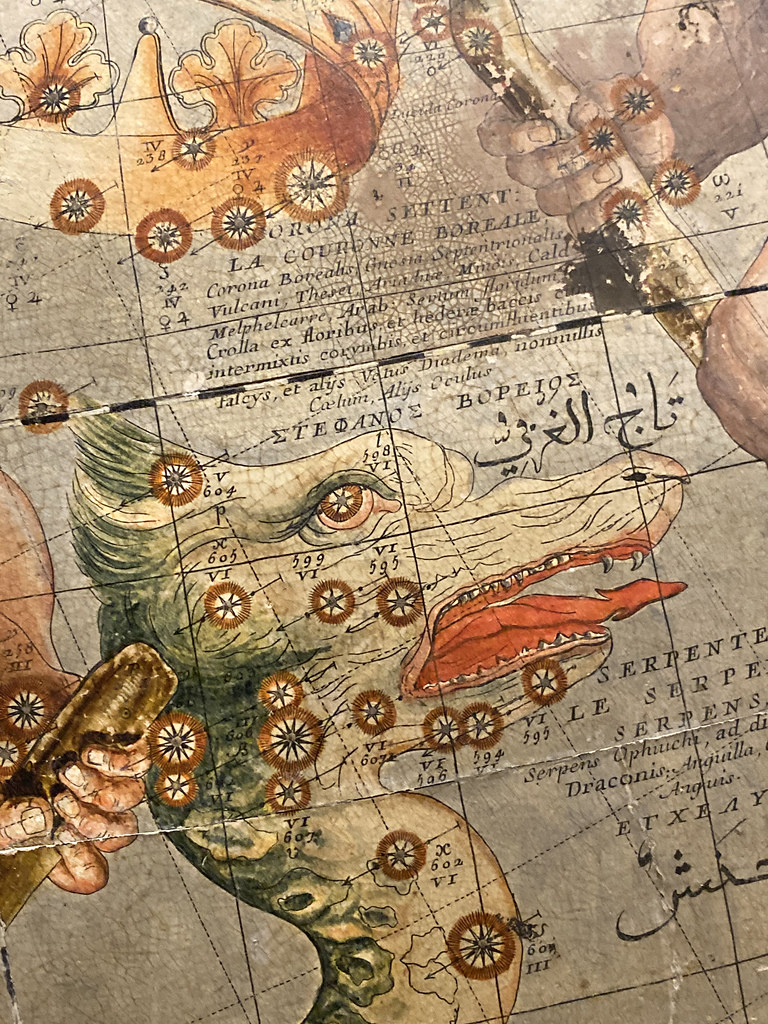
Serpens courtesy of Openverse
Constellations of the Month:
July – Serpens
Material may be shared for personal and educational use, Share with family and friends. The material cannot be used in an educational setting whereby a “book fee” is charged in or above tuition costs, and the material here is being used without paying a licensing fee.. AI must file an application for use of such material.
| You May Also Like. . . | |
 NASA 1997 Liftoff Special |
 NASA Mission Patch Party |
More on Versatileer:
![20211218_211152.jpg]()
Featured Photos: The 25 Days of Christmas – Photo 6 & Bonus Video: Yuletide on Worth Avenue (Christm...
12/30/2021![Disenchanted_Photo Jan 19 2024, 1 37 54 AM.png]()
Ends 02-28 – Disenchanted by Brianna Sugalski Book Blitz + Audiobook Copy Giveaway
02/23/2024![a full moon is seen behind some trees.jpg]()
August Super Sturgeon & Blue Moon + Information on Upcoming Future Full Moons & Names
08/18/2024![wp-17008609185545678794809798553620.jpg]()
Featured Photo: Flower of the Day – The Bada Bing Pink Begonia
11/25/2023![wp-17042644112753384002011428109598.jpg]()
Featured Photo + Video: The 25 Days of Christmas – Day 2: Yuletide on 158th Street's North, Middle S...
12/03/2024