Constellations of the Month: June – Circinus:
We start June with the next constellation of the month, Circinus, “The Compass.”
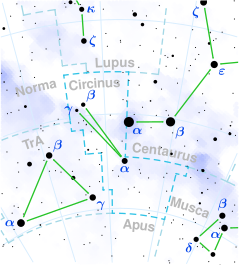
Circinus constellation map courtesy of Openverse
Circinus, “The Compass” – The Circinus constellation symbolizes “the compass.” Circinus “the compass” in Latin, which alludes to the instrument used for drawing circles. The constellation was established and initially catalogued by the French astronomer Nicolas Louis de Lacaille during the 18th century. Lacaille devised this constellation to fill the gap between Triangulum Australe and the stars that denote the forefeet of Centaurus. Circinus encompasses several significant deep sky objects, such as the Circinus Galaxy, the X-ray source Circinus X-1, the pulsar PSR B1509-58, the open clusters NGC 5823 and NGC 5715, as well as the planetary nebula NGC 5315.

NGC 5315 courtesy of Openverse
Key points regarding Circinus:
- Meaning: The term “Circinus” translates to “The Compass” in Latin. The constellation Circinus is located in the southern hemisphere and features a formally designated star, Xami (Alpha Circini). The optimal period for observing the stars and deep sky objects within Circinus is in June, when the constellation is positioned higher in the sky around 9 pm. The brightest star, Alpha Circini (Xami), has a magnitude of 3.19 and is 54 light years away. Circinus does not have bright stars or any within 10 parsecs of Earth. It has two stars with known exoplanets: HD 134060, which has two planets, and HD 129445, with one Jupiter-like planet. Additionally, it is linked to the Alpha Circinids meteor shower, which peaks on June 4.
- Notable stars: The constellation features a formally designated star, Xami (Alpha Circini). The optimal period for observing the stars and deep sky objects within Circinus is in June, when the constellation is positioned higher in the sky around 9 pm. Alpha Circini is the brightest star in its constellation, with a magnitude of 3.19. It is a visual binary star that includes a faint companion and is classified as a rapidly oscillating Ap variable star, located about 53.5 light years from Earth. Beta Circini, the second brightest star, has a magnitude of 4.069 and is a main sequence star of the spectral class A3Va, situated approximately 97 light years away. Gamma Circini is another binary star featuring blue and yellow stars. HD 129445, a G6V star, has a planet named HD 129445 b, confirmed by 17 Doppler velocity tests. It has a magnitude of 8.8 and is 220 light years away.
- Other features: The Circinus Galaxy is a spiral galaxy located about 13 million light years away, known for its gas motions and two internal rings, one of which is involved in star formation. Discovered in 1975, it has an active core powered by a black hole. Circinus X-1 is an X-ray binary star system about 30,700 light years away, made up of a neutron star and a normal star, discovered on June 14, 1969. NGC 5315 is a planetary nebula in Circinus, formed from a dying star shedding its layers, located 5.2 degrees from Alpha Circini. NGC 5823 and NGC 5715 are both open clusters in Circinus, with NGC 5823 being about 800 million years old. Pismis 20 is a smaller open cluster with 12 stars. PSR B1509-58 is a pulsar located 17,000 light years away, known for its energetic nebula named Hand of God, first detected in 1982.
- Mythology: There are no legends linked to Circinus. This constellation derives its name from the drafting instrument utilized for creating circles (as opposed to a sailor’s compass, which is symbolized by the constellation Pyxis). It is illustrated as a set of compasses employed by draftsmen to gauge distances. Lacaille initially designated the constellation as le Compas and situated it adjacent to Triangulum Australe, which he represented as a surveyor’s level, in order to occupy the gap between various established southern constellations.
- Visibility: Circinus is the 46th largest constellation, covering 93 square degrees in the southern hemisphere (4th smallest). It can be viewed at latitudes from +30° to -90°. Neighboring constellations include Apus, Centaurus, and Lupus. The name Circinus means “Compass,” and its genitive form is Circini. The brightest star is Xami (Alpha Circini), with a magnitude of 3.19, located 54 light years away. Circinus has two stars with exoplanets, HD 134060 and HD 129445. It is linked to the Alpha Circinids meteor shower, peaking on June 4, first noted in 1977.
⁺‧₊☽◯☾₊‧⁺⋆⁺‧₊☽◯☾₊‧⁺⋆⁺‧₊☽◯☾₊‧⁺⋆⁺‧₊☽◯☾₊‧⁺⋆⁺‧₊☽◯☾₊‧⁺⋆⁺‧₊☽◯☾₊‧⁺⋆
Constellations:
| Constellations by Month | ||
| JANUARY [8] | FEBRUARY [7] | MARCH [7] |
| Taurus | Camelopardalis | Ursa Major |
| Orion | Auriga | Cancer |
| Lepus | Gemini | Canis Minor |
| Caelum | Monoceros | Pyxis |
| Reticulum | Canis Major | Vela |
| Dorado | Columba | Carina |
| Pictor | Puppis | Volans |
| Mensa | ||
| APRIL [8] | MAY [7] | JUNE [6] |
| Ursa Major | Canes Venatici | Ursa Minor |
| Leo Minor | Coma Berenices | Boötes |
| Leo | Virgo | Libra |
| Sextans | Corvus | Lupus |
| Crater | Centaurus | Circinus |
| Hydra | Crux | Apus |
| Antlia | Musca | |
| Chamaeleon | ||
| JULY [9] | AUGUST [9] | SEPTEMBER [6] |
| Draco | Lyra | Cygnus |
| Corona Borealis | Vulpecula | Delphinus |
| Hercules | Sagitta | Equuleus |
| Serpens | Aquila | Capricornus |
| Ophiuchus | Scutum | Microscopium |
| Scorpius | Sagittarius | Indus |
| Norma | Corona Australis | |
| Ara | Telescopium | |
| Triangulum Australe | Pavo | |
| OCTOBER [7] | NOVEMBER [8] | DECEMBER [6] |
| Cepheus | Cassiopeia | Perseus |
| Lacerta | Andromeda | Triangulum |
| Pegasus | Pisces | Aries |
| Aquarius | Cetus | Eridanus |
| Piscis Austrinus | Sculptor | Fornax |
| Grus | Phoenix | Horologium |
| Octans | Tucana | |
| Hydrus | ||
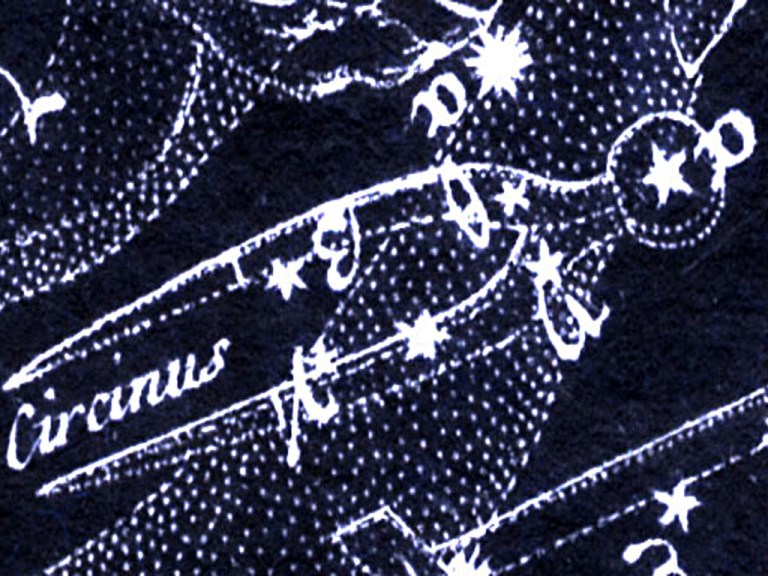
Circinus courtesy of Openverse
Constellations of the Month:
June – Circinus
Material may be shared for personal and educational use, Share with family and friends. The material cannot be used in an educational setting whereby a “book fee” is charged in or above tuition costs, and the material here is being used without paying a licensing fee.. AI must file an application for use of such material.
| You May Also Like. . . | |
 NASA 1997 Liftoff Special |
 NASA Mission Patch Party |
More on Versatileer:
![My room.jpg]()
Happy National Clean Out Your Computer Day – 2025
02/10/2025![April Fool's Day '24.jpg]()
Happy April Fool's Day – 2024
04/01/2024![two_pac_2d0__10_00__20211107__Terry-1.jpg]()
From the Satellite...Pacific Tropical Storm Terry on .GIPHY
01/15/2022![latest_totaltau.png]()
Weather's Eye in the Sky...The Atlantic Plume: Preface to Tropical Season – 2022
06/19/2022![Bonus Christmas Photo 6 – Ronald McDonald House]()
Bonus Christmas Photo 6 – Ronald McDonald House
12/30/2020