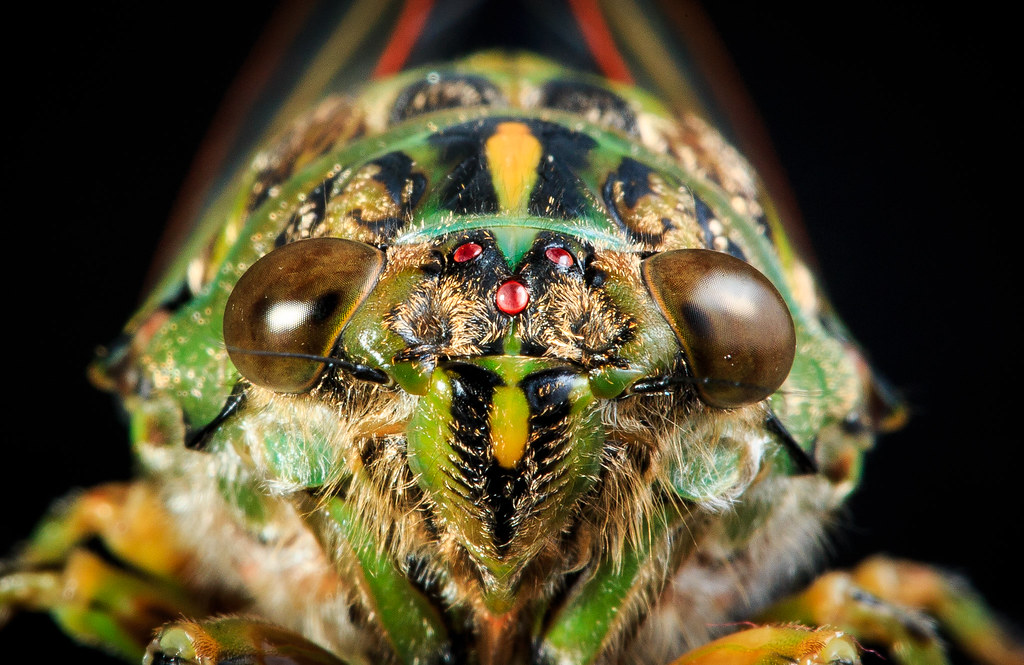
They are coming!
Climate data is used to predict the appearance of a 17-year insect! They will be emerging soon.
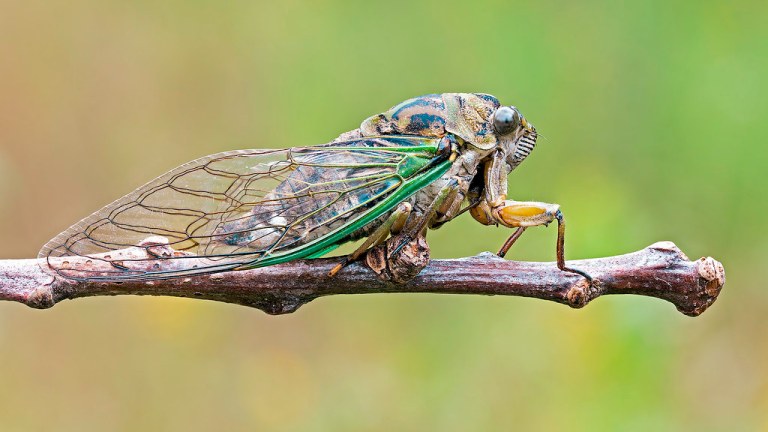
Neotibicen linnei linne’s annual cicada courtesy of Openverse
Whether or not you like the noise, the cicada are fascinating creatures, classified as Insecta: Hemiptera: Cicadidae, are a type of true bug insect. They are primarily recognized for the melodic songs produced by most male cicadas. The males create these songs by flexing their tymbals, which are drum-like organs located in their abdomens. Through the rapid contraction and relaxation of small muscles, the tymbals are manipulated to produce sound. The resonance of the sound is amplified by the cicada’s predominantly hollow abdomen. Brood XIV usually making their appearance from early-to-late May and continue into June to the north, with their emergence spanning approximately four weeks. It is important to note that the precise night of their emergence is contingent upon the soil temperature, specifically when it exceeds 64°F at a depth of 8 inches. Furthermore, cicada nymphs will only emerge following a rainstorm, adding an additional factor to their emergence pattern. The states seeing an emergence in the year of 2024 are:
- Brood XIV (17-year cycle)
- Indiana
- Ohio
- Pennsylvania
- West Virginia
- Virginia
- North Carolina
- Kentucky
- Tennessee

Click Images to Enlarge
Ten years of USCRN monitoring station data shows the median month of earliest cicada emergence based on when the soil temperature at 8 inches reaching 64°F, and with precipitation, usually a rainstorm. The logistics’ of hatching dates depend on the temperature criterion being met are here:

Click Images to Enlarge
Brood XIV emerges in the southern half of Indiana and mid- to southern-Ohio. mid-Pennsylvania, down the east side of the Appalachians in West Virginia, VIrginia and North Carolina, and various widespread parts of Kentucky and Tennessee, It is composed of three species of 17-year periodical cicadas: Magicicada Septendecim, M. Cassini, and M. Septendecula. For more information on the individual species emerging, Cicadamania.com is a valuable website to explore.
Cicada Biology:
Cicada nymphs spend the majority of their lives underground, extracting fluids from the roots of trees, and go unnoticed until they emerge. Once the emergence process begins, the nymphs leave the soil and ascend a few feet up a tree or shrub, where they shed their skin and transform into adults. The discarded exoskeleton is left behind. After molting, adult cicadas typically stay close to their molting site to allow their bodies to harden before venturing further up the tree. As adults, periodical cicadas consume very little food, as their main focus is on reproduction. Male adults produce a high-pitched buzzing song to attract females. In regions with a small cicada population, the calls create a pleasant summer chorus, but in areas with a large number of cicadas, the calling can be quite loud for some individuals.

Cicadas in the Apple Tree courtesy of Openverse
Injury to Trees and Shrubs:
Female cicadas, after mating, utilize their ovipositor, a structure specifically designed for laying eggs, to create small incisions in twigs and branches. They then proceed to deposit their eggs into these openings. This process may be repeated multiple times on a single twig, resulting in scars that can extend several inches in length. The growth of leaves beyond the affected area may be hindered, leading to their eventual death, and the affected twigs may become more prone to breakage. It is important to note that cicada damage typically does not pose a threat to well-established and healthy trees. However, it can become a concern for smaller, recently planted trees. Female cicadas exhibit a preference for depositing their eggs in twigs and branches that range from 1/4 to 1-1/2 inches in diameter. Nevertheless, they may also choose to deposit eggs in the trunks of young fruit or ornamental trees that have been transplanted. Therefore, these particular trees may benefit from protective measures.
Injury to Trees and Shrubs:
It is highly advised against using pesticides on cicadas. There are no pesticides specifically designed for cicadas, and studies have shown that pesticide applications do not effectively reduce egg-laying or plant damage. Additionally, it is crucial to consider the impact on local wildlife, such as birds, mammals, and reptiles, who rely on cicadas as a food source during their emergence. Allowing wildlife to consume cicadas without the presence of pesticides is an important opportunity for them to obtain essential nutrients and increase their reproductive success. Instead of resorting to pesticides, it is recommended to opt for cultural control methods or accept some level of injury to prevent harm to local wildlife.
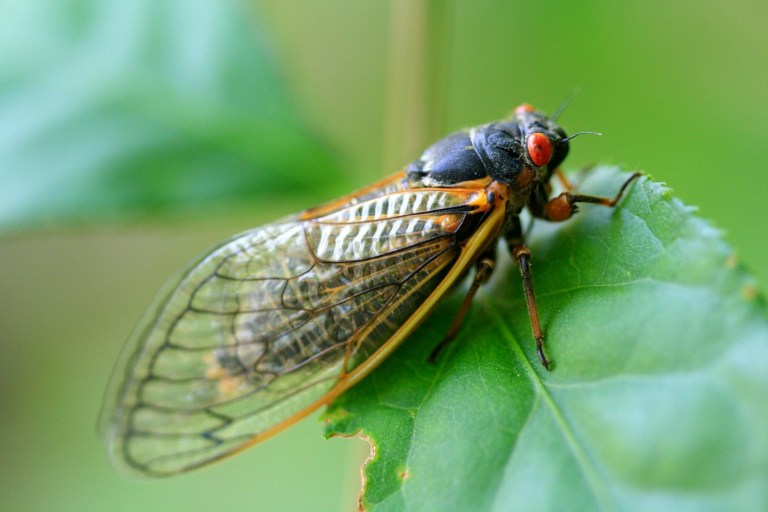
Photo by Ashlee Marie on Unsplash
It is advisable to refrain from controlling periodical cicadas due to the declining global insect populations. In most regions, the presence of periodical cicadas is not significant enough to warrant tree protection measures. These cicadas undergo a lengthy process of continuously feeding on the same tree roots for 13 to 17 years to complete a single generation. Therefore, areas where trees have been cleared for housing or were previously used for farming or as prairies may have minimal or no presence of periodical cicadas.
2025 Brood XIV Cicada Information:
| Brood XIV (17-year cycle) Cicada Emergence – 2025 |
| EVENT DURATION – About 4 Weeks |
| U.S. Event: Indiana, Ohio, Pennsylvania, West Virginia, Virginia, North Carolina, Kentucky and Tennessee |
| 1940 |
| 1957 |
| 1974 |
| 1991 |
| 2008 |
| 2025 |
| 2042 |
| 2059 |
| 2076 |
| 2093 |
🪳 🪳 🪳 🪳 🪳 🪳 🪳 🪳 🪳 🪳 🪳 🪳 🪳
More information on cicadas can be found at U.S. Forest Service at:

And National Centers for Environmental Information (NCEI) at:
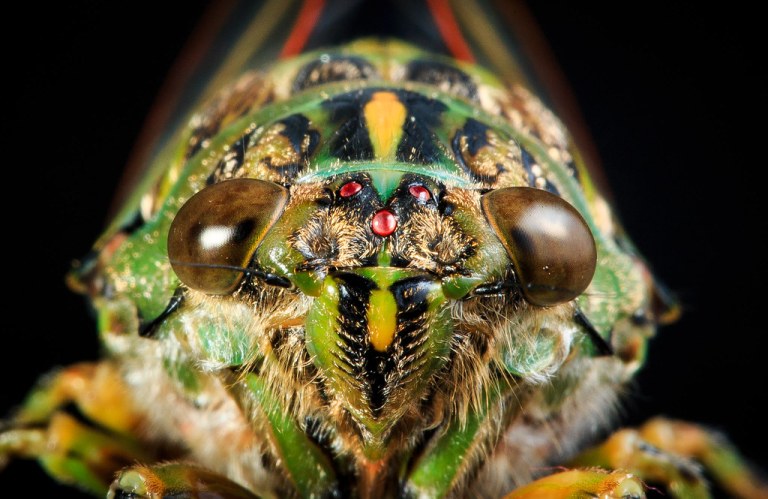
Cicada courtesy of Openverse
Cicadas 2025
More:
Photos & Video: Cicada Broods XIII & XIX, 2024 – Ending Soon!
More on Versatileer:
![False Haven Tropes and Themes.png]()
Ends 02-21 – False Haven by Rebecca Rook Book Blitz + Print Copy Giveaway
02/11/2024![ice-formation-in-body-of-water-3923277 climate_change_1704752358.jpeg Andrea Schettino at Pexels]()
What Are the Effects of Climate Change and Its Solution?
01/08/2024![a woman in a white shirt holding a red ribbon.jpg]()
Happy National Nurse's Day & Week - 2024
05/06/2024![Both Covers Flat Lay 1.jpg]()
Red Winter – Special Edition Hardcover Omnibus by Annette Marie Book Blitz – Publication date: TBA
10/08/2023![20220516_125235.jpg]()
Featured Photo: Flower of the Day – The Peony
10/08/2022





























Cicadas are an interesting insect. Thanks for the information!