
Happy Near Miss Day!
Today is National Near Miss Day for 2025. . .
Happy National Near Miss Day ! ! !
☄️ ☄ 🌠 🜸 💫 ☄️ ☄ 🌠 🜸 💫 ☄️ ☄ 🌠 🜸 💫 ☄️ ☄
Look Up At the Sky! Hopefully it is Only a Near Miss:
It is common for many areas to experience near misses on a daily basis. March 23rd marks the anniversary of a significant near miss for the entire planet, when a large asteroid, designated 4581 Asclepius, came perilously close to colliding with Earth in 1989. National Near Miss Day honors the occasion when 4581 Asclepius passed by without incident. You can visit asteroids up close by visiting the NASA website.

More Chances of a Hit/Miss:
Meteors: Meteorites are not exactly common, but the most common (and safest) astronomical projectile to hit Earth, and all planets and satellites.
Meteors, often referred to as “shooting stars,” are not stars but space debris that generates intense heat upon entering Earth’s atmosphere. Most are pebble-sized and if they hit the ground, they become a meteorite. Meteor showers occur on most nights, with 48.5 tons of meteoritic material daily. Meteorites can be meteoroids, comet particles, or other debris, while meteoroids are defined by specific parameters.
Comets: A comet would rarely hit a planet including Earth due to a set orbit around the Sun. It theoretically is not impossible, but astronomically improbable. If it were to happen, it would truly be devastating to the whole planet.
A comet is a compact, icy entity within the Solar System that emits gas and dust as it approaches the Sun. This process forms a noticeable “coma” and occasionally a tail, resulting from the effects of solar radiation and solar wind. Essentially, comets can be described as “dirty snowballs,” composed of ice, dust, and rocky fragments, traveling in a highly elliptical orbit around the Sun.
Special Featured Photo: Comet Hale–Bopp + Getting Ready For a Chance to See Comet NEOWISE
Celebrated: National Near Miss Day is celebrated every year on March 23rd, marking the anniversary of a significant near miss for the Earth, whereby a large asteroid named 4581 Asclepius, came very close to colliding with Earth in the year 1989.
A Few Facts:
I am sharing a few facts, and more, some trivia, some not trivial. . .
The Need for Detection:
On March 22-23, 1989, an asteroid of significant size approached Earth, coming within 500,000 miles of a potential collision. Dr. Henry Holt remarked, “In the vastness of the cosmos, that was a narrow escape.” Geophysicists project that a collision with the asteroid, named Asclepius, would unleash energy equivalent to that of a 600 megaton nuclear explosion, resulting in devastating consequences for our planet. The asteroid was identified by scientists on March 31, 1989, just nine days following its nearest encounter with Earth.
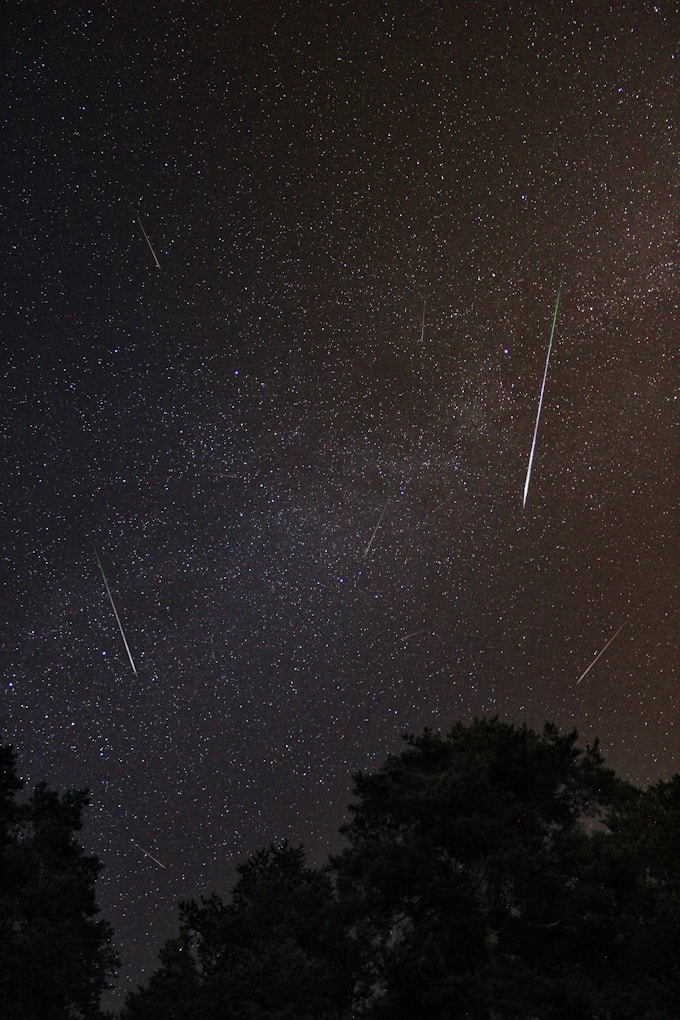
Photo by Prokhor Minin on Unsplash
The Present:
Hopefully we do not have a hit, and keep it at a near miss at most.
The Future:
To the future of the the Earth is in God’s hands. . .
FREEBIES & DEALS For National Meteor Watch Day:
😊 FREE National Meteor Watch Day: Fonts
😎 FREE National Meteor Watch Day: Crafts + Printable
🥰 FREE National Meteor Watch Day: Sheet music
🤗 CHEAP National Meteor Watch Day: Ideas, Crafts & Worksheets
😀 FREE National Meteor Watch Day: AT “Hey It’s Free”
Hashtags:
#HappyNationalNearMissDay #NationalNearMissDay #HappyNearMissDay #NearMissDay #Asteroid #AsteroidBelt #Astronomy #Boulder #Comet #Debris #Earth #Fragment #Meteor #Meteorite #Meteoroid #MeteorShower #Particle #Scattered #Science #Sky #Space #Trajectory
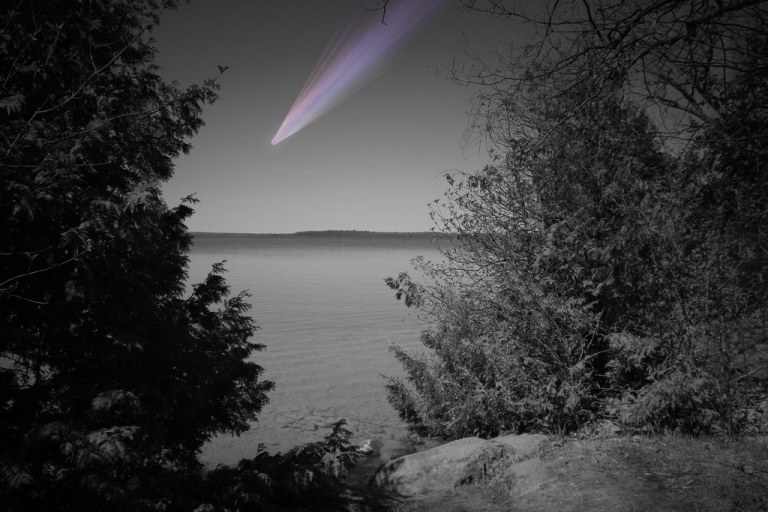
Orillia Ontario Canada ~ Leacock Museum ~ Streaking Meteor courtesy of Openverse
National Near Miss Day
More on Versatileer:
![Xpresso Tours]()
Ends 05-29 – The Closed Tunnel by Anthony Harold Book Blitz + $30 Amazon Giveaway
05/20/2024![In the Shadow of the Truth__TruthFlowers4.png]()
Ends 04-17 – In the Shadow of the Truth by Maci Aurora Book Blitz + eBook Copy Giveaway
04/10/2024![two_pac_2d0__02_00__20211025__Rick-1.jpg]()
From the Satellite...Pacific Hurricane Rick on .GIPHY
01/14/2022![Banana Bread (10).jpg]()
Happy National Banana Bread Day – 2025
02/23/2025![BCRF__Another Year & More.jpg]()
Another Year in the Battle for Breast Cancer Awareness – 2022
11/07/2022
































It’s a big world/universe. Watch out.