Happy Fall Astronomy Day!
Saturday was Fall Astronomy Day for 2025! It is much earlier than last years, but definitely not forgotten! It’s a day to celebrate the season of fall with enjoying all of the cosmos. . .
Happy Fall Astronomy Day ! ! !
☄️ ☄ 🌠 🜸 💫 ☄️ ☄ 🌠 🜸 💫 ☄️ ☄ 🌠 🜸 💫 ☄️ ☄
Look Up At the Sky! It’s Astronomical:
Astronomy is the scientific study of everything that exists beyond the Earth’s atmosphere. This field of study covers a wide variety of celestial objects and phenomena. It includes the Sun, which is the center of our solar system and provides light and warmth essential for life on Earth. The Moon, our planet’s natural satellite, plays a vital role in influencing tides and has been a source of fascination for humans throughout history.

backyard astronomy 46 courtesy of Openverse
Astronomy also examines the planets that orbit the Sun, including Mercury, Venus, Earth, Mars, Jupiter, Saturn, Uranus, and Neptune. Each of these planets has unique characteristics and environments, making them interesting subjects for study. In addition to planets, astronomers observe stars, which are massive balls of gas that produce light and energy through nuclear fusion. The vast number of stars in the night sky varies in size, brightness, and distance from Earth, contributing to the richness of the universe.
Furthermore, astronomy extends to other celestial bodies such as comets, asteroids, and galaxies. Comets are icy bodies that release gas and dust, forming bright tails when they approach the Sun. Asteroids are rocky remnants from the early solar system, primarily found in the asteroid belt between Mars and Jupiter. Galaxies, on the other hand, are enormous systems that contain billions of stars, along with gas, dust, and dark matter, all held together by gravity.
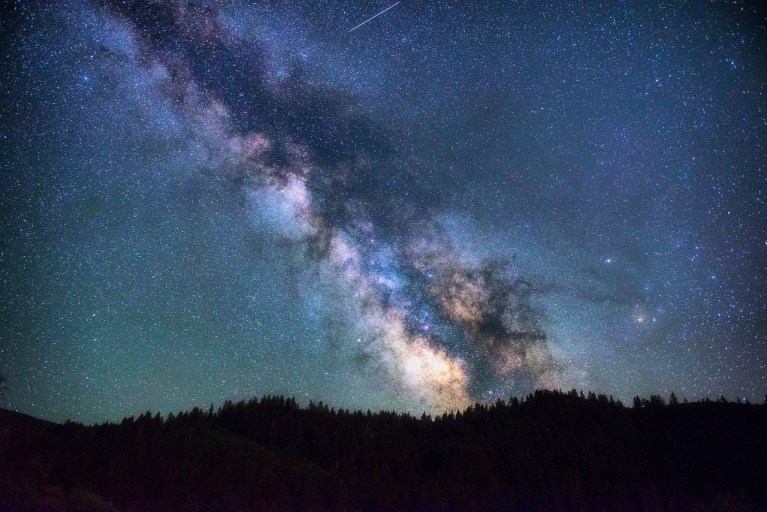
Photo by Pexels
Through the study of these celestial bodies, astronomy seeks to understand the origins, evolution, and fate of the universe, offering insights into fundamental questions about our existence and the laws of nature.
Astronomy:
Sun: The Sun serves as the central star of our Solar System. This colossal, almost flawless sphere of hot plasma is illuminated to brilliance through the process of nuclear fusion. The Sun is the primary force around which Earth and the other celestial bodies orbit. It holds over 99 percent of the system’s total mass, making it the most significant entity in our cosmic neighborhood. The Sun emits a vast amount of energy, a significant part of which delivers the light and warmth essential for sustaining life on Earth. Here is my classic event, one of the best things I ever witnessed:
An Eclipse: An eclipse is an astronomical event which occurs when an astronomical object or spacecraft is temporarily obscured, by passing into the shadow of another body or by having another body pass between it and the viewer. This alignment of three celestial objects is known as a syzygy. When a star is “eclipsed” it is called an occultation.
Antarctic Partial Solar Eclipse: Satellite Imagery From 09/21/25
“Solar Horns” Partial Solar Eclipse: Satellite Imagery From 03/29/25
Featured Photos & Video: March Worm Moon & Total Lunar Eclipse: 03/14/2025
The Moon: The Moon is Earth’s only natural satellite. It orbits Earth on a variable path, and it varies not only in distance from Earth, but also upon the exact placement close the the zodiacal path. The orbit only comes into conjunction with the Sun (solar eclipse) an average of 2 times per year, and with the Earth (lunar eclipse) another average 2 times per year. The Moon has been studied for years, and the United States, the former Soviet Union (now Russia), China, and India have landed on the Moon’s surface. The United States stands as the sole nation to have achieved the successful landing of astronauts on the Moon, with the final crewed Apollo mission, Apollo 17, taking place in the year 1972.
Happy National Moon Day 2025 + Photos of This Year’s Best Moon Photos
Planets: A planet is a celestial body orbiting the Sun, with enough mass to create a nearly spherical shape due to its own gravity. It must clear the surrounding neighborhood, making it the dominant gravitational body in its orbital path, according to the International Astronomical Union (IAU) definition. Key points include orbiting the Sun, maintaining a hydrostatic equilibrium due to its mass, and clearing the orbital path of other significant objects.
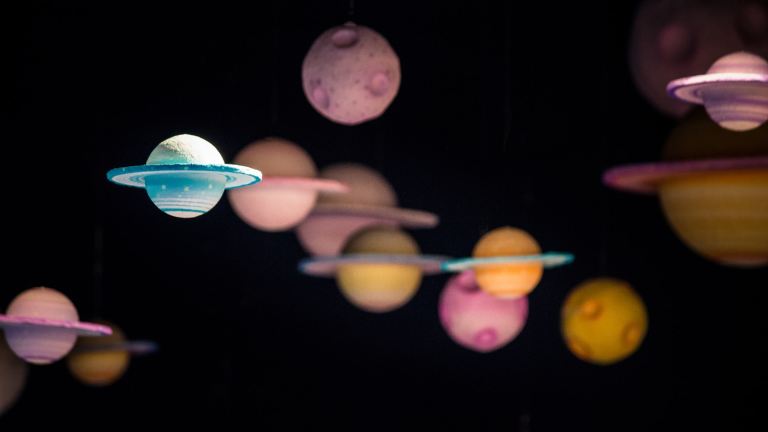
Photo by David Menidrey on Unsplash
Stars: Astronomical bodies in the universe include stars, planets, moons, asteroids, comets, nebulae, galaxies, black holes, dwarf planets, and meteoroids. They can be categorized into star clusters, galaxy clusters, and binary star systems based on their arrangement and composition. Distant galaxies, nebulae, and smaller asteroids require telescopes. These bodies are classified based on size, composition, and location within the universe.
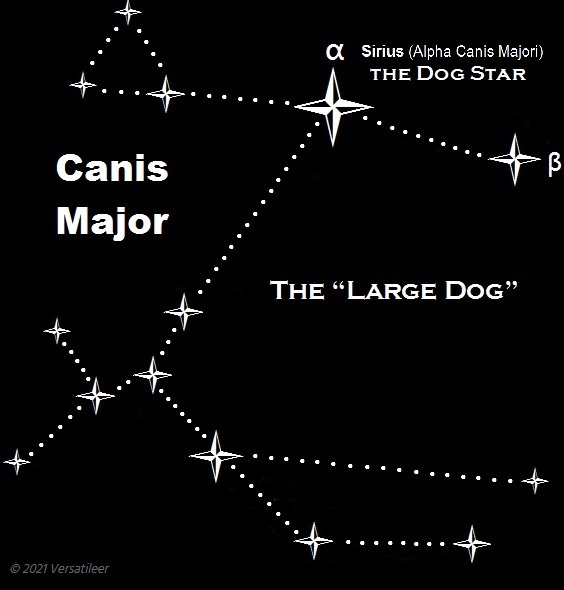
Galaxies & Cosmos Outside our Solar System: : Astronomical bodies in the universe include stars, planets, moons, asteroids, comets, nebulae, galaxies, black holes, dwarf planets, and meteoroids. They can be categorized into star clusters, galaxy clusters, and binary star systems based on their arrangement and composition. Distant galaxies, nebulae, and smaller asteroids require telescopes. These bodies are classified based on size, composition, and location within the universe.
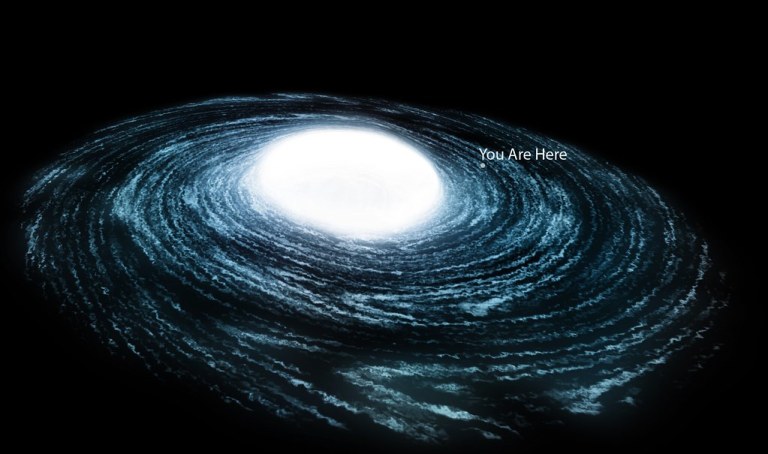
Galaxy courtesy of Openverse
Meteors: Meteors, often referred to as “shooting stars,” are not stars but space debris that generates intense heat upon entering Earth’s atmosphere. Most are pebble-sized and if they hit the ground, they become a meteorite. Meteor showers occur on most nights, with 48.5 tons of meteoritic material daily. Meteorites can be meteoroids, comet particles, or other debris, while meteoroids are defined by specific parameters.

Most are pebble-sized and if they hit the ground, they become a meteorite. Meteor showers occur on most nights, with 48.5 tons of meteoritic material daily. Meteorites can be meteoroids, comet particles, or other debris, while meteoroids are defined by specific parameters.
Comets: A comet is a compact, icy entity within the Solar System that emits gas and dust as it approaches the Sun. This process forms a noticeable “coma” and occasionally a tail, resulting from the effects of solar radiation and solar wind. Essentially, comets can be described as “dirty snowballs,” composed of ice, dust, and rocky fragments, traveling in a highly elliptical orbit around the Sun.
Special Featured Photo: Comet Hale–Bopp + Getting Ready For a Chance to See Comet NEOWISE
Space Flight: Astronautics is used in spaceflight, also known as space flight, to fly objects—typically spacecraft—into or through space, either with or without people on board.
Plenty of Days to Celebrate Astronomy: Be proud that yu are living in a day when interest in space is plentiful!
Astronauts & NASA: The celebration is observed every June 30th every year!
Celebrated: The celebration is observed twice every year, once in spring, and now in the fall season every year on a different “to be determined” day. This years celebration was on September 27th every year! See you in May!!
A Few Facts:
I am sharing a few facts, and more, some trivia, some not trivial. . .
Numerous Astronomical Events in 2024:
- November 11: The moon will cover Neptune in the early evening. This event can be seen across the U.S. and most of Canada. Neptune is quite dim at magnitude 8.0, so you’ll need a good telescope to spot it, especially since it will be near the bright three-quarter moon. If you have the right gear or can visit a local observatory, it could be an interesting sight.
- December 7: Jupiter at Its Brightest On this date, Jupiter will rise at sunset and remain visible all night, shining brightly at a magnitude of –2.8, competing with Venus. This is the best time of the year to observe Jupiter. Even with binoculars, you can see its four largest moons and some of its cloud bands. A telescope will provide an even better view.
- December 13: Geminid Meteor Shower The Geminid meteor shower is my favorite, featuring many bright meteors visible once it’s fully dark. However, this year, the nearly full moon will rise at sunset, making it harder to see the meteors. So, we start and end this list with a bit of disappointment. But sometimes we have to be patient. The good news is that in 2025, the moon won’t interfere with this shower.
- Aurora Borealis: The sun is increasing its magnetic activity as it approaches its peak in 2024 or 2025, leading to more sunspots. Some may be large enough to see with the naked eye (just remember to do so safely). You can check Spaceweather.com for updates. Additionally, solar storms like flares or coronal mass ejections can cause auroras on Earth, and many bright displays have already been observed during this solar cycle.
The Present:
The cosmos offer a great experience to all of the beginner, the intermediate and the expert space watcher.
The Future:
To the future of the interest in the science of astronomy. . .
FREEBIES & DEALS For National Meteor Watch Day:
😊 FREE Fall Astronomy Day: Fonts
😎 FREE Fall Astronomy Day: Crafts + Printable
🥰 FREE Fall Astronomy Day: Sheet music
🤗 CHEAP Fall Astronomy Day: Ideas, Crafts & Worksheets
😀 FREE Fall Astronomy Day: AT “Hey It’s Free”
Hashtags:
#Altitude #AntarcticCircle #Arcminutes #Arcseconds #ArcticCircle #Asteroid #AsteroidBelt #Astro #Astronaut #Astronomer #Astronomy #Atmosphere #Atomic #Aurora #Axis #Atom #Azimuth #BigBangTheory #BinaryStar #BlackHole #BlueGiant #Blur #Boulder #Calorie #Capsule #Celestial #CelestialEquator #CelestialPole #CelestialSphere #Celsius #Circumpolar #CircumpolarConstellation #Cluster #Collapse #Collision #Comet #Constellation #Cosmonaut #Cosmos #Crater #Crescent #CrescentMoon #Day #Debris #Degree #Declination #Detect #DwarfStar #Earth #Eclipse #Ecliptic #ElectromagneticSpectrum #Ellipse #Elliptical #EllipticalSphere #Energy #Environment #Equator #Equinox #Expand #Fahrenheit #FirstQuarterMoon #Fission #Fragment #Fuel #FullMoon #Fusion #Galaxy #GammaRay #Gap #Gas #GiantStar #Gibbous #GibbousMoon #Gravitation #GravitationalPull #Heat #Horizon #InfraredWave #Jupiter #Kilometer #LastQuarterMoon #Latitude #Light #LightYear #LineOfDemarcation #Longitude #LunarModule #LunarOccultation #LunarRover #LunarStandstill #Magnitude #Mercury #Meridian #Mars #Mass #Matter #Meteor #Meteorite #Meteoroid #MeteorShower #MilkyWay #Module #Moon #Moonth #Mythology #Nadir #NASA #Neptune #NewMoon #NorthCelestialPole #NorthPole #Nova #NuclearFusion #OccludedStar #Occultation #Orbit #Particle #Payload #Physicist #Physics #Plains #Planet #Pluto #Pole #PrimeMeridian #RadioWave #RedGiant #ReEntry #Reflect #Reusable #Revolve #Rocket #RocketShip #Rotate #Satellite #Saturn #SaturnsRings #Scattered #Science #Sky #Solar #SolarFlare #SolarWind #SouthCelestialPole #SouthPole #SpaceProbe #Space #Spectrograph #Spectroscope #SpeedOfLight #Sphere #Star #Stellar #StellarOccultation #Sun #SunRay #Sunspot #Supernova #Telescope #Trajectory #TropicOfCancer #TropicOfCapricorn #UltravioletRay #Universe #Uranus #Valley #Vehicle #Venus #Visible #VisibleLight #Volcano #WaterVapor #Wave #Wavelength #WaningCrescentMoon #WaningGibbousMoon #WaxingCrescentMoon #WaxingGibbousMoon #Weightless #WhiteDwarf #Xray #Year #Zenith #Zodiac #ZodiacAxis
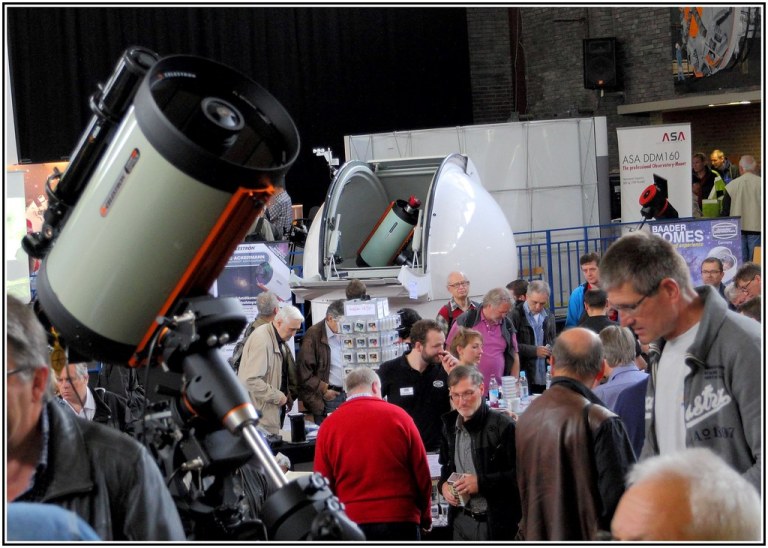
ATT Essen – Europe’s biggest Astronomy fair – Europas größte Astronomiebörse – 41 courtesy of Openverse
Fall Astronomy Day
More on Versatileer:
![Teacher Tuesday - May 2024.png]()
Ends 06-03 – Teacher Tuesday - May 28th
05/28/2024![INSTA_WickedAmbition_.png]()
Ends 07-30 – Wicked Ambition: The Lost Treasure by Patti O’Shea Book Blitz + $20 Amazon Gift Card Gi...
07/19/2025![prism light spectrum__LUNAPIC.jpg]()
50th Anniversary of the Best Selling Music Album of All Time: Pink Floyd – Dark Side of the Moon
03/31/2023![California_Ventura Freeway__Fujicolor 400.png]()
Photo of the Day: 11/07/19 – Off of Ventura Freeway, California
11/07/2019![Tornado Season: Be Prepared!]()
Tornado Season: Be Prepared!
04/21/2019