
Last Wednesday was International Day of People with Disabilities for 2025. It is a day to honor and contribute to persons with disabilities.

Another disabled placard courtesy of Openverse
Living with a disability is a constant challenge, but as someone who personally experiences it, I understand the struggles that come with it. Individuals with disabilities must navigate through life while dealing with the additional obstacles that their disability presents. The initial step in this journey involves obtaining a legal determination, which begins with a medical diagnosis from a licensed doctor. The specific disability mentioned in the diagnosis is determined by the type of diagnosis provided by the doctor. Subsequently, the disability is officially determined by the appropriate government department, such as the Social Security Administration or the Veteran’s Administration. The American Disabilities Act, enacted in July 26, 1990 by the 101st U.S. Congress is the act that legally defines any disabilities. The American Disabilities Act is a civil rights law that prohibits discrimination against individuals with disabilities in all areas of public life, including jobs, schools, transportation, and all public and private places that are open to the general public. The purpose of the law is to make sure that people with disabilities have the same rights and opportunities as everyone else. The American Disabilities Act gives civil rights protections to individuals with disabilities similar to those provided to individuals on the basis of race, color, sex, national origin, age, and religion. It guarantees equal opportunity for individuals with disabilities in public accommodations, employment, transportation, state and local government services, and telecommunications. The American Disabilities Act is divided into five titles (or sections) that relate to different areas of public life., and becomes enacted sometimes through trial. More information about the American Disabilities Act is contained at the web page: What is the Americans with Disabilities Act (ADA)?. The web page also has a great description of the explicit definition of how the American Disabilities Act is enforced: What is the definition of disability under the ADA?
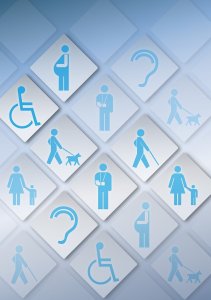
Photo by renma courtesy of Pixabay
I have compiled a compilation of resources for individuals, as I have frequently consulted these lists in the past. You have the option to either utilize them independently or enlist the help of an advocacy group to obtain the necessary resources. Based on my previous encounters, it is evident that relying on the government for assistance is futile, as they are unwilling to provide any. Even the relevant departments may claim that they are prohibited from offering “legal advice,” despite the fact that the aid provided is not classified as such. It is not uncommon for government employees to assert their inability to offer guidance, hence I believe that sharing these resource groups will be of great assistance.
🚳 🚷 🚶 🚹 🚺 🚻 🚼 🚮 🦽 👩🦽 👩🦼 🦯
Resources (NCD.gov)
🚳 Telephone References
- ADA Information Line (800) 514-0301 (Voice) (800) 514-0383 (TTY); Regional ADA and IT Technical Assistance Centers (800) 949-4232 (Voice / TTY).
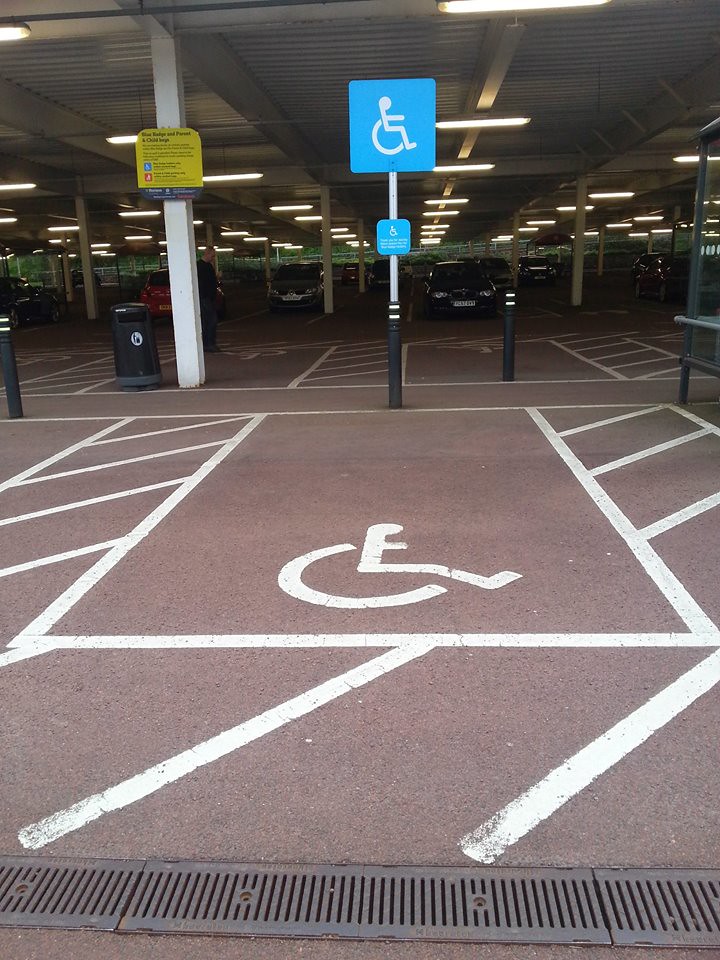
Disabled access – shopping courtesy of Openverse
🚷 Civil Rights
- A Guide to Disability Rights Laws (DOJ) Publication guide provided by the U.S. Department of Justice providing summaries of all major disability rights laws and appropriate federal contact information for more information.
- Americans with Disabilities Act (ADA) U.S. Department of Justice web page = information regarding ADA standards, technical assistance, new or proposed regulations, an ADA Help Line, a toolkit for state and local governments, etc.
- Air Carrier Access Act (ACAA) U.S. Department of Transportation web page that summarizes rules and rights of air passengers with disabilities. Information on filing a complaint
- Architectural Barriers Act (ABA) Access Board web page containing the text of the law.
- Civil Rights of Institutionalized Persons Act (CRIPA) U.S. Department of Justice web page containing the text of the law.
- The Developmental Disabilities Assistance and Bill of Rights Act of 2000 | ACL Administration for Community Living U.S. Department of Health and Human Services web page containing the text of the law.
- Rehabilitation Act of 1973 U.S. Department of Education web page containing a link to the text of the law.
- Voting Fact Sheet Voting accessibility resource created by the National Council on Disability.

Photo by geralt courtesy of Pixabay
🚶 Education
- Office of Special Education and Rehabilitative Services (OSERS) U.S. Department of Education web page containing information about OSERS programs, reports, and resources.
- Rehabilitation Services Administration U.S. Department of Education web portal containing information about RSA programs, reports, and resources.
- Individuals with Disabilities Education Act U.S. Department of Education web page containing a link to the text of the law.
🚹 Employment
- Employment Discrimination (EEOC) Equal Employment Opportunity Commission web page explaining what constitutes illegal discrimination on the basis of disability under the Americans with Disabilities Act and how to file a complaint.
- Job Accommodation Network (JAN) Web page providing information for employers, job seekers, rehabilitation professionals, union representatives, and others regarding workplace accommodations under the Americans with Disabilities Act and other legislation.
- Office of Disability Employment Policy (ODEP) U.S. Department of Labor web page providing information about ODEP’s programs, initiatives, and grants.
- Ticket to Work Social Security Administration web site providing information about the Ticket to Work and Self-Sufficiency Program, directories of Employment Networks, and other valuable information.
- Employer Assistance and Resource Network on Disability Inclusion (EARN). EARN is an Office of Disability Employment Policy (ODEP)-funded initiative that provides resources to help employers recruit, hire, retain and advance people with disabilities. The web page offers information on topics such as finding job candidates with disabilities, disability employment laws and workplace accessibility.

© FSL – Disability Day 2015 (09) courtesy of Openverse
🚺 Financial Assistance & Incentives
- Social Security Disability Benefits Web page featuring information on different disability benefits provided by the Social Security Administration; who can get disability benefits; how one applies for disability benefits; and other important information.
- Temporary Assistance for Needy Families (TANF) U.S. Department of Health and Human Services web page providing general information, history, goals, and organization of the TANF program.
- Food Stamps (SNAP) U.S. Department of Agriculture web page explaining the Supplemental Nutrition Assistance Program (SNAP) and how to apply for benefits.
🚻 Health Care
- Search Results: HHS Office on Disability contains a search of valuable information about the implementation and coordination of programs and policies that enhance the health of people with disabilities across age, race, and ethnicity.
- Medication-Assisted Treatment (MAT) | SAMHSA Web page of the Substance Abuse and Mental Health Services Administration (SAMHSA) providing a mental health services locator.
- CDC Office of Minority Health and Health Disparities Web site aiming to promote the health of people with disabilities, prevent secondary conditions, and eliminate disparities between people with and without disabilities in the U.S. population.
🚼 Housing
- Fair Housing Act U.S. Department of Justice web page containing information about the Fair Housing Act and a link to the text of the law.
- Architectural Barriers Act (ABA) Access Board web page containing information of how to have an investigation started
- Housing Discrimination U.S. Department of Housing and Urban Development web page explaining the process of filing a complaint of housing discrimination.

Photo by geralt courtesy of Pixabay
🚮 Independent Living
- Independent Living Centers (ILCs) Directory Web page containing a list of states, with links to each state’s directory of their ILCs, which are community-based, cross-disability, nonresidential nonprofit agencies designed and operated within a local community by people with disabilities that provide advocacy, independent living skills training, information and referral, and peer counseling.
- Client Assistance Program (CAP) Information and advocacy program for people with disabilities who are seeking or receiving federally funded rehabilitation services authorized in the Rehabilitation Act and provided by through specific state/territory grants.
- Consortia of Administrators for Native American Rehabilitation (CANAR) Collaboration and cooperation between the administrators of federally-funded rehabilitation projects and to increase and enhance the quality of services, resulting in positive outcomes for Native Americans with disabilities.
🦽 International
- U.N. Convention on the Rights of Persons with Disabilities United National web page containing text of the U.N. Convention on the Rights of Persons with Disabilities.
👩🦽 Legal Assistance
- Protecting Rights and Preventing Abuse of People with Disabilities | ACL Administration for Community Living U.S. Department of Health and Human Services web page containing a fact sheet about the P&A system as well as a listing of the agencies by state.

International Pillow Fight Day courtesy of Openverse
👩🦼 Technology
- Telecommunications Accessibility Federal Communications Commission web page containing information regarding Telecommunications Relay Service, accessibility and innovation, closed captioning, and other valuable information.
- Section 508 of the Rehabilitation Act Federal government web page containing the text of the law, regulations, and standards, as well as tools and resources for its effective implementation.
🦯 Transportation
- Accessible Transportation U.S. Department of Transportation web page containing general information and links regarding laws and regulations that govern equal access to transportation for people with disabilities. Contacts for ADA Information
- Air Carrier Access Act (ACAA) U.S. Department of Transportation (DOT) web page summarizing the DOT rules pertaining to the rights of air passengers with disabilities. Information on filing a complaint

Photo by geralt courtesy of Pixabay
🚳 Youth Perspectives
- Kids As Self Advocates (KASA) A national, grassroots project created by youth with disabilities for youth who learn to model leadership and the power of self-advocacy that are active in our schools, communities, families and places of employment.
- National Youth Leadership Network (NYLN) A youth driven and youth led non-profit leadership capacity-building organization of youth living with various disabilities promoting youth leadership, education, and advocacy.
🚳 🚷 🚶 🚹 🚺 🚻 🚼 🚮 🦽 👩🦽 👩🦼 🦯
Programs for People with Disabilities (HHS.gov)
🚷 Programs for People with Disabilities: Multiple HHS agencies provide programs that improve the well-being of people with disabilities. Learn more about programs for people with disabilities and locate resources:
- Disabilities | hhs.gov Web page with information about disabilities from healthfinder.gov, a government website with information and tools to help you and those you care about stay healthy.
- Disabilities | (MedlinePlus®) Web page with information about disabilities provided by the National Library of Medicine at NIH.
- Discapacidades(Spanish) | MedlinePlus®) Página web con información en español sobre discapacidades proporcionada por la Biblioteca Nacional de Medicina de los NIH. Web page with Spanish-language information about disabilities provided by the National Library of Medicine at NIH.
- Programs for People with Disabilities | hhs.gov Web page with resources to connect people with disabilities, caregivers, families, and professionals to federal, national, and local programs and information.
- Discrimination on the Basis of Disability | (Office for Civil Rights) Web page with the purpose to learn more about HHS’ role in enforcing non-discrimination requirements related to health care and social services programs.
- Administration on Intellectual and Developmental Disabilities| (Administration for Community Living) Web pages with the purpose to learn more about the Administration on Intellectual and Developmental Disabilities is dedicated to ensuring that individuals with developmental disabilities and their families are able to fully participate in and contribute to all aspects of community life in the United States and its territories.

Wheelchair courtesy of Openverse
Government and Local Disability Programs (Link to USAGov)
🚶 Find Government and Local Disability Programs and Services: If you have a disability, learn how government programs and services can help you with daily life.
🚹 Programs: The programs listed here are from the government. Besides these, there are many local and national non-profit organizations that provide help. You can find them online or through social workers or medical professionals.
🚺 Housing
Federal and state programs Web page with information that can help you find affordable housing. The web page has information that can help you learn about:
- Public housing
- Rental assistance
- Subsidized housing
- Housing Choice Vouchers (Section 8)
- Non-Elderly disabled voucher programs
- Your housing rights if you have a disability.
🚻 Jobs
- Web page with information that can help you find job training near you, starting with your state vocational rehabilitation agency.
- Web page with information that can help you find government programs can help you train for and find a job, starting with learning about special programs for young workers and veterans with disabilities.
- Web page with information that can help you find how you can work and get accommodations in the federal government, starting with learning about the traditional and Schedule A hiring processes.

Photo by Waldemar Brandt on Unsplash
🚼 Health Care
- Web page with information that can help you find health care resources for people with disabilities.
- Web page with information that can help you see options for government health insurance programs for people with disabilities.
- Web page with information that can help you get information from Healthcare.gov for children and adults with disabilities.
🚮 Education
- Web page with information that can help you learn about programs and accommodations for students of any age who have disabilities.
- Web page with information that can help you see a list of Web page with information that can help you see a list of resources for parents of children with disabilities | childcare-stage.acf.hhs.gov.
- Web page with information where you can read about Section 504 of the Rehabilitation Act, which protects students with disabilities.
- Web page with information that can help you learn about a total and permanent disability discharge, whereby sometimes you may not have to pay back some student loans.
🦽 Legal Issues
- Web page with information that can help you get information about your rights under the Americans with Disabilities Act (ADA).
- Web page with information that can help you find a list of disability rights resources from the National Council on Disability.
👩🦽 Tribal
- Web page with information that can help you find and apply for Financial assistance and services for Native Americans | usa.gov.
- Web page with information that can help you learn about vocational rehabilitation services for Native Americans.
👩🦼 Veterans
- Web page with information that can help you find government and nonprofit programs for veterans with disabilities and their families.
- Web page with information that can help you learn about government contracting and support for service-disabled veteran businesses.
- Web page with information that can help you find CareerStop’s list of job and training resources for veterans with disabilities.
🦯 Living
- Web page with information that can help you learn the difference between service and emotional support animals (adata.org). Know your rights for each type of animal.
- Web page with information that can help you find programs and insurance plans that allow family members to be paid caregivers.
- Web page with information that can help you learn how to make a disaster plan that includes people with disabilities.
🚳 🚷 🚶 🚹 🚺 🚻 🚼 🚮 🦽 👩🦽 👩🦼 🦯
The external links on this page are being supplied to you for your information. Versatileer website does not endorse any information, this is merely a convenience of information provided by Federal agencies, and your use of such information is provided for use solely based on provision, not fitness. No particular links are guaranteed usable in any situation, or by a person, business or entity.

Photo by Jubbar J. on Unsplash
International Day of People with Disabilities
More on Versatileer:
![German chocolate cake.jpg]()
Happy National German Chocolate Cake Day – 2024
06/12/2024![Wooden Letters and Wooden Punctuation Marks on Gray Surface.jpg]()
Happy National Punctuation Day – 2024
09/28/2024![Happy Leap Day_02-29-2024.jpg]()
Happy Leap Day this Leap Year in 2024: 02-29-2024!
02/29/2024![suzuki-samurai-doing-off-road-5913420 flood_1653369509.jpeg Robin Ramos at Pexels]()
The Danger of Floods – Spring & Summer Weather Series + Resources For Recovery
05/24/2022![wp-17308660756905489572909453476774.jpg]()
Featured Photo: The Beauty of Fall Color – White Morning Glory in October
11/05/2024






























thank you for sharing
God bless everyone who is living with a disability. I have depression & anxiety disorder & I know what a struggle it is from day to day.
A lot of wonderful porograms are available.