Uncommon Musical Instrument Day
The final day of July is recognized as Uncommon Musical Instrument Awareness Day. This occasion promotes the exploration and celebration of unique or less frequently encountered musical instruments, encompassing accessible musical instruments and their significance in inclusive music therapy.. . . .
🎸 🎼 🎵 🎶 🎧 🎷 🎹 🎺 🎻 🪗 🪘 🥁 💃 🪚 🪕 🪇 🪈
Happy Uncommon Musical Instrument Awareness Day

Chapman Stick courtesy of Openverse
Most Common Rare Instruments:
- Glass Armonica: The glass harmonica, which is alternatively referred to as the glass armonica, glass harmonium, bowl organ, hydrocrystalophone, or simply the armonica or harmonica, is a musical instrument that employs a sequence of glass bowls or goblets of varying sizes to generate musical tones through friction.
- Theremin: The theremin is an electronic musical instrument that is operated without any physical contact from the performer. It is named in honor of its creator, Leon Theremin, who secured a patent for the device in 1928.
- Nyckelharpa: The nyckelharpa is a bowed chordophone featuring keys, primarily associated with Sweden in its contemporary iteration, although its historical origins can be traced back to various regions of medieval Europe.
- Hydraulophone: A hydraulophone is a musical instrument that produces tonal acoustic sounds through direct physical interaction with water, utilizing hydraulic mechanisms to generate or modify sound. This instrument was conceptualized and named by Steve Mann in 2005, and it received a patent in 2011.
- Pikasso guitar: Pikasso guitar. In 1984, Canadian master luthier Linda Manzer was commissioned by jazz musician Pat Metheny to create a guitar that incorporated numerous string elements. Despite being a highly specialized instrument, the Pikasso guitar has had a considerable influence in the realm of music.
- Crwth: The crwth, which is also referred to as a crowd, rote, or crotta, is a bowed lyre, a category of stringed instrument, particularly linked to Welsh music. Although it is now considered archaic, it was once commonly played throughout Europe.
- Harp: The harp is a stringed musical instrument characterized by individual strings that are positioned at an angle to its soundboard; these strings are plucked using the fingers. Harps can be constructed and performed in multiple styles, whether standing or seated, and are utilized in orchestras or concerts. The most prevalent design of the harp is triangular and typically crafted from wood.
- Contrabass balalaika: The contrabass balalaika is an impressively large, triangular string instrument originating from Russia, crafted to generate profound, resonant sounds. Being the largest member of the Balalaika family, the Contrabass Balalaika is akin to an upright bass. It is usually played using a sizable leather plectrum.
- Hurdy-gurdy: The hurdy-gurdy is a string instrument that generates sound through a hand-operated crank, with a rosined wheel that rubs against the strings. The wheel operates similarly to a violin bow, and the individual notes produced by the instrument resemble those of a violin.
- Ondes Martenot: The ondes Martenot, also known as ondes musicales, is a pioneering electronic musical instrument. It can be played using a lateral-vibrato keyboard or by manipulating a ring attached to a wire, which produces “wavering” sounds akin to those of a theremin. The dynamics and timbre are modified through controls located in a drawer on the left side of the instrument.
- Pyrophone: The Pyrophone serves as a dynamic alternative to the contemporary piano. Additionally, the pyrophone is categorized within the organ genre. It is considered one of the lesser-known musical instruments and operates using propane gas.
- Chapman Stick: The Chapman Stick is an electric musical instrument created by Emmett Chapman during the early 1970s. As a member of the guitar family, the Chapman Stick typically features ten or twelve individually tuned strings and is utilized to perform bass lines, melody lines, chords, or textures. Many artists, including Tony Levin, have played the Chapman Stick, collaborating with numerous distinguished musicians, such as those from King Crimson.
- Cimbalom: The cimbalom, also known as cimbal or concert cimbalom, is a chordophone characterized by a sizable trapezoidal box supported by legs, with metal strings extended over its surface and a damping pedal located beneath. It gained prominence in Hungary; the cimbalom is a concert hammered dulcimer distinguished by its large trapezoidal box and the metal strings.
- Didgeridoo: The didgeridoo, which can also be spelled didjeridu, is a wind instrument that is played by vibrating the lips to create a continuous drone, utilizing a unique breathing method known as circular breathing.
- Hang drum: The original creators assert that the name of the instrument should be Hang for their brand of hand pan. Although the term Hang Drum is frequently used in conversation, it is more appropriate in written form to refer to instruments produced by the company Pan Art as simply “hang” and to categorize all other instruments as “hand pans.”
- The Erhu: The Erhu is a form of violin, yet it appears quite distinct from a traditional model. It is equipped with a drum resonator located at the base of the instrument. The Erhu is mainly utilized in symphonic performances.
- Jew’s harp: The Jew’s harp, which is also referred to as the jaw harp, juice harp, or mouth harp, is a type of lamellophone instrument. It comprises a flexible metal or bamboo tongue or reed that is affixed to a frame.
- Octobass: The octobass is a remarkably large and uncommon bowed string instrument that was initially constructed circa 1850 in Paris by the French luthier Jean-Baptiste Vuillaume. This colossal instrument belongs to the string family and significantly surpasses the double bass in size, producing exceptionally deep tones.
- Sharpsichord: The Sharpsichord is a musical instrument developed by Henry Dagg in Faversham, Kent. It functions as a pin-barrel harp or Stroh Harpsichord, producing music through a mechanism of pegs, similar to a music box. Sharpsichord. Among the most unusual instruments in existence, the sharpsichord is a contemporary creation attributed to British sound sculptor Henry Dagg.
- Singing Ringing Tree: The Singing Ringing Tree is located in the picturesque British countryside. This wind-powered sound sculpture, constructed in Lancashire, England, is known as the Singing Ringing Tree. Created by designers Mike Tonkin and Anna Liu, the Singing Ringing Tree functions as a musical instrument composed of steel pipes of differing lengths.

Chapman Stick courtesy of Openverse
A Few Facts:
I am sharing some important, and not so trivial info on musical%20instrument. . .
Different Categories of Music Instrument: A mix of different instruments, to suit the player’s wants and needs. Some instruments can be double-categorized, likely to be included in one or more of these different categories, depending on the deposition for melodic classification. In other words, for example, a bass guitar is both in the “Bass” category and also in the “Strings” category. But when classifying the reasoning, looking at strings, we need to cover all the tiers of octaves. On the other hand when looking at “Bass” we don’t want several different instruments not being able to be heard or in the way of each other. Therefore the instruments must be double and sometimes even triple categorized. Selecting the right aura of instruments is an art. Here is a general list:
| Categories of Musical Instruments | ||
|---|---|---|
| Aerophones An aerophone is a type of musical instrument that generates sound mainly by vibrating a body of air, without relying on strings or membranes, and without the instrument’s own vibrations significantly contributing to the sound. |
Bass Bass instruments include the bass recorder, bass oboe, bass tuba, bass saxophone, bass sarrusophone, bass trombone, bass guitar, and bass drum. Additionally, there are instruments that are lower than bass. |
Brass Instruments A brass instrument is a type of musical instrument that generates sound through the sympathetic vibration of air within a tubular resonator, which resonates in harmony with the vibrations of the player’s lips. Brass instruments encompass French horns, trombones, and trumpets, which come in various shapes to facilitate ease of play. |
| Chordophones Chordophones refer to all instruments that generate sound primarily through the vibration of one or more strings that are tensioned between fixed points. This category encompasses all instruments commonly referred to as string instruments, in addition to various keyboard instruments, including pianos and harpsichords. |
Electrophones Electrophones refer to a category of musical instruments, such as synthesizers or electric organs, that produce sound through electronic means. |
Idiophones An idiophone refers to a category of musical instruments that generate sound mainly through the vibration of the instrument itself, without relying on air flow, strings, membranes, or electricity. |
| Keyboard Instruments A keyboard instrument refers to a musical device that is operated through a keyboard, which consists of a series of levers activated by the fingers. The most prevalent examples of such instruments include the piano, organ, and a range of electronic keyboards, such as synthesizers and digital pianos. |
Membranophones A membranophone refers to any musical instrument that generates sound mainly through the vibration of a stretched membrane. |
Percussion A percussion instrument refers to a type of musical instrument that produces sound when it is struck or scraped with a beater. This includes instruments with attached or enclosed beaters, as well as rattles that are struck, scraped, or rubbed by hand, or that are struck against another similar instrument. |
| String Instruments String instruments, sometimes known as chordophones, are musical devices that generate sound through the vibration of strings when a musician strums, plucks, strikes, or otherwise engages the strings in different ways. |
Woodwind Instruments Woodwind instruments can produce a diverse range of tones, spanning from the vibrant saxophone to the delicate, classical clarinet. The bassoon is classified as a woodwind instrument. Also, depte not being made of wood, a recorder is also considered a woodwind instrument. |
Automatic Instruments Automated instruments are any instrument that is not played by a person, like a drum machine, an machine organ, or automated guitar playing, and just about any other sound that is filled in to replace the presence of a player. |
| This is a list of popular choice. This by no means is every music instrument category. This is meant for suggestions. AIf you do not see a music instrument category that you are interested in, and it is not on this list, feel free to do an online search. |
||
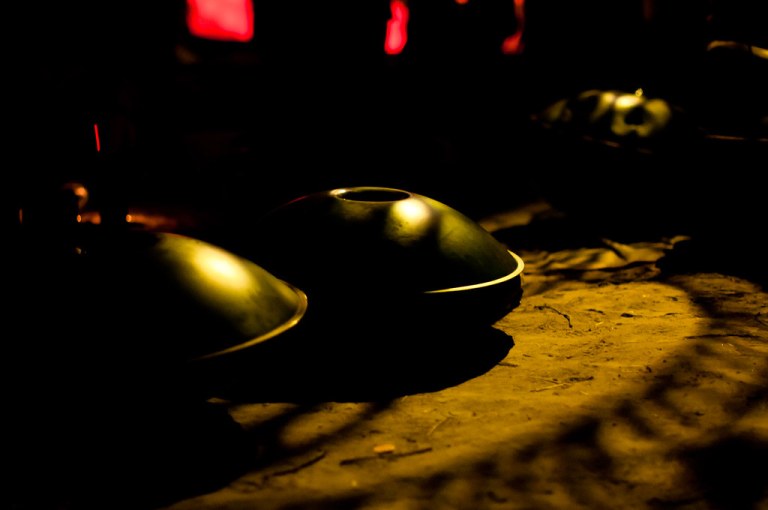
Hang drums courtesy of Openverse
The Present:
People adore a perron who chooses to share their playing of a rare musical instrument, especially when played well!
The Future:
The future definitely needs young recruits to take the stages all across the world with a rare musical instrument. . .
FREEBIES & DEALS For Uncommon Musical Instrument:
🎸 FREE: Drum Month Fonts
🎼 FREE: Drum Month: Crafts + Printable
🎵 FREE: Drum Month: Sheet music
🎶 CHEAP: Drum Month: Ideas, Crafts & Worksheets
🎧 FREE: Drum Month: AT “Hey It’s Free”
Hashtags:
#HappyUncommonMusicalInstrumentAwarenessDay #UncommonMusicalInstrument #UncommonMusicalInstrument #UncommonMusicalInstrumentAwarenessDay #ChapmanStick #Cimbalom #ContrabassBalalaika #Crwth #Didgeridoo #GlassArmonica #HangDrum #Harp #HurdyGurdy #Hydraulophone #Jew’sHarp #Nyckelharpa #Octobass #OndesMartenot #PikassoGuitar #Pyrophone #Sharpsichord #SingingRingingTree #Theremin #Musical #Music #Musician #Musicians

Green harp flag of Ireland courtesy of Openverse
Uncommon Musical Instrument Awareness Day