
Happy Find A Rainbow Day!
Today is 2025’s Find A Rainbow Day. . .How colorful!
Happy National Find A Rainbow Day ! ! !
■ 🌈 ● 🌈 ■ 🌈 ● 🌈 ■ 🌈 ● 🌈 ■ 🌈 ● 🌈
National Find a Rainbow Day is a special day serves as a reminder for individuals to seek out a glimmer of hope in the heavens above. Rainbows, with their enchanting allure, are a captivating meteorological occurrence that many find awe-inspiring. This occasion presents a chance to delve into and admire the splendor of nature. day to honor rainbows: ROYGBIV to help them to remember the sequence of colors in a rainbow: red, orange, yellow, green, blue, indigo, violet. Many forms of airborne water can cause a rainbow including, rain, mist, spray, and dew.

Rainbow on the outskirts of Reykjavik courtesy of Openverse
Prism Makes a Rainbow:
Infrared Explained: The Visible Light Magic Window sees the same part of the spectrum as our eyes see. Visible waves are a little shorter than the size of a bacterium. By the way, in the visible light range of the electromagnetic spectrum are the separate smaller ranges that our eyes see as different colors. A prism separates white light into its different wavelengths. White light goes in, all the colors of the rainbow come out. In the visible range, red has the longest wavelength, while violet has the shortest.
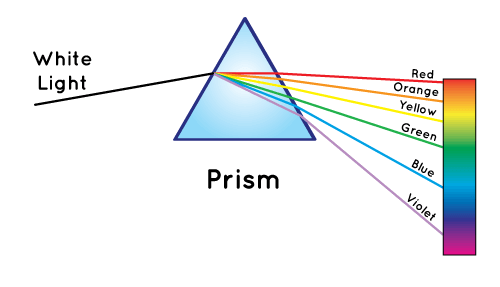
Image courtesy of NASA Space Place – NASA Science for Kids
Viewed: When white light passes through a prism, it is divided into its various colors. A prism is a crystal with a specific shape. If you were to explore The Land of the Magic Windows, you would discover that the light visible to us is just a small portion of the different types of light energy present in the universe – including the light surrounding you! Similar to energy moving through the ocean, light energy also moves in waves. Some light moves in short, rapid waves, while others move in long, slow waves. The waves of blue light are shorter compared to those of red light. Each color of light has its own unique wavelength. Light always travels in a straight line unless it encounters an obstacle that causes it to either reflect (like a mirror), refract (like a prism), or scatter (like the molecules in the atmosphere). When sunlight enters Earth’s atmosphere, it is scattered in all directions by the gases and particles present in the air. Blue light, in particular, is scattered in various directions by the small air molecules in Earth’s atmosphere. Blue light scatters more than other colors because it consists of shorter, smaller waves. This phenomenon explains why we typically see a blue sky.
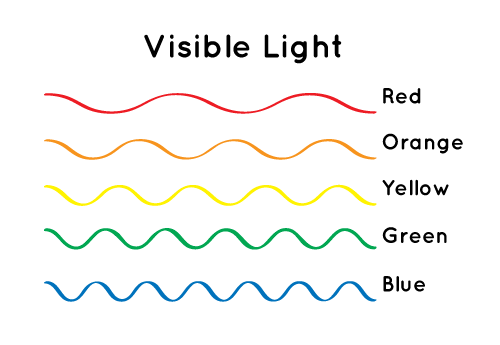
Image courtesy of NASA Space Place – NASA Science for Kids
Observation Date:
Observed: National Find a Rainbow Day is observed annually on April 3rd.

Edit © 2024 Versatileer
Photos:
Deeply Prominent Rainbow: This astounding rainbow was witnesses on my way down to Indianapolis last year the day before the “Great American Eclipse”

© 2025 Versatileer
Photo #1 taken with a Samsung Galaxy S24 with the factory triple camera system: 50 MP sensor with an f/1.8 aperture and OIS, ultrawide camera has a 12 MP sensor with an f/2.2 aperture and a 120-degree FOV, telephoto camera has a 10 MP sensor with an f/2.4 aperture and 3x optical zoom.
Infrared Explained: Any visible light frequencies are reflected and refracted into any rainbow’s arc and show up as individual colors starting at the violet range all the way to red. The red spectrum is the longest ray, almost a wave as the longer spectrums have the personality of waves. Any infrared light is also being reflected and refracted but it is NOT visible to the eye. Since infrared light is subject to being absorbed as heat, the light does not show up as a lighter portion of the infrared film, rendering the infrared band appearing to be darker than the non-infrared sectors of light. Also notice “ghosting” of leaves on some of the trees. Since is is a darker value, it is showing of the branches transpiring water, therefore being cooler (the process is what gives that “cool” feel of being by plants). This was the original great asset of infrared photography’s use for military purposes in the jungles.

Images originally posted: Sep 3, 2019: New Feature: Photo of the Day © 2019 Versatileer; Photo edited and overlayed by LunaPic Photo Editor.© 2023 Versatileer
Photo #2 is an image overlay of the visible light photo on top of the infrared. I allowed the transparency to see both photos equally. See the below two photos for exposure information for each of the two photos..
Infrared vs. Visible Light Rainbow: Photo 2 & 3 are photos are of a rainbow in Oak Forest, Illinois, of a repeat post of the absolute original “Photo Of The Day” (now “Featured Photo”) segment that started Labor Day weekend in 2019. In the segment, I show the difference between a rainbow in an infrared photo by displaying the spectrum they use as compared to a visible light photo. Note that the spectrum is down on the near side shifted over and out of the red spectrum, as the featured rainbows show the results.
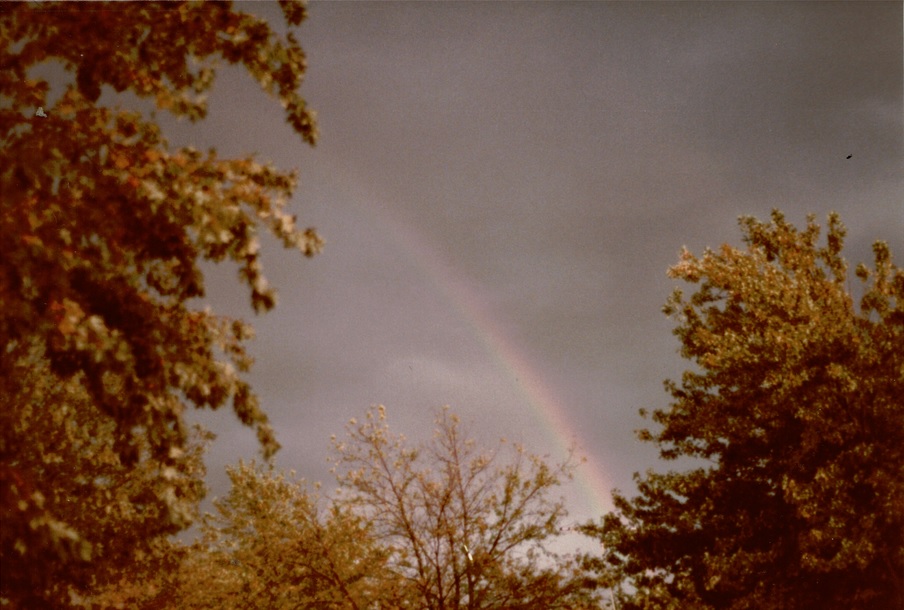
Originally posted: Sep 3, 2019: New Feature: Photo of the Day © 2019 Versatileer
Photo #3 is taken on Kodacolor then ASA (ISO) 100 speed film processed C-41 with a tripod through a Nikon EM with a Nikon 26 mm lens, filter=polarizer, Aperture=22 f/stop, shutter-speed 1/30th second. Enlargements processed standard color process on 4×6″ silk standard color image enlargement paper.

Originally posted: Sep 3, 2019: New Feature: Photo of the Day © 2019 Versatileer
Photo #4 is taken with the same Nikon 26 mm lens put onto a Nikon FE camera, filter=polarizer and yellow filter, Aperture=22 f/stop, shutter-speed 1/15th second, loaded with Kodak Ektachrome Infrared Color IE 135-20 Infrared Slide Film processed E-6 using Kodak Ektachrome Chemicals. Enlargement processed Type R color positive paper and R-3000 chemistry onto 3½x5″ glossy negative color image enlargement paper.
180° Rainbow: Full 180° Rainbow in Oak Forest, Illinois. Photos were taken near sunset on 10/11/2021, published same day.

Originally posted: Oct 12, 2021: Full 180° Rainbow in Oak Forest, Illinois © 2021 Versatileer
Photo Set #5 taken with a Samsung Galaxy A71 with the factory Quad camera Standard-wide: 64 MP 1/1.72-inch sensor with 0.8µm pixels and 26 mm-equivalent f/1.8 PDAF lens Ultra-wide: 12 MP sensor with f/2.2 aperture lens.
Winter Sundog: A rare formation of a sundog and halo arc in winter. Photo was taken in the winter of 1982.
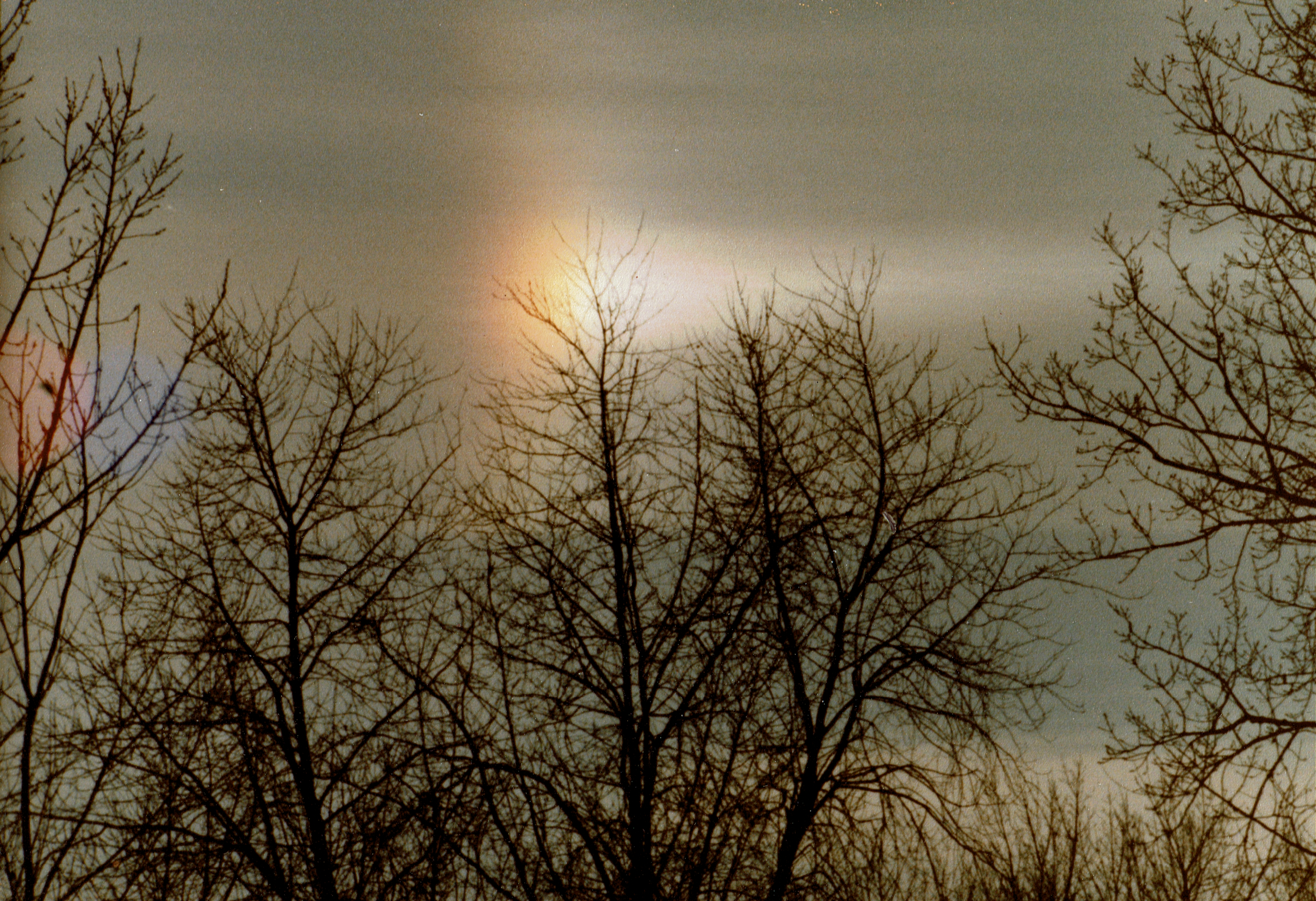
Originally posted: Feb 16, 2020: Photo of the Day: Sundog and Halo Arc in Winter © 2020 Versatileer
Photo #6 taken with a Nikon FE camera mounted on a mini-pod through a Nikon 26 mm lens, filter=NONE, Aperture=2.8 f/stop, shutter-speed 1/15th second, loaded with Fujicolor 400 Color 135 Negative Film processed with C-41 Processing Chemicals, and a Type C Print using the RA-4 enlargement paper process, onto a 4X6″ semi-gloss print.
FREEBIES & DEALS For Find A Rainbow Day:
🌈 FREE: Find A Rainbow Day: Fonts
🌈 FREE: Find A Rainbow Day: Crafts + Printable
🌈 CHEAP: Find A Rainbow Day: Ideas, Crafts & Worksheets
🌈 FREE: Find A Rainbow Day: AT “Hey It’s Free”
Hashtags:
#Rainbow #Rainbows #Color #Colors #Colorful #Colour #Colours #Colourful #Rain #RainyDay #Beautiful #Sky #Clouds #Sunset #Landscape #Photo #NaturePhotography #Nature #Photography #PhotoOfTheDay #PicOfTheDay #PictureOfTheDay #Unicorn #Cute #Artist #Spring #Summer #Fall #Autumn #Winter #ROYGBIV #Red #Orange #Yellow #Green #Blue #Indigo #Violet #Infrared

Photo by Todd Cravens on Unsplash
National Find A Rainbow Day
More on Versatileer:
![facebook_invitation_1597978576-e1688614343475.jpeg]()
Reporting a Facebook Scam – Don't Become a Target
08/20/2020![poster-yof09.jpg]()
Ends 08-09 – Year of the Fledgling by Linda Kage Book Blitz + $30 Amazon Gift Card Giveaway
07/31/2023![Wonder Land_6.png]()
Ends 07-05 – Wonder Land by Alexis Rey Book Blitz + $20 Amazon Gift Card Giveaway
07/02/2023![Flag Cube__imageedit_4_3001575270__CROP.png]()
Happy Labor Day 2021
09/06/2021![Daring Destiny by Kaylene Winter Book Tour & Interview.jpg]()
Ends 01-29 – Daring Destiny by Kaylene Winter Book Tour & Interview + Signed Copy of Daring Destiny ...
01/20/2025



























lots of rain today, no rainbows
My father said that he saw rainbows before he passed away