
Today is National Cut Your Energy Costs Day for 2025. To start your year off with more than a New Year’s resolution, being smarter by knowing that you are able to be real smart by saving money just by using energy in a more efficient manner.
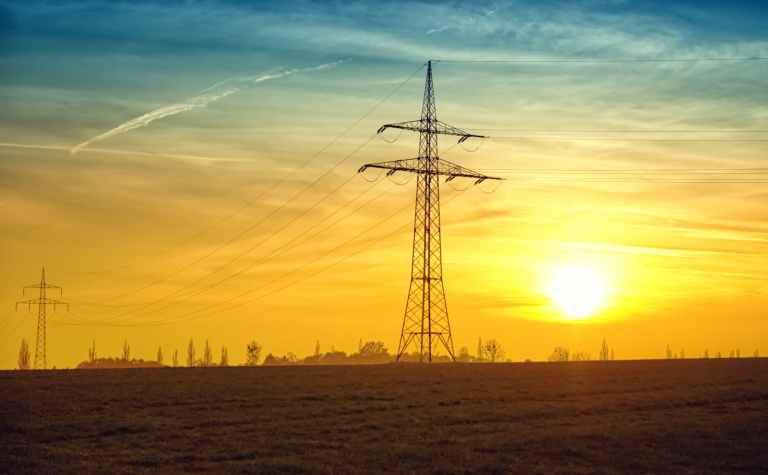
Photo courtesy of Pixabay
Even though using energy is inevitable, a few tweaks can make that hunk of change that we have no way around, but a few or more changes can keep more than just pennies in you bank account every month! With soaring energy costs, this list will assist in a program to keep more $$$ in your wallet. . .
⚡ Ways to Start Saving Today and For the Future:
- Close up the cracks. Check caulking and seals on all your windows, doors and appliances. Contacting a local energy consultant who will examine your house or business for a fee and give you an extensive report on how to fix cracks and leaks and give other great advice on energy savings. The price you pay as the fee will more than pay for itself over and over again, so this is not actually an expense over the course of time, but an income saver.
- Adjust your thermostat. Give your thermostat a seasonal nudge. A smart thermostat can help because it is programmable and can cut your energy down at designated times of day. By turning the heat down one degree in the winter, and setting the air conditioner up one degree higher in the summer, there is a dramatic difference in the energy consumption, and you probably won’t even notice the difference physically, but will make a great difference in added savings.
- Fix leaky ductwork. Ducts leaking air where it is not meant to come out equal less effectively, and thereby heater will be on longer because the heat never makes it where it is intended. Sometimes it is not efficient to keep wasting energy, so if you think that you will not be able to fix this yourself, you can contact a local energy consultant who will examine your house or business for a fee and give you an extensive report on how to fix any leaks and give other great advise on energy savings.
- Adjust your fridge and freezer temperature. Make sure, however to not overdo it. Your refrigerator MUST be lower than 38 degrees for the save storage of any dairy products and for the proper storage of a lot of meat, poultry, vegetables, fish and the like. Plus it just tastes way better! Your freezer is recommended at 0 degrees, so if you see it below zero, try a setting between 0 and 5, but NEVER go higher than that for any reason! Deep freezers at -20 degrees. Buy a refrigerator and/or a freezer thermometer. Food storage being safe is of upmost importance. Also clean the coils periodically and keep them all as full as possible, because solids transfer heat less quickly, increasing efficiency, because air is another hole in your pocketbook.
- Take shorter showers. Even though they are truly rehabilitative, a shorter shower means less in water bills too, but less hot water could also lump up in energy savings with a saving of heating costs to heat the hot water. Constellation Energy has an article relating to better understanding of shower head use: https://blog.constellation.com/2016/07/05/average-shower-length-flowchart/
- Replace your shower head. A showerhead can be in control of saving nearly 2,700 gallons per year, just by turning up the pressure of the water. There are a many of great new options available where there are less liters of water used per shower, by turning up the pressure of the water, thereby producing greater results at getting the same rinsing done–and you definitely will never notice the extra water being lost down the drain. Use the showerhead calculator: https://www.energy.gov/eere/femp/energy-cost-calculator-faucets-and-showerheads
- Turn off the water while shaving and/or brushing. You will save more by not letting the water go down relentlessly while brushing your teeth or shaving..
- Don’t wash clothes in hot water. Hot water uses almost twice as much energy than warm water and doesn’t even do a better job at washing out the protein staining from sweat and can do a better job at “fixing” stains in, which is not good at all. You can enjoy great energy savings by your hot water heater not working so hard producing the hot water for each load You can read more about reducing your hot water use at: https://www.energy.gov/energysaver/reduce-hot-water-use-energy-savings
- Wait until you have full loads before washing clothes. It takes at least a few extra gallons of water, and that’s putting it mildly–to anti up the washing machine in order to even start a load of laundry.
- Fix your leaky or dripping faucets. A dripping faucet with just one drop per second wastes over 170 gallons of water per month. You can measure your savings with the drip calculator: https://water.usgs.gov/edu/activity-drip.html
- Adjust the temperature on your water heater. Having the water too hot can not only be a burn hazard, but the heater works more inefficiently over the course of time, and heat goes right through the roof of the unit. You can use the water heater tool at: You can use the water heater tool at: https://www.energy.gov/energysaver/estimating-costs-and-efficiency-storage-demand-and-heat-pump-water-heaters
- Purchase energy-efficient appliances. Energy-Star is a system invented for the continual procurement of energy savings by implementing a system behind equipment, appliances and just about anything that can consume energy. It has a rating system whereby like appliances are rated for efficiency. Businesses and commercial properties and apartments + condominium associations are urged to going the “Portfolio Manager Tool”: https://portfoliomanager.energystar.gov/pm/signup
- Don’t use more energy than you need. You wouldn’t think of using a truck all day to deliver a pizza, so why do it on a daily ongoing basis? Keep your energy at a level where you get the results you are looking for on anything and then take steps to curtail energy consumption.
- Shop smarter. It starts at the store when you buy just about anything. From light bulbs, to dimmer switches, smart switches, smart power strips, even television sets.
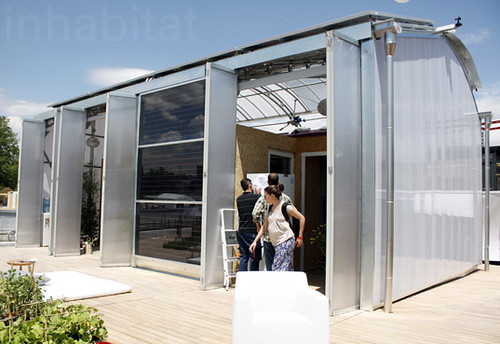
LOW3 – Politecnica de Cataluna courtesy of Openverse
| TYPICAL HOUSE EQUIPMENT – LIST OF WATTAGE USE | |||||
| APPLIANCE | APPLIANCE | WATTAGE | |||
| Clock Radio | VCR/DVD | 17-21/20-25 | |||
| Clothes Washer |
350-500 |
Refrigerator | 1725 | ||
| Dishwasher | Microwave | 750-1100 | |||
| Stereo |
Computer | 120 | Clothes Iron | 1000-1800 | |
| 18″ Color Television |
110 | Computer Monitor |
150 | Hair Dryer | 1200-1875 |
- Turn things off. Whenever possible, especially lights, turn it off–even if you leave a room only for a few minutes.
- Use the free daylight as much as you possibly can. This is the ultimate in energy savings in ALL cases! To find the total wattage of a fixture, add the wattage of each light bulb together.
TYPICAL POWER USE FORMULAS fixture watts = bulb watts × bulb quantity. kWh = Power(W) × Time(hrs) ÷ 1,000. monthly kWh = kWh per day × 30. price = kWh × cost per kWh. - Buy smarter bulbs. Swap out your legacy incandescent light bulbs. Replace them with CFL and LED and furnish the same lumens of light without burning all of that extra energy. You can use the Electricity & LED calculator at: https://energyusecalculator.com/electricity_ledlightbulb.htm

Daniel Reche at Pexels
- Efficiency. Make sure all your appliances and products that you use every day are energy efficient by using the following energy calculators:
- LED Light Bulb
- CFL Light Bulb
- Incandescent Bulb
- LCD/LED TV/Display
- CRT Monitor
- Game Console
- Desktop Computer
- Laptop/Notebook
- Wi-Fi Router
- Printer
- DVR
- Cell Phone Charger
- Cordless Phone
- Alarm Clock Radio
- Electric Furnace
- Space Heater
- Water Heater
- Central Air Conditioner
- Air Conditioner
- Clothes Washer
- Clothes Dryer
- Cooking Stove Top
- Oven
- Dishwasher
- Freezer
- Refrigerator
- Coffee Maker
- Microwave
- Toaster
- Hair Dryer
- Iron
- Vacuum
- Ceiling Fan
- Watts Volts Amps Ohms
- Install dimmer switches. Keeping a chandelier with as many bulbs as they have down a few extra watts can save countless energy over the course of a year’s time. Make sure that you use only lighting on any dimmer switch as it could ruin any other appliance and especially electronics including computers and chargers.
- Use smart power strips. The strip usually will pay for itself over the course of time.
- Tweak your television settings. There are a lot of setting ion the set that can be changed to keep certain reserve power on to power up a set quicker when you are away, and over the course of time, this really makes a difference.
- Measure your electricity and gas. Do an energy audit, an you house, automobiles and all other energy consumption.

budget calculator (Custom) courtesy of Openverse
- Make the call. Call and ask about discounted rates. Remember it never hurts to ask, but it always hurts to find out later how much you could have been saving all along. It also inherently hurts to pay more for something and not know.
- Unplug unnecessary chargers. Chargers left unattended with fully charged batteries still trickle power, thereby having your savings go out the door.
- Recycle your old electronics. Recycling pays in terms of the environment in two ways, by not polluting and by not using all those extra resources.
- Choose renewable energy, whenever it is possible. Don’t become too reliant, because you need your energy on all the time, and certain resources are not always available, like solar, so you need to make sure that you always have another type of energy available at all times. Establish an order of preferred provider type and then providers.
💫 Live With Assurance:
Living with the assurance that you are not only doing your part for the environment, but really, I mean really for your pocketbook! A great way to live efficiently and decrease the shrinkage of your bank account in a rough and tough economy!
🔋 More Energy Resources, All on One Page:
Domestic Water Conservation Technologies: Federal Energy Management Program (FEMP) Federal Technology Alert (Booklet):
More, use the following resource: https://www1.eere.energy.gov/femp/pdfs/22799.pdf
ENERGY USAGE CALCULATOR: Interactive comparison tool courtesy of Energy Use Calculator: energyusecalculator.com
 ENERGY USAGE CALCULATOR: Interactive comparison tool courtesy of saveonenergy.com

Photo by geralt courtesy of Pixabay
Cut Your Energy Costs
More on Versatileer:
![coffee-beans-and-white-mug-606545 coffee_1664427333.jpeg Jessica Lewis Creative at Pexels]()
Happy National Coffee Day! – 2022
09/29/2022![20211219_192334.jpg]()
Featured Photos: The 25 Days of Christmas – Final Photo 11 & Bonus Video: Yuletide at the Aurora Fes...
12/31/2021![President-John-F-Kennedy__FOREVER-REMEMBERED-A-TRUE-LEGACY-2022.jpg]()
Remembering President John F. Kennedy: 59 Years Later – 2022
11/22/2022![Ends 11-10 – A New Streaming App for Kids- Bentkey + 1-Year Subscription Giveaway!]()
Ends 11-10 – A New Streaming App for Kids- Bentkey + 1-Year Subscription Giveaway!
11/03/2023![INSTA_TheChampagneCrush.png]()
Ends 12-10 – The Champagne Crush by Caroline O’ Connell Book Blitz + $35 Amazon Gift Card & Print Co...
12/03/2025































I know from my small home, making sure the home is thoroughly sealed from the outside, makes the biggest difference. Most people don’t realize that their homes allow the entry of the outdoors into their home, in some way. Thanks for the reminders and good advice.