Happy Bowling Day!
Yesterday was National Bowling Day for 2024. . .
Happy National Bowling Day ! ! !
🎳 🎳 🎳 🎳 🎳 🎳 🎳 🎳 🎳 🎳 🎳 🎳 🎳 🎳 🎳 🎳
Bowling:
What is the Basic Concept of Bowling? Bowling is both a game and a sport that involves rolling a heavy ball down a long, narrow lane in an attempt to strike down a set of objects referred to as pins, with the objective of knocking down a greater number of pins than one’s opponent. the majority of cowling centers and modern forms of bowling are based on standard 10-pin bowling. There is also the form of bowling called candlepin bowling and also duckpin bowling. There are also various different renditions of using less than 10 pins.

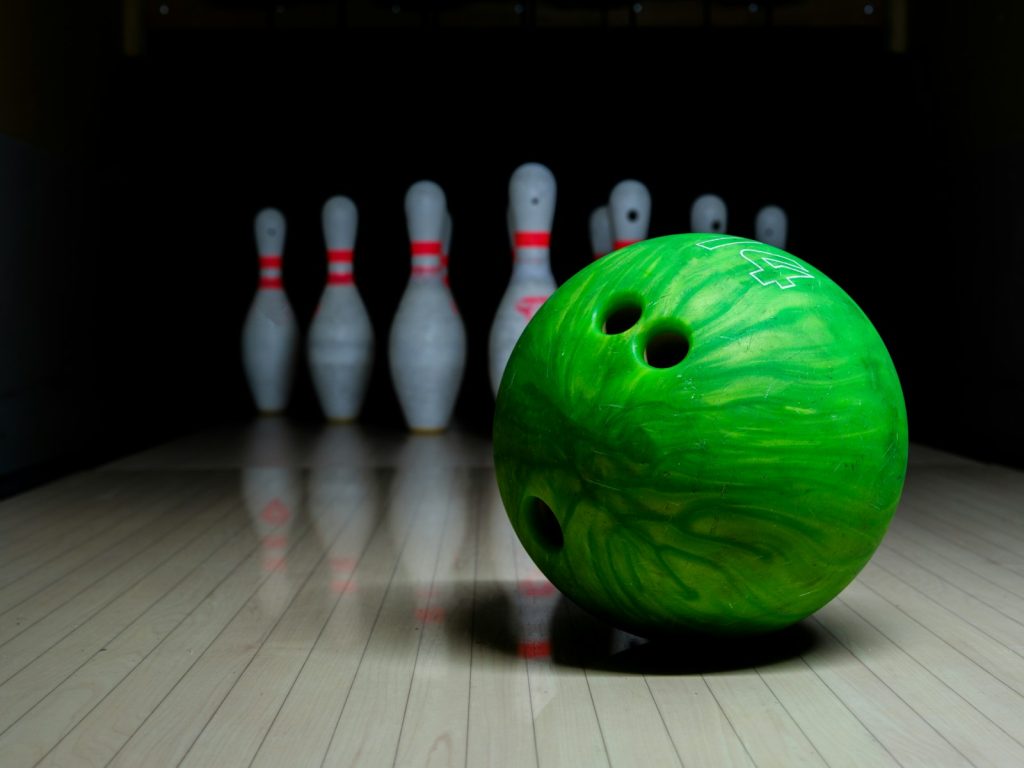
20200127 Bowling ball and pins for strike – front view courtesy of Openverse
Origination: The origins of bowling can be traced to approximately 3200 B.C. in ancient Egypt, where British archaeologists unearthed bowling artifacts within a child’s tomb. It is believed that the game initially served as a religious ceremony, in which participants rolled a stone towards a Kegel, with the belief that striking it down would absolve them of their sins. As time progressed, the Kegel transformed into what we now recognize as pins, and the term Keglers is still occasionally used to refer to bowlers today.
Early Equipment: The initial bowling balls were constructed from wood or dense rubber and did not feature finger holes, which likely resulted in a less smooth rolling experience compared to contemporary bowling balls. Originally a pinsetter (“pin boy”) was a paid position whereby the pins would be reset in the alley after each frame. The conventional bowling alley of the early 20th century saw significant advancements in automation with the introduction of a machine that replaced the manual labor of a pinsetter. This innovation, which automated the process of resetting fallen pins, emerged in the 1950’s, marking a notable shift in the bowling experience.
Banning of Bowling: Throughout history, bowling has faced bans in various locations, likely as a result of its widespread appeal. In 1366, King Edward III of England is believed to have prohibited bowling in order to ensure that his soldiers remained dedicated to archery training. In the United States, bowling was restricted to avert soldiers from engaging in gambling on the game, thereby neglecting their responsibilities. In Connecticut, the year 1841 saw the prohibition of ninepin bowling, which was thought to be linked to gambling and criminal activities, potentially giving rise to the creation of ten-pin bowling.
Out of Date Gender Restrictions: Bowling was initially regarded as a sport exclusively for men, with women being barred from participation until the establishment of the Women’s National Bowling Association in 1917.
The Origination of the Modern Indoor Game: The original indoor bowling lane was established in New York City in the year 1840, and by 1875, delegates from nine bowling clubs in New York and Brooklyn met in Germania Hall in the Bowery and organized the National Bowling Association. This was the first attempt to bring order out of chaos. and the modern era of the sport of bowling. It made its television debut by the year of 1950.

20181230 Bowling ball at board 17.5 with pins courtesy of Openverse
The Game:
Rules: The game of bowling is played with the following general regulation:
- Ten Frames in a Bowling Game: In a standard bowling game, there are a total of 10 frames. Each frame allows a bowler to take one turn, with the opportunity for up to two rolls. In the tenth frame, bowlers may have a maximum of three rolls, contingent upon their performance in the initial two rolls.
- Two Rolls per Frame: As previously stated, each bowler is permitted a maximum of two rolls within a single frame. Should a bowler achieve a strike (knocking down all pins) on their first roll, their turn concludes. However, in the tenth frame, if a bowler scores two strikes, they are allowed a third roll. Nonetheless, the limit remains two rolls per frame for all other instances.
- Scoring: Achieving the Maximum Score of 300 The highest possible score in a bowling match is 300. This score is attained by achieving a perfect score of 30 points in each of the ten frames, which requires scoring a strike in each of the first nine frames and three strikes in the tenth frame. To accomplish this, a bowler must secure a total of 12 strikes throughout the game.
- Ball Release/Foul Line: When bowling, it is essential for the player to release the ball from behind the foul line, allowing it to roll into the playing lane. If a bowler crosses the foul line while delivering the ball, any pins knocked down will not contribute to their score, resulting in no points being awarded. Consequently, crossing the foul line is strictly prohibited; if a bowler steps on it, the roll is nullified, and the score is recorded as zero.
- Gutter Balls and Scoring: If a bowling ball rolls into the gutter and subsequently bounces out to knock down pins, those pins will not be counted towards the bowler’s score. The gutter is considered out of bounds, and once the ball has entered it, it cannot return to the lane. Therefore, that roll is deemed invalid.
- RWait for the Bowler on Your Right: In situations where two bowlers are preparing to bowl simultaneously, the bowler positioned to the right is to bowl first. This guideline is applicable when both bowlers approach the lane together and are ready to take their turns.
- Use of Proper Bowling Shoes: It is essential to wear appropriate bowling shoes to prevent accidents. Additionally, regular footwear can damage the wooden lanes; therefore, ensure that you either rent bowling shoes or bring your own.
| TYPICAL BOWLING GAME | |||||||||||||
| BOWLER 1 | 1 |
2 |
3 |
4 |
5 |
6 |
7 |
8 |
9 |
10 |
←FRAME | ||
| FACTORING | x | x | x | x | x | x | x | x | x | x | x | x | TOTAL |
| Me | 30 | 60 | 90 | 120 | 150 | 180 | 210 | 240 | 270 | 300 | 300 | ||
| BOWLER 2 |
1 |
2 |
3 |
4 |
5 |
6 |
7 |
8 |
9 |
10 |
←FRAME |
||
| FACTORING | x | x | x | x | x | x | x | x | x | x | 9 | TOTAL | |
| You | 30 | 60 | 90 | 120 | 150 | 180 | 210 | 240 | 250 | 289 | 289 | ||
| BOWLER 3 | 1 |
2 |
3 |
4 |
5 |
6 |
7 |
8 |
9 |
10 |
←FRAME | ||
| FACTORING | x | x | 4 / | x | x | x | 9 / | 9 / | x | x | x | x | TOTAL |
| Friend #1 | 24 | 44 | 64 | 94 | 123 | 143 | 162 | 182 | 212 | 242 | 242 | ||
| BOWLER 4 | 1 |
2 |
3 |
4 |
5 |
6 |
7 |
8 |
9 |
10 |
←FRAME | ||
| FACTORING | 9 / | 9 / | 9 / | 9 / | 9 / | 9 / | 9 / | 9 / | 9 / | 9 | / | x | TOTAL |
| Friend #1 | 19 | 38 | 57 | 76 | 95 | 114 | 133 | 152 | 171 | 191 | 191 | ||
Further Regulations & Guidelines:
- Players are permitted to select the ball that best suits their preferences.
- The bowling ball must remain unmodified throughout the duration of the game.
- A standard bowling game comprises ten frames for each player.
- In the initial frames, each player is allowed to roll two balls, except in the case of a strike.
A Free Bowling Calculator:
Visit the following website to use the free bowling calculator. Most lanes are computerized and you won’t be able to cheat. This calculator will make the concept much easier:

The Equipment:
THe Bowling Pins: A typical bowling pin measures 15 inches in height. The specifications for bowling pins are established by the United States Bowling Congress, which stipulates a maximum width of 4-3/4 inches at the broadest point and a weight of 3 pounds, 8 ounces, allowing for a variance (+/-) of 2 ounces. Generally constructed from hard maple, bowling pins feature a design that is broader at the base and tapers towards the top. To ensure stability, each pin incorporates two voids located at its widest section.
The Bowling Ball: The predominant form of bowling, ten-pin bowling utilizes balls that generally measure 8.59 inches in diameter, possess a circumference of 27 inches, and weigh between 6 to 16 pounds (2.7 to 7.3 kg). The United States Bowling Congress oversees the specifications regarding the dimensions and spacing of the thumb holes, along with additional criteria such as surface hardness and texture. Balls that are lighter in weight typically feature smaller finger holes to better fit individuals with smaller hands.
The Bowling Lane: The United States Bowling Congress (USBC) establishes various standards for bowling lanes, encompassing dimensions, equipment specifications, and certification processes:
- Dimensions: A standard United States Bowling Congress bowling lane measures 60 feet in length from the foul line to the center of the head pin and has a width of 42 inches. Additionally, the lane features gutters on either side to capture wayward balls.
- Equipment: Bowling lanes designated for certified leagues and tournaments must be resurfaced in accordance with USBC guidelines. For instance, any drilled holes must not exceed a diameter of 1-9/16 inches or a depth of 4-1/2 inches.
- Certifications: Bowling centers aspiring to host USBC-certified events must adhere to the USBC Tiered Center Certification Program. This entails passing inspections carried out by USBC personnel and ensuring that all equipment utilized on the lanes is recognized as USBC approved. Furthermore, the United States Bowling Congress undertakes research to evaluate lane certification documentation and assess lanes nationwide to update requirements and specifications.
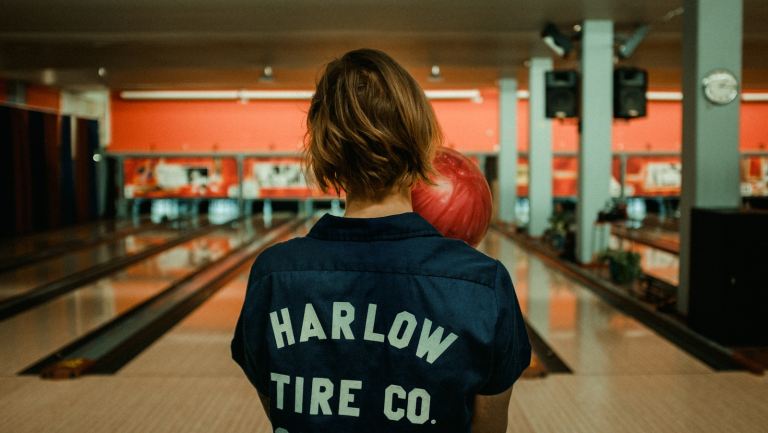
Photo by Kalle Stillersson on Unsplash
Types of Bowling:
Open Bowl: Open bowling is the form of bowling that you walk in and grab an open lane, and bowl until you want, or unless there is a restricted time where the lane is available until, you would be able to bowl until the reserved time.
League Bowling: League bowling consists of a group event where several teams compete against each other over a season. Leagues typically consist of four-player teams that meet weekly or bi-weekly at a set day and time, with three or five-player teams also being common. Leagues can be male-only, female-only, or mixed. They were established in the late 1800s and can be organized by bowling alleys or by groups like companies, churches, or labor unions. During each session, teams face off against each other, playing three games per match. Players bowl in a specific order across two lanes, switching lanes after each frame to ensure fair conditions. Player averages are set after the first week and may change as more games are played. Handicaps based on averages help level the playing field, allowing lower average teams to compete against higher average teams. Some leagues are casual, while others are highly competitive, with disputes over fouls or intentionally lowering averages to gain an advantage. Additionally, membership in the USBC has declined, signaling a decrease in league participation. However, the number of lanes per bowling center has slightly increased over time, and there has been a recent uptick in bowling center employment due to diversification into broader entertainment offerings. Many leagues offer cash prizes and betting pools, adding an extra incentive for players. Strike and spare pools, as well as side poker games, are common ways to make things more interesting. Jackpots for high scores, mystery games, and other prizes are also popular. The goal is to enhance the friendly competition and keep players engaged throughout the season.
Tournament Bowling: Tournament bowling is a form of bowling whereby the competition of either league bowling or high stakes competition get together and run a playoff. A typical tournament format has each bowler rolling eighteen qualifying games, three blocks of six games. All scores added together and the top twenty-four advance to match play. Positional ties are broken by whichever bowler had the highest single-game total. The tournaments are from different backgrounds and range from popularity all the way and up to being on television. Tournaments are not available to the novice, and are more reserved for the best rolling bowlers to the professional. There are often awards, trophies, pots and sweepstakes connected with being a champion in a tournament.
Blacklight Bowling & Candlelight Bowling: In Blacklight Bowling, sometimes referred to as “cosmic bowling,” a black light is used to illuminate the bowling lanes and pins, giving them a dazzling fluorescent effect in the dark. These fluorescent-colored objects glow brightly when illuminated by blacklight, creating a fantastical and unique bowling delight. The lane material used on the wood like surfaces is actually a laminate coated flooring that is specifically only used and licensed by the Brunswick Bowling Center Products Corporation that fully illuminates because of the lack of visible light and a blacklight cast onto the photoluminescent material that the laminate is made of. Blacklight bowling came around in the 1980’s to 1990’s and sort of replaced candlelight bowling, although sometimes for the sake of vintage reasons, candlelight bowling is on the comeback. In candlelight bowling, all the lights are our, and the lighting of the lanes remains on. Depending on fire code, candles are used–although it is much safer to use flameless candles.
The Trends of the Fabulous Sport of Bowling:
Overall Trend: Over the past few decades, bowling has experienced a significant transformation. Previously, league bowling accounted for approximately 70 percent of a bowling center’s revenue; however, due to shifts in societal norms and lifestyle choices, this figure has now decreased to around 40 percent of total bowling business, and the trend appears to be on a downward trajectory.
U.S. Bowling Centers
 Families often seek new ways to have fun and break away from their routines. They might spend a day at an amusement park or go bowling with friends. In the U.S., the number of bowling alleys has been slowly declining, dropping from 3,470 in 2012 to 2,849 in 2022. |
Recent Trends: In 2024, the United States is home to 2,646 bowling centers, reflecting a decrease of 2.04% compared to 2023. This figure has been on a downward trend over the years, having reached 3,470 bowling centers in 2012. Nevertheless, the bowling center sector has experienced growth in market size since the pandemic, as an increasing number of individuals opt to engage in bowling during their leisure time.
Bowling Centers List By State:
| Bowling Centers State-By-State |
||
| Centers by State |
No. |
Rank |
|---|---|---|
| Alabama | 49 |
24 |
| Alaska | 14 |
41 |
| Arizona | 63 | 20 |
| Arkansas | 40 |
31 |
| California | 224 |
2 |
| Colorado | 83 |
14 |
| Connecticut | 24 |
38 |
| Delaware | 13 |
42 |
| Florida | 150 |
9 |
| Georgia | 83 |
15 |
| Hawaii | 16 |
40 |
| Idaho | 48 |
25 |
| Illinois | 269 |
1 |
| Indiana | 136 | 10 |
| Iowa | 134 |
11 |
| Kansas | 78 | 16 |
| Kentucky | 63 |
21 |
| Louisiana | 33 |
34 |
| Maine | 20 |
39 |
| Maryland | 46 |
28 |
| Massachusetts | 41 |
30 |
| Michigan | 207 |
6 |
| Minnesota | 156 |
8 |
| Mississippi | 27 |
37 |
| Missouri | 114 | 12 |
| Montana | 45 |
29 |
| Nebraska | 65 |
18 |
| Nevada | 36 |
32 |
| New Hampshire | 8 |
44 |
| New Jersey | 65 |
19 |
| New Mexico | 29 |
36 |
| New York | 218 | 4 |
| North Carolina | 90 | 13 |
| North Dakota | 31 | 35 |
| Ohio | 213 | 5 |
| Oklahoma | 52 |
23 |
| Oregon | 54 |
22 |
| Pennsylvania | 193 |
7 |
| Rhode Island | 8 |
45 |
| South Carolina | 48 |
26 |
| South Dakota | 47 | 27 |
| Tennessee | 70 |
17 |
| Texas | 221 |
3 |
| Utah | 1 | 50 |
| Vermont | 10 | 43 |
| Virginia | 34 | 33 |
| Washington | 8 |
46 |
| Washington, D.C. | 2 | 49 |
| West Virginia | 3 |
48 |
| Wisconsin | 5 | 47 |
| Wyoming | 0 |
51 |
| Figures are the latest available. Statistics courtesy of Bowling Wiki | Fandom | ||
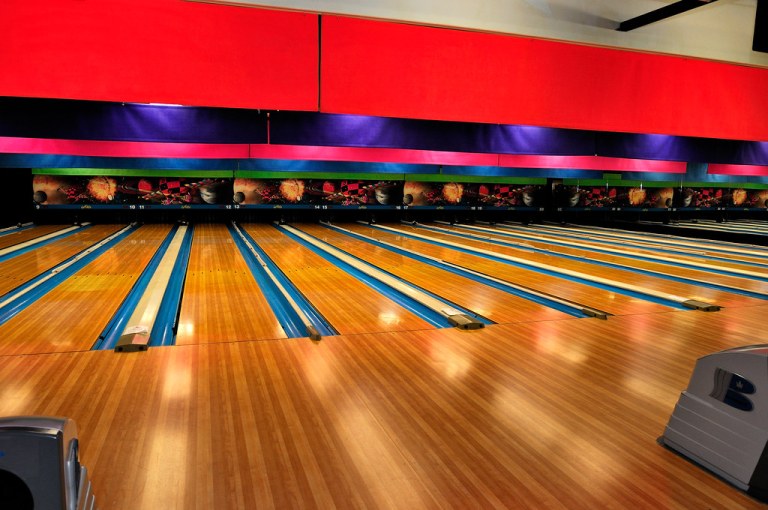
Fat Cats Bowling Alley courtesy of Openverse
A Few Facts:
I am sharing a few facts, and more, some trivia, some not trivial. . .
Popular U.S. Bowling Centers:
Great Places to Visit For Bowling: United States has many bowling centers, including some that are considered top bowling alleys:
- National Bowling Stadium: Located in Reno, Nevada, this facility has 78 championship lanes and is designed for tournament bowling
- Thunder Lanes: Located in Allen Park, Michigan, this center has 90 lanes and is the second largest bowling facility in the country
- 300 New York: Located in Chelsea Piers, New York, this 40-lane center includes eight private lanes
- Stardust Bowl: Located in Addison, Illinois
- AMF Riviera Lanes: Located in Fairlawn, Ohio
- Royal Pin Woodland: Located in Indianapolis, Indiana
- Bowlero North Brunswick: Located in North Brunswick, New Jersey
- Boardwalk Bowl: Located in Orlando, Florida
Visit Your Local Bowling Alley: Here is a list of some suggested bowling centers in the United States. Visit the United States bowling centers by state | Bowling Wiki | Fandom website page HERE:

Future: People are loving their bowling. . .An ancient game that still fits the ticket, and hope for the future!
Just For Fun:
Get out and bowl!

Photo by Benjamin Faust on Unsplash
FREEBIES For or About Bowling:
🎳 FREE Bowling: Fonts
🎳 FREE Bowling: Crafts + Printables
🎳 FREE Bowling: Sheet Music
🎳 FREE Bowling: FREE Bowling Score Sheets
🎳 FREE Bowling: AT “Hey It’s Free”
🎳 FREE Bowling: Bowling Score Sheets
🎳 FREE Bowling: Bowling Score Sheet Templates
Hashtags:
#Bowling #BowlingAlley #BowlingTime #BowlingBall #BowlingBalls #BowlingFun #BowlingLife #BowlingNight #BowlingLeague #BowlingTeam #BowlingParty #BowlingShoes #Strike #Spare #Fun #Sports #GoBowling #BowlingShirt #Bowl #BowlingDay #PBA #Bowler #BowlingPins #BowlingPin #TenPinBowling #SevenTenSplit #BowlingTournament #BowlingIsFun #BowlingIsLife #BowlingCenter #StormNation #BowlingClub #StormBowling #BowlingBag #BowlingChamp
Photo by engin akyurt on Unsplash
More on Versatileer:
![green blue and pink plastic toy.jpg]()
Happy National Crayon Day – 2024
03/31/2024![20230115_110919.jpg]()
Featured Photo: Flower Bouquet Photo of the Day – The Week of August Going Into September
09/02/2023![California_Hwy 1__Fujicolor 400.png]()
Photo of the Day: 11/14/19 – Pacific Ocean from Famous Scenic Route Hwy 1, California
11/14/2019![Featured Photo: The Everglades Through Trees Off the Bee Line Between Orlando and Cocoa Beach – Flor...]()
Featured Photo: The Everglades Through Trees Off the Bee Line Between Orlando and Cocoa Beach – Flor...
08/19/2020![The Lost Man_BUTTON.jpg]()
Ends 05-10 – The Lost Man by A.S. Kelly Book Blitz + $25 Amazon Gift Card Giveaway
05/06/2023

























I haven’t been bowling in years