
Happy Dollar Day!
Today is the 2024 National Dollar Day. . .
Happy National Dollar Day
💵 💵 💵 💵 💵 💵 💵 💵 💵 💵 💵 💵 💵 💵 💵 💵 💵 💵
A Brief History on Dollar:
Dollar History: National Dollar Day! Money goes back to the ancient times worldwide. Our U.S. dollar in its present form started in 1792. The Federal Reserve System (FRS) was established in 1913 when President Woodrow Wilson signed the Federal Reserve Act on December 23. This act allowed Federal Reserve Banks to start issuing Federal Reserve notes, which began to circulate in 1914.
The Current Form of Currency: Here is a chart of the currently circulating currency in the U.S.:
Circulating U.S. Currency |
|
| Issued | Description |
$1 Note1963 – Present
Security Features |
The first $1 Federal Reserve notes were issued in 1963. The design, featuring George Washington on the face and the Great Seal on the back, has not changed. The first $1 notes (called United States Notes or “Legal Tenders”) were issued by the federal government in 1862 and featured a portrait of Secretary of the Treasury Salmon P. Chase (1861-1864). The first use of George Washington’s portrait on the $1 note was on Series 1869 United States Notes. If you had 10 billion $1 notes and spent one every second of every day, it would require 317 years for you to go broke. Because the $1 note is infrequently counterfeited, the government has no plans to redesign this note. In addition, there is a recurring provision in Section 116 of the annual Financial Services and General Government Appropriations Act that prohibits the redesign of the $1 note. |
$2 Note1976 – Present The back of the $2 Federal Reserve note features
|
The first $2 notes (called United States Notes or “Legal Tenders”) were issued by the federal government in 1862 and featured a portrait of the first Secretary of the Treasury, Alexander Hamilton (1789-1795). The first use of Thomas Jefferson’s portrait on $2 notes was on Series 1869 United States Notes. The same portrait has been used for all series of $2 United States Notes as well as for all $2 Federal Reserve notes. Monticello, Thomas Jefferson’s estate in Virginia, was first featured as the vignette on the back of the Series 1928 $2 United States Note. In celebration of the United States’ bicentennial, a $2 Federal Reserve note, Series 1976, was introduced. The new design maintained the portrait of Jefferson on the face but the back was changed from Monticello to a vignette of the signing of the Declaration of Independence. The most recent printing of the $2note has the Series 2017A designation. There are no plans to redesign the $2 note. The vignette on the back of the current $2 Federal Reserve note features an engraving of John Trumbull’s painting “Declaration of Independence.” |
$5 Note2008 – Present 2000 – 2008 1993 – 2000 |
The $5 note features subtle background colors of light purple and gray, and includes an embedded security thread that glows blue when illuminated by UV light. Two watermarks are featured in the $5 note, and they are visible from both sides of the note when held to light. Look for a vertical pattern of three numeral 5s to the left of the portrait and a large numeral 5 located in the blank space to the right of the portrait.
|
$10 Note2006 – Present 2000 – 2006 1990 – 2000 |
The $10 note features subtle background colors of orange, yellow, and red, and includes an embedded security thread that glows orange when illuminated by UV light. When held to light, a portrait watermark of Alexander Hamilton is visible from both sides of the note. The note includes a color-shifting numeral 10 in the lower right corner of the note. |
$20 Note2003 – Present 1998 – 2003 1990 – 1998 |
The $20 note features subtle background colors of green and peach. The $20 note includes an embedded security thread that glows green when illuminated by UV light. When held to light, a portrait watermark of President Jackson is visible from both sides of the note.The note includes a color-shifting numeral 20 in the lower right corner of the note. |
$50 Note2004 – Present 1997 – 2004 1990 – 1997 |
The $50 note features subtle background colors of blue and red, and includes an embedded security thread that glows yellow when illuminated by UV light. When held to light, a portrait watermark of President Grant is visible from both sides of the note. The note includes a color-shifting numeral 50 in the lower right corner of the note. |
$100 Note2013 – Present 1996 – 2013 1990 – 1996 |
The $100 note features additional security features including a 3-D Security Ribbon and color-shifting Bell in the Inkwell. Also there is a slot that a toothpick can go through on the photo of Ben Franklin on the underside near center.
|
| Information courtesy of bep.gov > Circulating Currency (Dept. of Engraving & Printing) | |

Photo by Kenny Eliason on Unsplash
Series Numbers, Years & the Relationship Each bill of the same value has a unique serial number. Up until Series 1995, all Federal Reserve notes featured serial numbers made up of one letter, eight digits, and another letter, like A12345678B; currently, only the $1 and $2 bills still follow this format. The first letter in the serial number indicates the Federal Reserve Bank (FRB) that issued the bill. Since there are 12 FRBs, this letter ranges from A to L. The last letter moves forward in the alphabet after all eight-digit serial numbers for a specific FRB in the same series are printed. When a series changes, the last letter resets to A and starts the cycle again. The letter O is avoided due to its resemblance to the number 0, and Z is not used because it is set aside for test prints. Sometimes, a star replaces the last letter. If a flawed sheet is found during production after the serial number is printed, it must be swapped for a new one. A “star” sheet is used for this replacement. Reusing the same serial number for a flawed note is expensive and takes time. A “star” note has a unique serial number with a star instead of the last letter. Starting with Series 1996, Federal Reserve notes have two letters at the beginning of the serial number. The first letter indicates the series, while the second letter shows the issuing FRB, ranging from A to L. The last letter can still be any letter except O or Z and may also be replaced by a star, maintaining the same meaning as before.
Serial Numbers: Series Year/Number Relationship |
|||
| Denomination | Secretary/Treasurer | Series | First Prefix |
|---|---|---|---|
| $20 | Rubin/Withrow | 1996 | A |
| $50 | Rubin/Withrow | 1996 | A |
| $100 | Rubin/Withrow | 1996 | A |
| $1 | Summers/Withrow | 1999 | * |
| $5 | Summers/Withrow | 1999 | B |
| $10 | Summers/Withrow | 1999 | B |
| $20 | Summers/Withrow | 1999 | B |
| $100 | Summers/Withrow | 1999 | B |
| $1 | O’Neil/Marin | 2001 | * |
| $5 | O’Neil/Marin | 2001 | C |
| $10 | O’Neil/Marin | 2001 | C |
| $20 | O’Neil/Marin | 2001 | C |
| $50 | O’Neil/Marin | 2001 | C |
| $100 | O’Neil/Marin | 2001 | C |
| $1 | Snow/Marin | 2003 | * |
| $2 | Snow/Marin | 2003 | * |
| $10 | Snow/Marin | 2003 | D |
| $100 | Snow/Marin | 2003 | D |
| $1 | Snow/Cabral | 2003A | * |
| $2 | Snow/Cabral | 2003A | * |
| $5 | Snow/Cabral | 2003A | F |
| $100 | Snow/Cabral | 2003A | F |
| $20 | Snow/Marin | 2004 | E |
| $50 | Snow/Marin | 2004 | E |
| $10 | Snow/Cabral | 2004A | G |
| $20 | Snow/Cabral | 2004A | G |
| $50 | Snow/Cabral | 2004A | G |
| $5 | Paulson/Cabral | 2006 | H |
| $100 | Paulson/Cabral | 2006 | H |
| $100 | Paulson/Cabral | 2006A | K |
| $20 | Paulson/Cabral | 2006 | I |
| $1 | Paulson/Cabral | 2006 | * |
| $5 | Paulson/Cabral | 2006 | I |
| $10 | Paulson/Cabral | 2006 | I |
| $50 | Paulson/Cabral | 2006 | I |
| $1 | Geithner/Rios | 2009 | * |
| $2 | Geithner/Rios | 2009 | * |
| $10 | Geithner/Rios | 2009 | J |
| $20 | Geithner/Rios | 2009 | J |
| $50 | Geithner/Rios | 2009 | J |
| $100 | Geithner/Rios | 2009 | J |
| $100 | Geithner/Rios | 2009A | L |
| $1 | Lew/Rios | 2013 | * |
| $5 | Lew/Rios | 2013 | M |
| $10 | Lew/Rios | 2013 | M |
| $20 | Lew/Rios | 2013 | M |
| $50 | Lew/Rios | 2013 | M |
| $100 | Lew/Rios | 2013 | M |
| $1 | Mnuchin/Carranza | 2017 | * |
| $10 | Mnuchin/Carranza | 2017 | N |
| $20 | Mnuchin/Carranza | 2017 | N |
| $1 | Mnuchin/Carranza | 2017 | * |
| $2 | Mnuchin/Carranza | 2017A | P |
| $5 | Mnuchin/Carranza | 2017A | P |
| $10 | Mnuchin/Carranza | 2017A | P |
| $20 | Mnuchin/Carranza | 2017A | P |
| $20 | Mnuchin/Carranza | 2017A | P |
| $50 | Mnuchin/Carranza | 2017A | P |
| $100 | Mnuchin/Carranza | 2017A | P |
| $1 | Yellen/Malerba | 2021 | Q |
| $5 | Yellen/Malerba | 2021 | Q |
| Information courtesy of bep.gov > Serial Numbers | Engraving & Printing | |||
Celebrated: National Dollar Day is celebrated every August 6th!
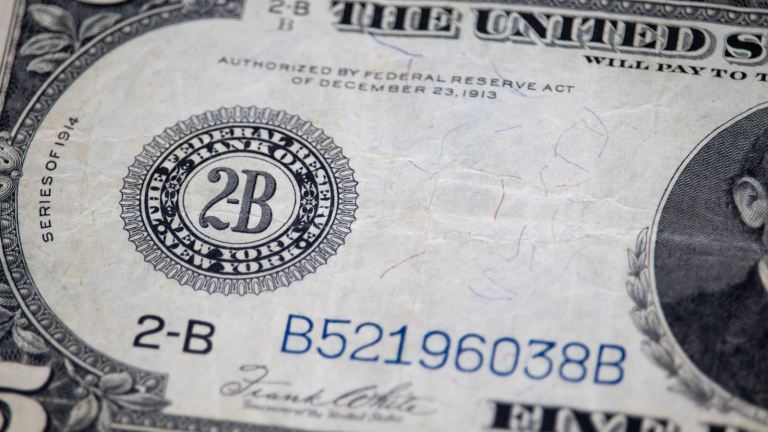
Photo by Andrew Dawes on Unsplash
A Few Facts:
I am sharing a few facts, and more, some trivia, some not trivial. . .
History of U.S. Currency:
History Over the History of the Developing United States:
The Massachusetts Bay Colony issued the first paper money to cover costs of military expeditions, leading to the spread of issuing paper notes to other colonies. In 1739, Benjamin Franklin introduced unique nature prints on colonial notes to deter counterfeiting. The Continental Congress issued paper currency in 1775 to fund the Revolutionary War, but the lack of solid backing led to the devaluation of the notes. The Coinage Act of 1792 established the U.S. Mint and a federal monetary system, setting coin denominations in gold, silver, or copper.
1861 marked the introduction of greenbacks, the first federal paper currency, to finance the Civil War. The same year saw the issuance of the first $10 Demand Notes featuring President Abraham Lincoln. In 1862, the Treasury Secretary was authorized to print notes using fine-line engraving for counterfeit deterrence. Spencer M. Clark introduced machinery for producing notes at the Treasury Department.
National Banknotes were established in 1863, allowing national banks to issue currency secured by U.S. bonds. Fractional Currency notes were introduced in the same year. The 1864 issue of Fractional Currency featuring Spencer Clark’s portrait caused controversy, leading to a prohibition on living persons’ images on currency. The United States Secret Service was established in 1865 to combat counterfeiting activities.
In 1865, Gold Certificates backed by gold held by the Treasury were issued. The BEP printed its first revenue stamps in 1866. United States Notes’ engraving and printing were taken over by the BEP in 1869. The establishment of the Bureau of Engraving and Printing was officially funded in 1874.
Various changes were made over the years, including the introduction of high-denomination notes, the re-introduction of the $2 Federal Reserve note, and the redesign of currency to incorporate new security features. These changes continued in subsequent years, such as the introduction of background colors on currency and the implementation of security threads and microprinting. In recent years, the BEP has shifted to producing currency on high-speed rotary presses and has diversified its operations by opening additional facilities.
Overall, the history of U.S. currency evolution includes innovative changes to combat counterfeiting and meet the changing needs of the economy. From the introduction of paper money in colonial times to the modernization of currency design and production methods, the U.S. monetary system has undergone significant developments to ensure the integrity and security of its currency.

Photo by Alexander Grey on Unsplash
Timeline:
- 1690: Colonial Notes
- 1739: Franklin’s Unique Counterfeit Deterrent
- 1775: Continental Currency
- 1792: Monetary System
- 1861: Greenbacks
- 1861: First $10 Bills – Demand Notes
- 1862: Treasury Department Authorization
- 1862: Spencer Clark
- 1863: National Banknotes
- 1863: Fractional Currency notes, in denominations of 5, 10, 25, and 50 cents, are issued.
- 1864: The 5-cent note of the second issue of Fractional Currency features the portrait of Spencer Clark
- 1865: The United States Secret Service is established
- 1865: Gold Certificates
- 1866: Revenue Stamps on boxes of imported cigars.
- 1869: United States Notes
- 1874: Bureau of Engraving and Printing
- 1876: Congress passes an appropriation bill that directs the Internal Revenue Service to procure stamps engraved and printed at the Bureau of Engraving and Printing
- 1877: The BEP begins printing all United States currency.
- 1878: Silver Certificates
- 1880: First Facility
- 1890: Treasury Coin Notes
- 1894: Postage Stamps
- 1900: The first issue of postage stamps in small booklets is produced.
- 1905: Paper Currency with Background Color
- 1912: Offset Printing
- 1913: Federal Reserve Act
- 1914: The first $10 Federal Reserve Notes
- 1914: New DC Facility
- 1929: Federal Reserve Note Standardized Design
- 1938: Annex Building
- 1939: Food Stamps
- 1942: Hawaii Overprints
- 1943: Allied Military Currency
- 1946: Military Payment Certificates
- 1951: Congressional Appropriations
- 1952: 18-Subject Sheets
- 1957: In God We Trust
- 1957: 32-Subject Sheets
- 1968: Barr Notes
- 1969: High-Denomination Notes
- 1976: $2 Federal Reserve Note
- 1990: Security Thread and Microprinting
- 1990: Western Currency Facility
- 1996: Currency Redesign
- 2003: Redesigned $20 Note
- 2004: Redesigned $50 Note
- 2005: Final Postage Stamp Run
- 2008: Redesigned $5 Note
- 2013: Redesigned $100 Note
- 2014: 50-Subject Printing
Celebrated: August 9th marks National Dollar Day!

Photo by 472301 courtesy of Pixabay
Nowadays:
Now: We wait and see if currency will prevail with this very weak economy!
Future: I am truly confident that in the U.S., the dollars trend will continue everywhere–on and on. . .
FREEBIES & DEALS For National Dollar Day:
💵 FREE: National Dollar Day: Fonts
💵 FREE: National Dollar Day: Crafts + Printables
💵 FREE: National Dollar Day: Sheet Music
💵 CHEAP: National Dollar Day: Ideas, Crafts & Worksheets
💵 FREE: National Dollar Day: AT “Hey It’s Free”
Hashtags:
#NationalDollarDay #Dollar #DollarDay #DollarVibes #DollarBreak #Money #Currency #USCurrency #ILoveDollars #DollarLife #Millionaire #Billionaire

Photo by Emilio Takas on Unsplash
National Dollar Day
More on Versatileer:
![wp-17421866107159004463614288297993.jpg]()
Featured Photo: St. Patrick's Flower of the Day '25 – Bouquet #9
03/17/2025![bare tree on snow covered ground under gray cloudy sky.jpg]()
The Danger of Thunderstorms + Lightning Safety '25 – Spring & Summer Weather Series + Resources
04/27/2025![Baccarat Picnic.jpg]()
Happy National Picnic Day – 2025
04/25/2025![Featured Photos Montage: The 31 Days of Halloween – 2025]()
Featured Photos Montage: The 31 Days of Halloween – 2025
11/01/2025![20221008_195712.jpg]()
Featured Photo + Video: The 24 Hours of Halloween – Hour of Midnight: The Briar Fun House
10/31/2022






























Thank you for sharing