

Constellations of the Month: December – Fornax:
We continue December with the next constellation of the month, Fornax, “The Furnace.”


Fornax constellation map mk courtesy of Openverse
Fornax, “The Furnace” – The Fornax constellation is located in the southern hemisphere, and symbolizes and symbolizes “the furnace.” Fornax was introduced by the French astronomer Nicolas Louis de Lacaille during the mid-18th century. There are no associated myths with it. Fornax is considered a relatively obscure constellation, featuring only one star that exceeds a brightness of magnitude 4.0. It is particularly recognized for the luminous galaxies found in the Fornax Cluster, which includes the Great Barred Spiral Galaxy (NGC 1365), Fornax A (NGC 1316), the Fornax Dwarf, JADES-GS-z14-0, the most distant galaxy identified as of 2024, and UDFy-38135539, the first galaxy observed within 1 billion years following the Big Bang.


Elliptical Galaxy NGC 1316 courtesy of Openverse
Key points regarding Fornax:
- Meaning: The term “Fornax” translates to “The Furnace” in Latin. The constellation Fornax comprises four stars that have known planets, yet it does not contain any Messier objects. The most luminous star in this constellation is Dalim (Alpha Fornacis), which has an apparent magnitude of 3.85. Additionally, there are no meteor showers linked to this constellation. Fornax features three stars that have been formally named. The names of these stars, as recognized by the International Astronomical Union (IAU), are Dalim, Diya, and Intan.
- Notable stars: Dalim (Alpha Fornacis) is the brightest star in its constellation, with an apparent magnitude of 3.85 and located about 46 light years away. This subgiant star is more massive than the Sun and is around 2.9 billion years old. It is a binary star with potential debris around it. Beta Fornacis is a giant star located 169 light years away, with a visual magnitude of 4.465 and an optical companion star. Lambda-2 Fornacis, about 84.1 light years distant, is a main sequence star with a low mass planet and is younger and hotter than the Sun. HD 20781 and HD 20782 are a wide binary system, both with orbiting planets. HD 20781 is 117 light years away and has two known planets, while HD 20782 has one.
- Other features: The Fornax Cluster is a small but significant galaxy cluster located in the Fornax constellation, containing about 58 member galaxies. The central galaxy is NGC 1399, a bright elliptical galaxy, while NGC 1404 and NGC 1427A are other notable members. It is among the closest galaxy clusters to our Local Group. The VISTA telescope captured an image showing many cluster members, including the barred-spiral galaxy NGC 1365 and NGC 1399. JADES-GS-z14-0 is currently the most distant known galaxy, with light that took 13.4 billion years to reach Earth, discovered by the James Webb Space Telescope. UDFy-38135539 was discovered in 2009 as the second most distant galaxy, observed during the early reionization epoch. NGC 1097 is a barred spiral galaxy classified as a Seyfert galaxy, known for its supermassive black hole and multiple satellite galaxies. It has seen several supernovae in the past decades. NGC 1360 is a planetary nebula, while NGC 1365, the Great Barred Spiral Galaxy, is also well-known for its structure. Other galaxies in the cluster include NGC 1398, NGC 1427, NGC 1049, the Fornax Dwarf Spheroidal galaxy, Fornax A, and NGC 1350, each with noticeable characteristics and distances from Earth.
- Mythology: Fornax was first introduced by Nicolas Louis de Lacaille in 1756, following his journey to the Cape of Good Hope, where he studied the southern stars and constellations. Lacaille initially designated the constellation as Fornax Chemica, meaning the chemical furnace, in reference to the small fuel heater utilized for chemical experiments. It was the English astronomer Francis Bailey who, at the suggestion of John Herschel in 1845, abbreviated the constellation’s name to Fornax.
- Visibility: Fornax is the 41st largest constellation, covering 398 square degrees. It is situated in the first quadrant of the southern hemisphere (SQ1) and is observable at latitudes ranging from +50° to -90°. The constellations that border it include Cetus, Eridanus, Phoenix, and Sculptor. The name Fornax is pronounced /ˈfɔːrnæks/. In English, this constellation is referred to as the Furnace. The genitive form of Fornax, which is utilized in the naming of stars, is Fornacis (pronunciation: /fɔːrˈneɪsɪs/). The three-letter abbreviation, which was officially adopted by the International Astronomical Union (IAU) in 1922, is For. Fornax is part of the Lacaille family of constellations, which also includes Antlia, Caelum, Circinus, Horologium, Mensa, Microscopium, Norma, Octans, Pictor, Reticulum, Sculptor, and Telescopium.
⁺‧₊☽◯☾₊‧⁺⋆⁺‧₊☽◯☾₊‧⁺⋆⁺‧₊☽◯☾₊‧⁺⋆⁺‧₊☽◯☾₊‧⁺⋆⁺‧₊☽◯☾₊‧⁺⋆⁺‧₊☽◯☾₊‧⁺⋆
Constellations:
| Constellations by Month | ||
| JANUARY [8] | FEBRUARY [7] | MARCH [7] |
| Taurus | Camelopardalis | Ursa Major |
| Orion | Auriga | Cancer |
| Lepus | Gemini | Canis Minor |
| Caelum | Monoceros | Pyxis |
| Reticulum | Canis Major | Vela |
| Dorado | Columba | Carina |
| Pictor | Puppis | Volans |
| Mensa | ||
| APRIL [8] | MAY [7] | JUNE [6] |
| Ursa Major | Canes Venatici | Ursa Minor |
| Leo Minor | Coma Berenices | Boötes |
| Leo | Virgo | Libra |
| Sextans | Corvus | Lupus |
| Crater | Centaurus | Circinus |
| Hydra | Crux | Apus |
| Antlia | Musca | |
| Chamaeleon | ||
| JULY [9] | AUGUST [9] | SEPTEMBER [6] |
| Draco | Lyra | Cygnus |
| Corona Borealis | Vulpecula | Delphinus |
| Hercules | Sagitta | Equuleus |
| Serpens | Aquila | Capricornus |
| Ophiuchus | Scutum | Microscopium |
| Scorpius | Sagittarius | Indus |
| Norma | Corona Australis | |
| Ara | Telescopium | |
| Corona Australis | Pavo | |
| OCTOBER [7] | NOVEMBER [8] | DECEMBER [6] |
| Cepheus | Cassiopeia | Perseus |
| Lacerta | Andromeda | Triangulum |
| Pegasus | Pisces | Aries |
| Aquarius | Cetus | Eridanus |
| Piscis Austrinus | Sculptor | Fornax |
| Grus | Phoenix | Horologium |
| Octans | Tucana | |
| Hydrus | ||

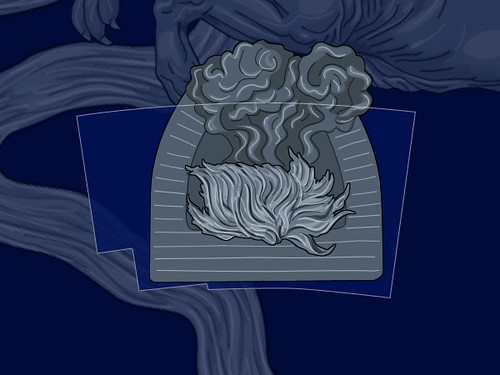
fornax courtesy of Openverse
Constellations of the Month:
December – Fornax
Material may be shared for personal and educational use, Share with family and friends. The material cannot be used in an educational setting whereby a “book fee” is charged in or above tuition costs, and the material here is being used without paying a licensing fee.. AI must file an application for use of such material.
| You May Also Like. . . | |
 NASA 1997 Liftoff Special |
 NASA Mission Patch Party |

