

Constellations of the Month: August – Sagitta:
We continue August with the next constellation of the month, Sagitta, “The Arrow.”

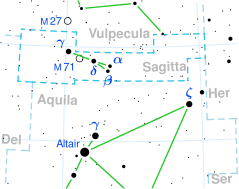
Sagitta constellation map courtesy of Openverse
Sagitta, “The Arrow” – The Sagitta constellation is located in the northern hemisphere, and symbolizes “the arrow.” Sagitta is classified as one of the Greek constellations. It was initially catalogued by the Greek astronomer Ptolemy during the 2nd century. In Greek mythology, it symbolizes the arrow of Heracles.

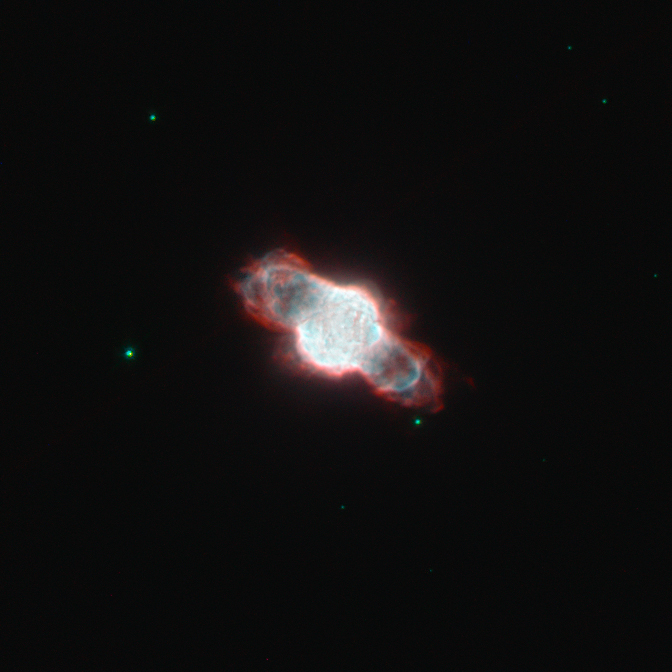
NGC 6886 courtesy of Openverse
Key points regarding Sagitta:
- Meaning: The term “Sagitta” translates to “The Arrow” in Latin. Sagitta ranks as the 3rd smallest constellation in the celestial sphere. It does not feature any stars that exceed 4th magnitude in brightness and includes a limited number of significant deep sky objects. Among these are the globular cluster Messier 71 (NGC 6838) and the Necklace Nebula, a planetary nebula that was discovered in 2005. Sagitta is part of the Hercules family of constellations, which includes many others like Aquila and Cygnus. It contains one Messier object, the globular cluster Messier 71. There are no meteor showers associated with Sagitta, which has three named stars: Sham, Uruk, and Sansuna. The brightest star is Gamma Sagittae, with a magnitude of 3.51. The closest star is Gliese 745, 28.14 light years away. Sagitta has three stars with exoplanets, including HD 231701, 15 Sagittae, and HAT-P-34, each hosting different types of planets.
- Notable stars: Gamma Sagittae is the brightest star in the Sagittarius constellation, classified as an orange giant (K5III), about 274 light years away and 640 times more luminous than the Sun. Delta Sagittae is a close multiple star system, consisting of a red giant and a white main sequence star, located 448 light years away. Alpha Sagittae is a yellow bright giant, 620 light years away, and 340 times brighter than the Sun. Beta Sagittae, a yellow giant, is 470 light years away, while Zeta Sagittae is a triple star system at 326 light years. Eta and Epsilon Sagittae are orange giant and multiple star systems respectively. 15 Sagittae, a solar analog, has a brown dwarf companion, and HD 231701 is a yellow-white dwarf with a Jupiter-like planet. Theta Sagittae is a multiple star system, S Sagittae is a Cepheid variable, U Sagittae is an Algol-type eclipsing variable, and 9 Sagittae is a blue supergiant in a multiple star system.
- Other features: Messier 71 is a globular cluster in Sagitta, discovered in 1746, with an apparent magnitude of 6.1 and located about 13,000 light years away. It spans approximately 27 light years and has a luminosity of 13,200 Suns. The Necklace Nebula, a planetary nebula also in Sagitta, is about 15,000 light years away and was discovered in 2005. It formed around 10,000 years ago when a giant star engulfed its binary companion. NGC 6839 is an asterism of about 11 stars, discovered by William Herschel in 1784, with an apparent magnitude of 8.4. M1-67 is a nebula formed from the Wolf-Rayet star WR 124, expanding rapidly at over 150,000 km/h. WR 124 was discovered in 1938 and is about 10,900 light years from Earth. IC 4997 is a young planetary nebula with a magnitude of 11, located about 8,000 light years away. NGC 6886 is another planetary nebula, with an apparent magnitude of 11.8, discovered in 1884, with its distance estimated between 4,900 and 17,900 light years.
- Mythology: Sagitta constellation symbolizes the arrow used by Heracles to kill the eagle that tormented Prometheus. In mythology, Prometheus created humans from clay and stole fire from the gods, leading to his punishment by Zeus, who had him chained to Mount Caucasus. Heracles freed him. Sagitta is also linked to Apollo’s arrow against the Cyclopes and Eros’ arrow that made Zeus love Ganymede. The Greeks originally called it Oistos, while the Romans later named it Sagitta.
- Visibility: Sagitta is the 86th largest constellation, covering merely 80 square degrees. The only constellations that are smaller than Sagitta are Equuleus and Crux. Sagitta is situated in the fourth quadrant of the northern hemisphere (NQ4) and can be observed at latitudes ranging from +90° to -70°, visible from all locations on Earth except for the Antarctic Circle. The constellations that border Sagitta include Aquila, Delphinus, Hercules, and Vulpecula. The name Sagitta is pronounced /səˈdʒɪtə/. In English, it is referred to as the Arrow. The genitive form of Sagitta, which is used in the naming of stars, is Sagittae (pronunciation: /səˈdʒɪtiː/). The three-letter abbreviation, which was adopted by the International Astronomical Union (IAU) in 1922, is Sge.
⁺‧₊☽◯☾₊‧⁺⋆⁺‧₊☽◯☾₊‧⁺⋆⁺‧₊☽◯☾₊‧⁺⋆⁺‧₊☽◯☾₊‧⁺⋆⁺‧₊☽◯☾₊‧⁺⋆⁺‧₊☽◯☾₊‧⁺⋆
Constellations:
| Constellations by Month | ||
| JANUARY [8] | FEBRUARY [7] | MARCH [7] |
| Taurus | Camelopardalis | Ursa Major |
| Orion | Auriga | Cancer |
| Lepus | Gemini | Canis Minor |
| Caelum | Monoceros | Pyxis |
| Reticulum | Canis Major | Vela |
| Dorado | Columba | Carina |
| Pictor | Puppis | Volans |
| Mensa | ||
| APRIL [8] | MAY [7] | JUNE [6] |
| Ursa Major | Canes Venatici | Ursa Minor |
| Leo Minor | Coma Berenices | Boötes |
| Leo | Virgo | Libra |
| Sextans | Corvus | Lupus |
| Crater | Centaurus | Circinus |
| Hydra | Crux | Apus |
| Antlia | Musca | |
| Chamaeleon | ||
| JULY [9] | AUGUST [9] | SEPTEMBER [6] |
| Draco | Lyra | Cygnus |
| Corona Borealis | Vulpecula | Delphinus |
| Hercules | Sagitta | Equuleus |
| Serpens | Aquila | Capricornus |
| Ophiuchus | Scutum | Microscopium |
| Scorpius | Sagittarius | Indus |
| Norma | Corona Australis | |
| Ara | Telescopium | |
| Triangulum Australe | Pavo | |
| OCTOBER [7] | NOVEMBER [8] | DECEMBER [6] |
| Cepheus | Cassiopeia | Perseus |
| Lacerta | Andromeda | Triangulum |
| Pegasus | Pisces | Aries |
| Aquarius | Cetus | Eridanus |
| Piscis Austrinus | Sculptor | Fornax |
| Grus | Phoenix | Horologium |
| Octans | Tucana | |
| Hydrus | ||


Saggita courtesy of Openverse
Constellations of the Month:
August – Sagitta
Material may be shared for personal and educational use, Share with family and friends. The material cannot be used in an educational setting whereby a “book fee” is charged in or above tuition costs, and the material here is being used without paying a licensing fee.. AI must file an application for use of such material.
| You May Also Like. . . | |
 NASA 1997 Liftoff Special |
 NASA Mission Patch Party |

