

Happy Oklahoma Day!
Today is National Oklahoma Day for 2025. . .
Happy National Oklahoma Day ! ! !


Which State is OK:
The Beginning Years: It is believed that the ancient history of Oklahoma includes evidence of human presence from the Last Ice Age, beginning with Paleo-Indians. These early people, such as those from the Clovis and Folsom cultures, hunted large animals and made advanced tools. Various Native American tribes later formed agricultural and village-based societies. European explorers arrived in the 16th century, and the territory became part of the U. S. through the Louisiana Purchase in 1803. Notable tribes included the Caddo, Wichita, Osage, Quapaw, Comanche, and Ute, each with distinct lifestyles.


First of the Oklahoma Map Series completed: WWII P.O.W. Camps courtesy of Openverse
More History: The state of Oklahoma’s history includes land runs, and oil booms. The Land Run of 1889 marked a major shift as the territory opened to non-Indian settlers. The U. S. acquired the land through the Louisiana Purchase in 1803 and designated it as Indian Territory in 1834. The Land Run opened Unassigned Lands to settlers in 1889, and from 1890 to 1907, it was divided into Oklahoma Territory and Indian Territory. Oklahoma became the 46th state on November 16, 1907. It also faced the Dust Bowl in the 1930s and contributed to the Civil Rights Movement in the 1950s.

Climate of Oklahoma: Oklahoma has a climate is known for its varied climate, ranging from humid subtropical in the east to semi-arid in the west, with four distinct seasons. Summers are long and hot, often reaching over 100°F, while winters are shorter and milder in the south. Average annual temperatures range from 62°F in the south to 58°F in the north, with precipitation levels varying from 17 inches in the west to 56 inches in the southeast. Drought and frequent thunderstorms, including tornadoes, are common. Humidity is higher in the southern and eastern regions.

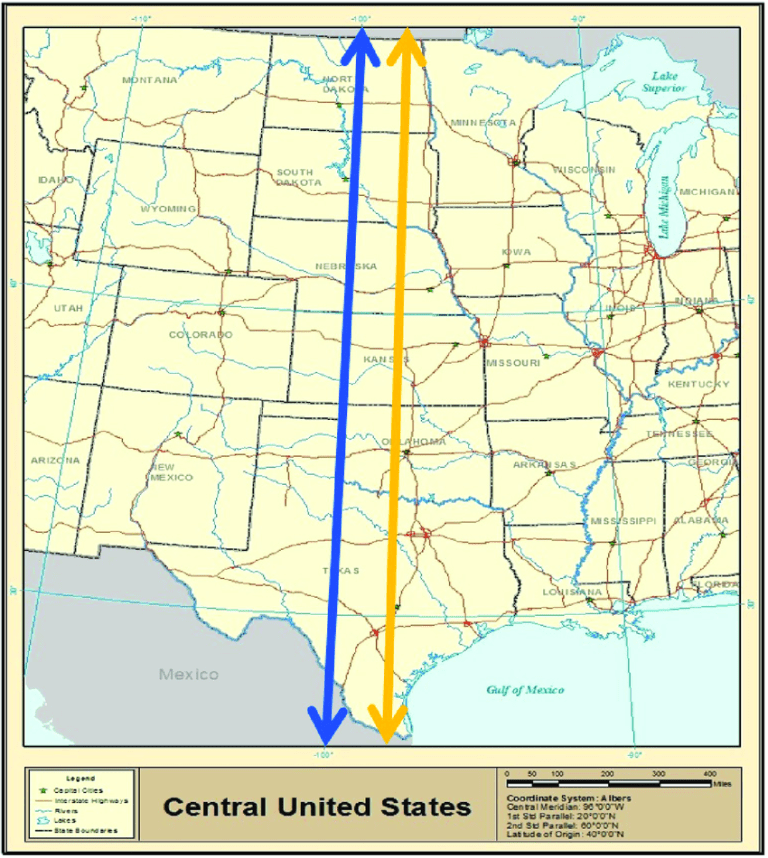
Image courtesy of researchgate.net
Dry-lines demark other states as well, but nothing quite like that of Texas, due to the extreme heat. This climate is shaped by the Gulf of Mexico, Rocky Mountains, and central North America. There are approximately 237 sunny days per year in Oklahoma, with 65% of days being sunny.
!["Oklahoma!" - State Song of Oklahoma [+Lyrics]](https://i.ytimg.com/vi/oiM3XCEIJ9A/hqdefault.jpg)
More About Oklahoma: Throughout the years, Oklahoma has earned the titles of being known for its vibrant Native American culture, Western heritage, oil and gas industry, and agricultural production. The state has many unique tourist attractions, such as the Oklahoma City National Memorial & Museum and the Philbrook Museum of Art. Oklahoma hosts many Native American tribes, with museums like the Gilcrease Museum highlighting this rich history. The oil and gas sector is vital to the economy, especially in Tulsa, while agriculture focuses on wheat and cattle. Notable tourist spots include Myriad Botanical Gardens, Chickasaw National Recreation Area, and Robbers Cave State Park. Famous foods include Fried Onion Burgers and Chicken-fried Steak. Other interesting facts include the state having the most astronauts and an oil well under its capitol. It is also known for being the capital for tornado chasers.

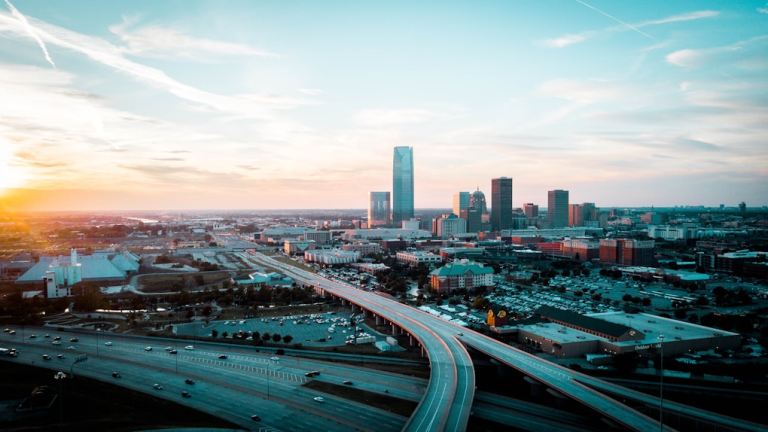
Photo by Gerson Repreza on Unsplash
The Dust Bowl: The “Dust Bowl” was a dreaded phenomenon that was the largest weather disaster that was directly caused by decades of ill activity man created by lack of the proper knowledge skills to preserve a land’s environment. For decades leading up to the disaster, mankind kept using the disk plow which dug too deep into the soil of the plains and pulverized the dirt and made in featherlight. To make matters worse, mankind kept digging up the grassland to plant for aid to economic depression of both Europe and the United States, with legislation to pay farmers more than the value of the crops. The Dust Bowl also was brought on by natural effects of extended drought and unusually high temperatures. Poor agricultural practices and the resulting wind erosion all contributed to making the Dust Bowl. President Herbert Hoover then finally admitted it was a disaster when the winds blew the dust all the way to Washington D.C. U.S. Congress established the Soil Erosion Service and the Prairie States Forestry Project in 1935. The Dust Bowl effected Kansas and other U.S. States. A great book with the subject of the Dust Bowl is listed here:




My Rating ★★★★★
See my review on the following post: The Worst Hard Time: The Untold Story of Those Who Survived the Great American Dust Bowl by Timothy Egan. Please see my excellent five star review on this great book!
The Great Location of Oklahoma: The state of Oklahoma spans 230 miles in length from north to south and 468 miles in width west to east. It is bordered by Colorado and Kansas to the north, Missouri and Arkansas to the east, Texas to the south and southwest, and New Mexico to the west.

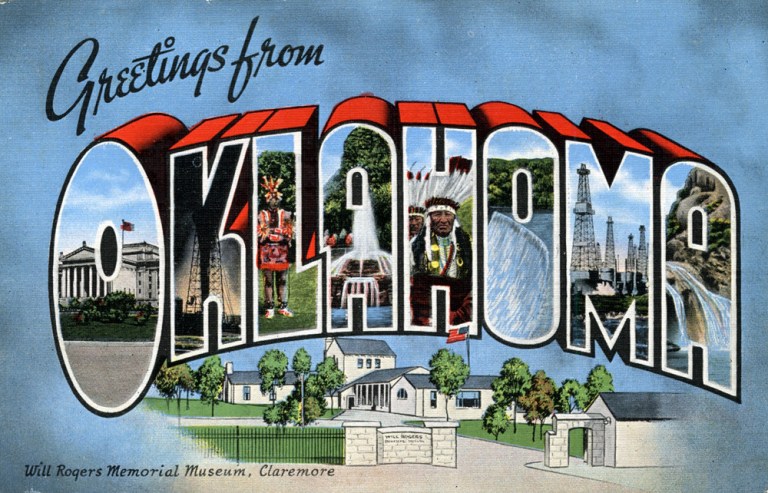
Greetings from Oklahoma – Large Letter Postcard courtesy of Openverse
Oklahoma’s Statehood Facts:
- Date: 11/16/1907
- Capital: Oklahoma City
- Population: 4,088,380 (2024)
- Size: Land area of 68,591 square miles; Total area of 69,895 square miles
- Nickname: The Sooner State
- State Motto: Labor Omnia Vincit Latin for “Labor Conquers All Things”
- Tree: Eastern Redbud (Cercis Canadensis)
- Flower: Oklahoma Rose (Rosa spp.’Oklahoma’)
- Bird: Scissor-tailed flycatcher (Tyrannus Forficatus)
The History:
| Oklahoma Officially Adopted as a U.S. State, State Song, Admission Date & Oklahoma Flag | |||
| State Name Info ♪ State Song ♫ |
Admission |
Capital | Flag Image |
| 46th State. Oklahoma Territory and Indian Territory “Oklahoma Sky” by Miranda Lambert (Modern), “Oklahoma” Richard Rodgers (Original) |
11/16/1907 | Oklahoma City | |

See: Officially Adopted as a U.S. States, State Songs, Admission Dates & Flags at:
Some Great Oklahoma Sites: Here is a list of some some great places to visit while in Oklahoma:
- Oklahoma City National Memorial & Museum, 620 N Harvey Ave, Oklahoma City, OK 73102
- Bricktown, 429 E California Ave, Oklahoma City, OK 73104
- National Cowboy & Western Heritage Museum, 1700 NE 63rd St, Oklahoma City, OK 73111
- Philbrook Museum of Art, 2727 S Rockford Rd, Tulsa, OK 74114
- WinStar World Casino and Resort, 777 Casino Ave, Thackerville, OK 73459
- SKELETONS: Museum of Osteology, 10301 S Sunnylane Rd, Oklahoma City, OK 73160
- Myriad Botanical Gardens, 301 W Reno Ave, Oklahoma City, OK 73102
- The Cave House, 1623 Charles Page Blvd, Tulsa, OK 74127
- Beavers Bend State Park and Nature Center, 4350 OK-259A, Broken Bow, OK 74728
- Oklahoma City Zoo and Botanical Garden, 2000 Remington Pl, Oklahoma City, OK 73111
- Choctaw Casino Resort, 4216 US-69, Durant, OK 74701
- Oklahoma Aquarium, 300 Aquarium Dr, Jenks, OK 74037

Memorable Oklahoma Events: Here is a list of some events that happened in Oklahoma:
- 1541: Spanish explorer Francisco Vasquez de Coronado is the first European to arrive.
- 1682: Robert de La Salle claims Oklahoma for France.
- 1803: Oklahoma becomes part of the United States through the Louisiana Purchase.
- 1819: Oklahoma is part of the Arkansas Territory.
- 1830: Congress passes the Indian Removal Act.
- 1835 to 1838: Many Indian tribes are forced to move from the southeast to Oklahoma.
- 1866: Slavery is abolished.
- 1889: Much of Oklahoma is opened up to homesteaders.
- 1897: The first oil well is drilled in Oklahoma.
- 1905: The Indian tribes request to create an all Indian state called Sequoyah.
- 1907: Oklahoma becomes the 46th state.
- 1910: The capital city is moved from Guthrie to Oklahoma City.
- 1930: Severe drought begins across much of the Great Plains causing the Dust Bowl. Many people will leave Oklahoma and head west in the years to come.
- 1995: The Oklahoma City bombing occurs when terrorists bombed a government building killing 168 people.
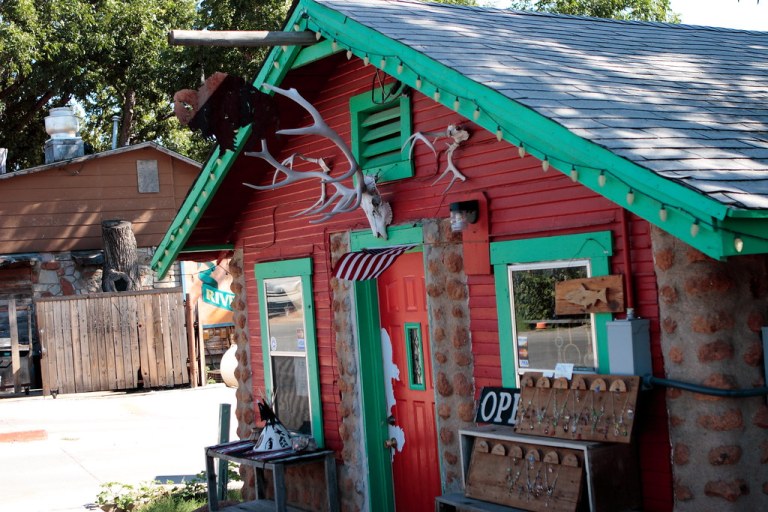
Medicine Park 0005 courtesy of Openverse
FREEBIES & DEALS For National Oklahoma Day:
Hashtags:
#HappyNationalOklahomaDay #NationalOklahomaDay #HappyOklahomaDay #Oklahoma #OklahomaCity #OklahomaCityOK #Tulsa #TulsaOK #Norman #NormanOK #Muskogee #MuskogeeOK #OK


National Oklahoma Day
