

Happy Battery Day!
Yesterday was National Battery Day for 2025. This is a day dedicated to the celebration of the battery. . .
Happy National Battery Day !! !
🔋⚡🪫 🔋⚡🪫 🔋⚡🪫 🔋⚡🪫 🔋⚡🪫 🔋⚡🪫
A Brief History:
The Job of the Battery: The battery is a classic example of energy storage and dispersal in the form of one or more “cells”. It is an example of direct current (D/C). A 1-1/2 volt power is considered a normal amount of voltage in the United States per cell, so as in the 9-volt battery, there are 6 individual sets of cells connected in a series configuration, whereby the positive terminal of one cell is linked to the negative terminal of the subsequent cell. A standard 9-volt battery comprises six cells, each providing 1.5 volts, thereby achieving the cumulative voltage of 9 volts. No matter what the battery, the power is dispatched through a wire from the positive side of the battery to the load, as shown below in the form of the light bulb, whereby being utilized, and the used current is then continued to return to the negative side of the battery, thereby completing the circuit of power.
┌→💡→┐
+ −
└←🔋←┘
As always, the wattage is the amount of power that is needed to utilize a load (as in the light bulb, light the bulb up and provide light). The higher the voltage, the less the amperes needed to complete a needed wattage.
What is Alternating Current? Why can’t there be a Battery? Alternating current (A/C) is similar the D/C, but it is the positive to negative changing directions a certain amount of times per second (hertz), and in the United States, the direction of current switches back and forth at 60 hertz, or 60 back and forth directions per second.
– + – + – + – +
Alternates ↑ ↓ ↑ ↓ 60× ↑ ↓ ↑ ↓ ≡ 1 second
+ – + – + – + –
The voltage and amperage determine the wattage. A 60-watt bulb at 120 volts takes 0.5 amps. Here is a common figure:Formula:
| Amps = Watts ÷ Volts |
| Wattage: 60 watts |
| Voltage: 120 volts |
| ————————— |
| Total: 0.5 amps |
A conventional battery is unable to directly supply power to an air conditioning unit due to the fact that batteries generate direct current (DC), whereas air conditioners operate on alternating current (AC). This discrepancy indicates that a battery cannot produce the requisite fluctuating current essential for the operation of an AC unit. To utilize a battery with an air conditioner, an inverter is necessary to convert the DC into AC. However, the power requirements of air conditioning systems are generally too substantial for the majority of battery systems to manage effectively.


Battery Recycling courtesy of Openverse
Premise: In contemporary society, it is increasingly difficult to identify individuals in the United States who do not derive advantages from the use of batteries. Even those residing in remote areas without conventional power sources utilize battery-powered devices, including flashlights, radios, and watches. A battery converts chemical energy into electrical energy by arranging various chemicals in a precise sequence. When these substances are properly aligned, electrons move from one material to another, thereby generating an electrical current.
A Little History: Battery manufacturing for personal use has developed over the last 50-60 years, but archaeologists discovered a device possibly used for electroplating gold onto silver, resembling a battery. In 1936, a tomb near Baghdad revealed a copper cylinder encasing an iron rod, thought to be around 2,000 years old. The term “battery” was first used by Benjamin Franklin in 1748 for an array of charged glass plates. In 1800, Alessandro Volta created “voltaic piles” with layers of silver, cloth, and zinc to generate electrical current. William Cruickshank designed a mass-production battery in 1802. John Daniell improved corrosion issues with the Daniell Cell in 1820. The first commercially available battery was made in 1896, and by 1957, the first battery-operated watch was introduced. Today, batteries power many devices, with various types and sizes available, including solar batteries.
Celebrated: February 18th every year!

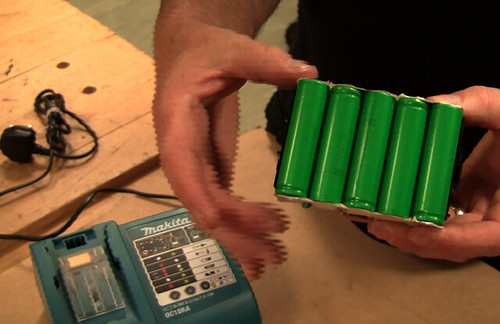
Lithium-Ion Battery Technology courtesy of Openverse
A Few Facts:
I am sharing a few facts, and more, some trivia, some not trivial. . .
Examples of Battery Options:
- AA batteries
- AAA Batteries
- C batteries
- D batteries
- 9V batteries
- Alkaline
- Lead acid
- Lithium-ion batteries
- Nickel metal hydride
- Alkaline batteries
- Lithium
- Carbon zinc batteries
- Nickel-cadmium
Battery Options:
- Flow batteries
- Lithium manganese oxide
- Silver oxide
- Lithium cobalt oxide
- Lithium nickel cobalt aluminum oxide
- Lithium titanate
- NiCd (“Ni-Cads” for nickel-cadmium)
- Lithium polymer
- Lithium-sulfur

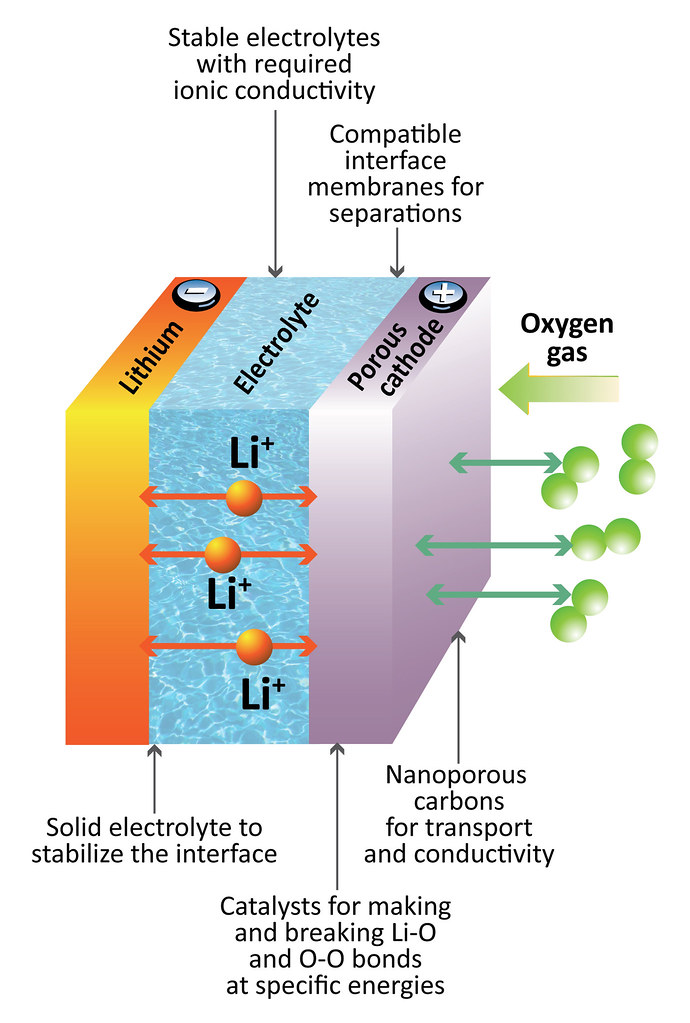
Lithium-ion battery diagram courtesy of Openverse
The Present:
People all over the world, have been enjoying making and brightening up the day someone at random–by spreading an act of random kindness!
The Future:
You can make a difference into the future, just by being kind–now, and in the years to come. . .
FREEBIES & DEALS For National Battery Day:
🔋 FREE National Battery Day Fonts
⚡FREE National Battery Day Crafts + Printable
🪫FREE National Battery Day Sheet music
🔋 CHEAP National Battery Day Ideas, Crafts & Worksheets
🪫FREE National Battery Day AT “Hey It’s Free”
Hashtags:
#Battery #Batteries #Cell #HappyNationalBatteryDay #HappyBatteryDay #NationalBatteryDay #DirectCurrent #AlternatingCurrent #Volt #Amp #Ampere #Watt
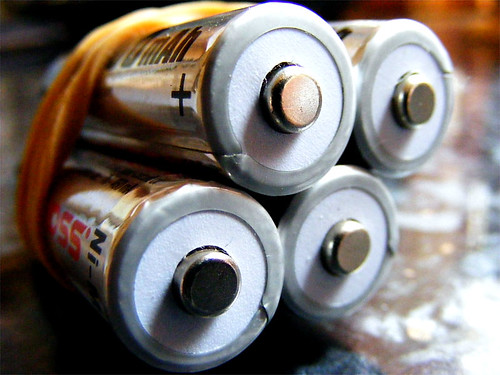
batteries courtesy of Openverse
National Battery Day
