

Happy Artificial Intelligence Day!
Yesterday was National Artificial Intelligence Day for 2025, celebrating the AI industry & proper usage. . .
Happy National Artificial Intelligence Day! ! !
📝 🕵️ ✅ 🔠 ✍🏻 📖 📑 🔤 📝 🕵️ ✅ 🔠 ✍🏻 📖 📑
A Brief History:
Origination: Artificial Intelligence has existed for a longer period than most individuals are aware of. Indeed, the concept of AI originated in 1950 when Alan Turing released “Computing Machinery and Intelligence” and posed the inquiry of whether a machine could “think independently.” In 1951, Marvin Minsky and Dean Edmonds constructed one of the earliest artificial neural networks (SNARC). By 1952, Arthur Samuel created a checkers-playing program capable of learning from its own experiences, demonstrating that machines could learn from their errors. In 1956, John McCarthy introduced the term “artificial intelligence” during the Dartmouth Summer Research Project on Artificial Intelligence. Together with a group of fellow researchers who were keen on the project, John aimed to develop systems capable of emulating human thought processes, which encompassed problem-solving and enhancing learning. This research initiative attracted some of the most brilliant individuals in the fields of computing and cognitive science at that time.

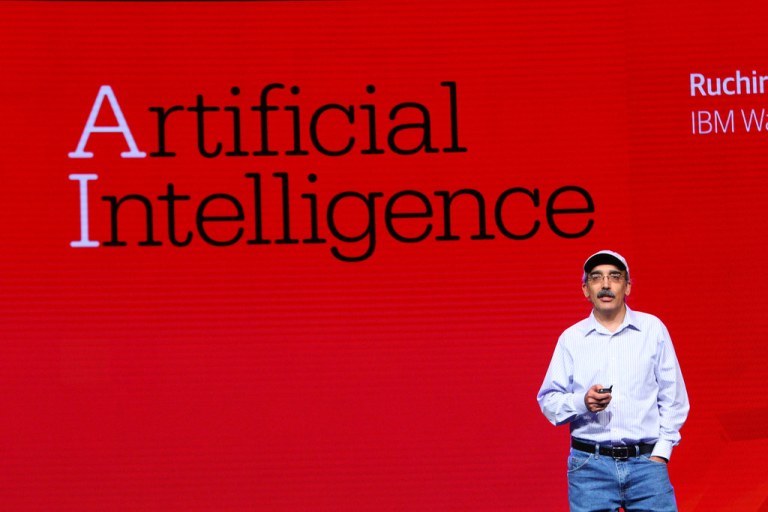
Artificial Intelligence 2017 San Francisco courtesy of Openverse
Middle Years: During the 1970s and 1980s, there was a phase when progress in artificial intelligence was minimal, primarily due to the constraints of computing power. Nevertheless, the surge in data availability, enhanced hardware capabilities, and sophisticated algorithmic techniques have propelled AI into a prominent position. The emergence of large language models such as Gemini and ChatGPT in the 2020s represented a remarkable advancement, introducing generative AI to the general public and showcasing AI’s extraordinary potential for creativity and human-like engagement.
The Important Figures in Implementing AI: THere are some of the founding members of artificial intelligence:
- John McCarthy: Assistant Professor of Mathematics at Dartmouth College. He introduced the term “Artificial Intelligence” in his quest for a neutral phrase to describe the investigation into whether a machine can learn autonomously.
- Marvin Minsky: A Junior Fellow at Harvard, specializing in Mathematics and Neurology. He is recognized for his contributions to neural networks and brain modeling.
- Nathaniel Rochester: The Manager of Information Research at IBM. He played a key role in the development of one of IBM’s earliest commercial computers.
- Claude Shannon: A mathematician affiliated with Bell Telephone Laboratories. He is frequently acknowledged as the “Father of Information Theory.”

Photo by erik_and_so_on on Unsplash
Some of the Benefits of Using AI: The landscape of AI is incredibly diverse, with many different models and approaches. AI is a learning tool that is constantly evolving through user interaction. That interaction increases the intelligence of the AI platform, which is beneficial for increased efficiency and automation for the user because each AI platform has its strengths and unique characteristics. In fact, AI powers personalized recommendations and adapts to learning the user’s needs, customizing the individual user experiences and needs. AI can:
- Automate repetitive and time-consuming tasks, freeing up human workers for more complex and creative endeavors.
- Analyze vast datasets rapidly and identify patterns, leading to more informed and accurate decisions in fields like finance and healthcare, such as diagnosis, treatment plans and robotic surgery.
- Enhance safety by reducing human error and anticipating potential hazards in machinery, including self-driving cars.
- Break down communication barriers and improve accessibility for individuals with disabilities who use AI tools, including voice assistants and real-time translation.
- Accelerate research in fields like climate science, material science, and astrophysics by processing complex data and simulating scenarios.

Photo by TheDigitalArtist on Unsplash
Celebrated: National Artificial Intelligence Day is celebrated on July 16th every year!
A Few Facts:
I am sharing a few facts, and more, some trivia, some not trivial. . .
Misuse of AI:
Here are several instances of the improper use of Artificial Intelligence (AI):
- Spreading misinformation and disinformation: AI can be utilized to produce realistic deepfake images and videos, as well as generate convincing text that can be employed to disseminate false information, manipulate public opinion, and sway elections. An example includes AI-generated robocalls that impersonate political figures to deter voting.
- Malicious cyberattacks: AI can be harnessed to develop more advanced and difficult-to-detect malware, automate phishing schemes, and improve social engineering strategies to steal sensitive data, commit fraud, or disrupt systems. For instance, AI-driven malware can hide itself and activate only under certain conditions, as noted by Perception Point.
- Privacy violations and surveillance: AI can be applied for mass surveillance, data mining, and profiling, which raises concerns regarding privacy infringements and the potential for the misuse of personal data. For example, facial recognition systems have been implemented in public areas and have demonstrated lower accuracy for specific demographics, raising issues of fairness.
- Bias and discrimination: AI systems may unintentionally acquire and reinforce biases found in their training datasets, resulting in unjust or discriminatory results across various sectors, including hiring, lending, and criminal justice.
- Autonomous weapons systems: The application of AI in the creation of autonomous weapons capable of making decisions independently of human oversight presents significant ethical and safety dilemmas.
- Generating fake content and intellectual property infringement: AI models have the ability to produce artificial artwork and text that closely resemble human creations, which raises issues regarding intellectual property rights and plagiarism.
- Unintended misuse: Even in the absence of malicious intent, AI can be improperly utilized due to a lack of understanding of its associated risks or as a result of inadequately designed systems. Instances of this include AI chatbots delivering erroneous information, such as an Air Canada chatbot giving a customer incorrect refund details, as reported by Evidently AI.
It is essential to acknowledge these possible misuses and to establish strong safeguards and ethical standards to guarantee that AI is developed and utilized in a responsible manner for the benefit of humanity.


Photo by GDJ on Unsplash
The Present:
America, the world and everywhere, have come very greatly appreciative of all the best AI software that there is . . .
The Future:
The United States and whole world will celebrate ai when used properly, now and into the years to come!
FREEBIES & DEALS For National Artificial Intelligence Day:
📝 FREE National Artificial Intelligence Day: Fonts
🕵️ FREE National Artificial Intelligence Day: Craft + Printables
🔠 CHEAP National Artificial Intelligence Day: Ideas, Crafts & Worksheets
✍🏻 FREE National Artificial Intelligence Day: AT “Hey It’s Free”
Hashtags:
#HappyNationalArtificialIntelligenceDay #ArtificialIntelligence #NationalArtificialIntelligenceDay #ArtificialIntelligenceDay


Photo by Possessed Photography on Unsplash
National Artificial Intelligence Day
